
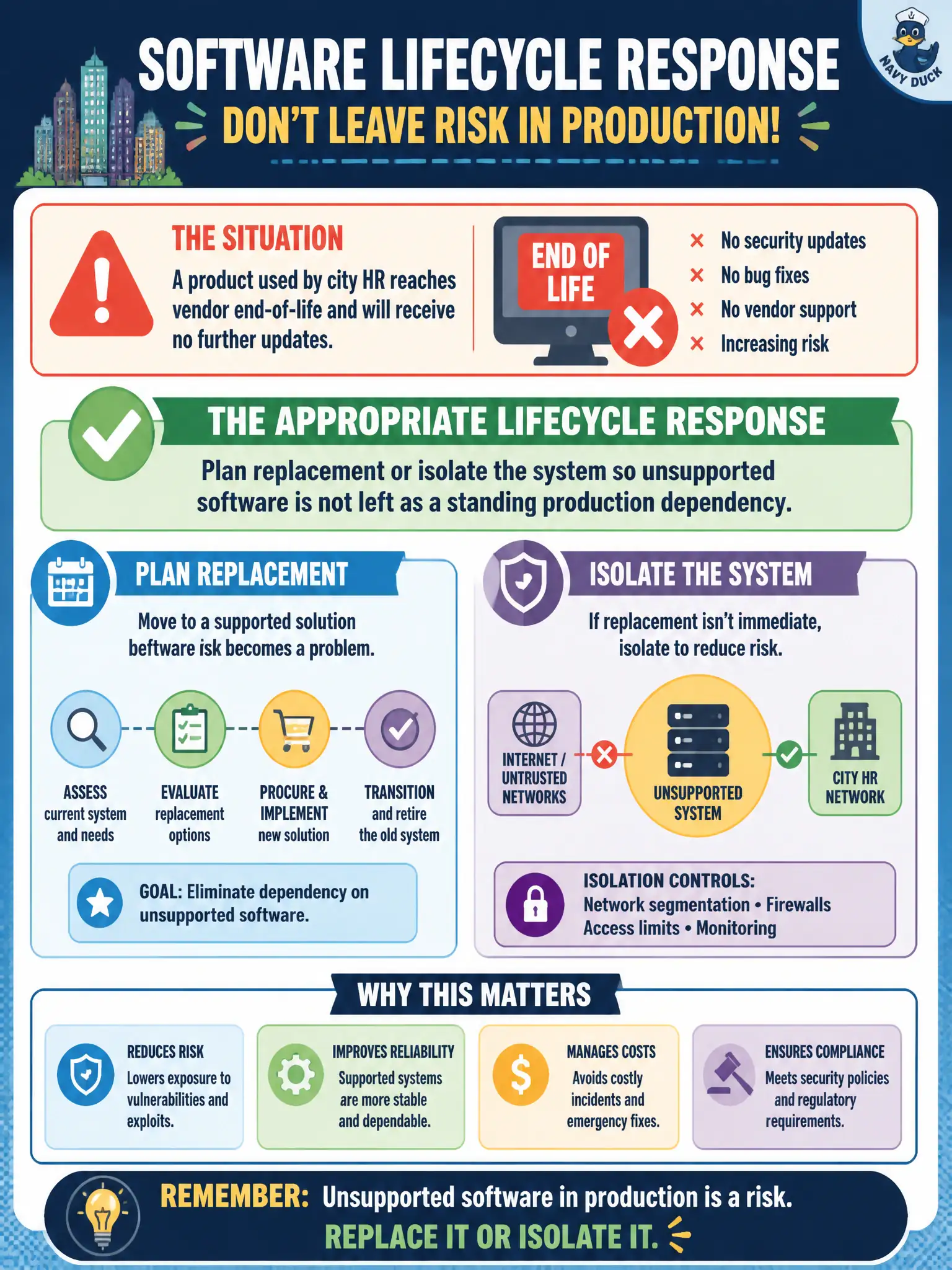
A product used by city HR reaches vendor end-of-life and will receive no further updates. What lifecycle response is appropriate?
Select an answer to reveal the explanation.
Short Explanation
When the maker stops making parts, you either replace the truck or park it away from the main route. EOL means plan migration or isolate—do not pretend nothing changed.
Full Explanation
End-of-life marks the end of the vendor’s normal product lifecycle for fixes and enhancements. When city HR software reaches EOL with no further updates, the appropriate response is to plan replacement or isolate the system so unsupported software is not left as a standing production dependency for employee data. Lifecycle governance demands an exit path before risk compounds.
Continuing indefinitely with no migration plan because EOL is "only marketing" ignores loss of fixes and compatibility. Expanding production exposure by onboarding more departments onto the EOL product increases blast radius. Disabling all logging so EOL risk is harder to measure hides the problem from leadership and auditors.
Exam caveat: EOL and EOS (end-of-support/security support) are related lifecycle milestones; security support ending is especially urgent. Compensating controls may buy time but are not a substitute for migration.
Operational check: inventory integrations and data held in the HR product, present replacement options with timelines to stakeholders, apply network isolation and strict access if interim use is unavoidable, and track the migration in the city’s lifecycle risk register until cutover completes.