
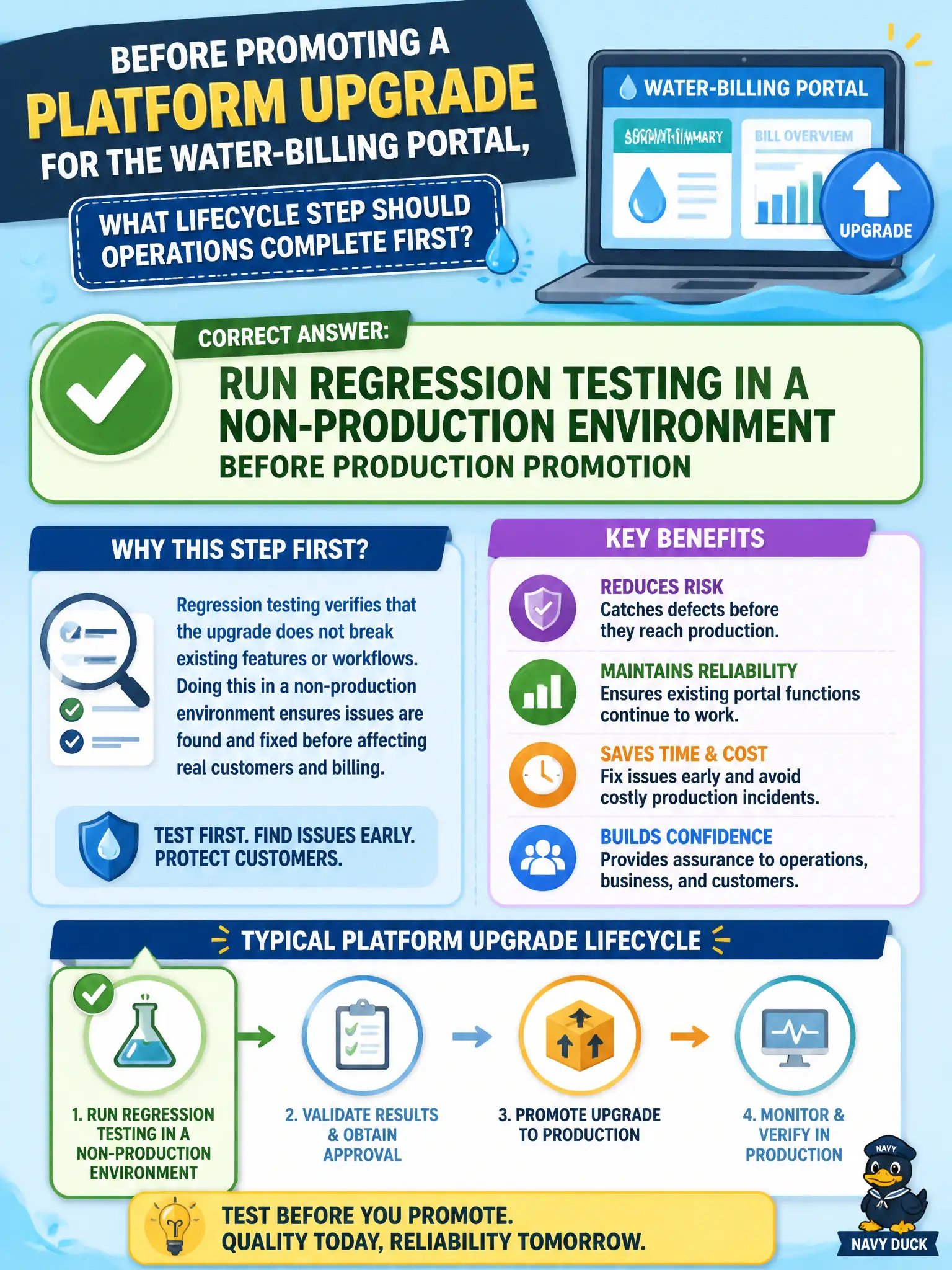
Before promoting a platform upgrade for the water-billing portal, what lifecycle step should operations complete first?
Select an answer to reveal the explanation.
Short Explanation
Try the new recipe in the test kitchen before serving city hall dinner. Non-prod regression catches breaks before citizens hit them.
Full Explanation
Lifecycle management for updates includes validating changes in non-production environments before production promotion. Before upgrading the water-billing portal platform, operations should complete regression testing in a non-production environment so billing defects are found before citizens cannot pay and revenue posting fails. That sequence protects both service availability and public confidence.
Pushing the upgrade straight to production during peak payment week maximizes user impact and skips validation. Deleting the non-prod stack so only production consumes patch bandwidth removes the test bed required for safe lifecycle promotion. Disabling monitoring so upgrade noise does not create tickets blinds operators to real failures during the change.
Exam caveat: non-prod testing does not replace a production change window, smoke test, or rollback plan—it precedes them. Configuration drift between non-prod and prod can invalidate test results if environments are not representative.
Operational check: sync non-prod with representative data/config, execute regression and payment-path tests, record evidence in the change ticket, promote only after sign-off, and watch billing SLOs during and after cutover. Schedule the window outside peak payment periods when possible.