
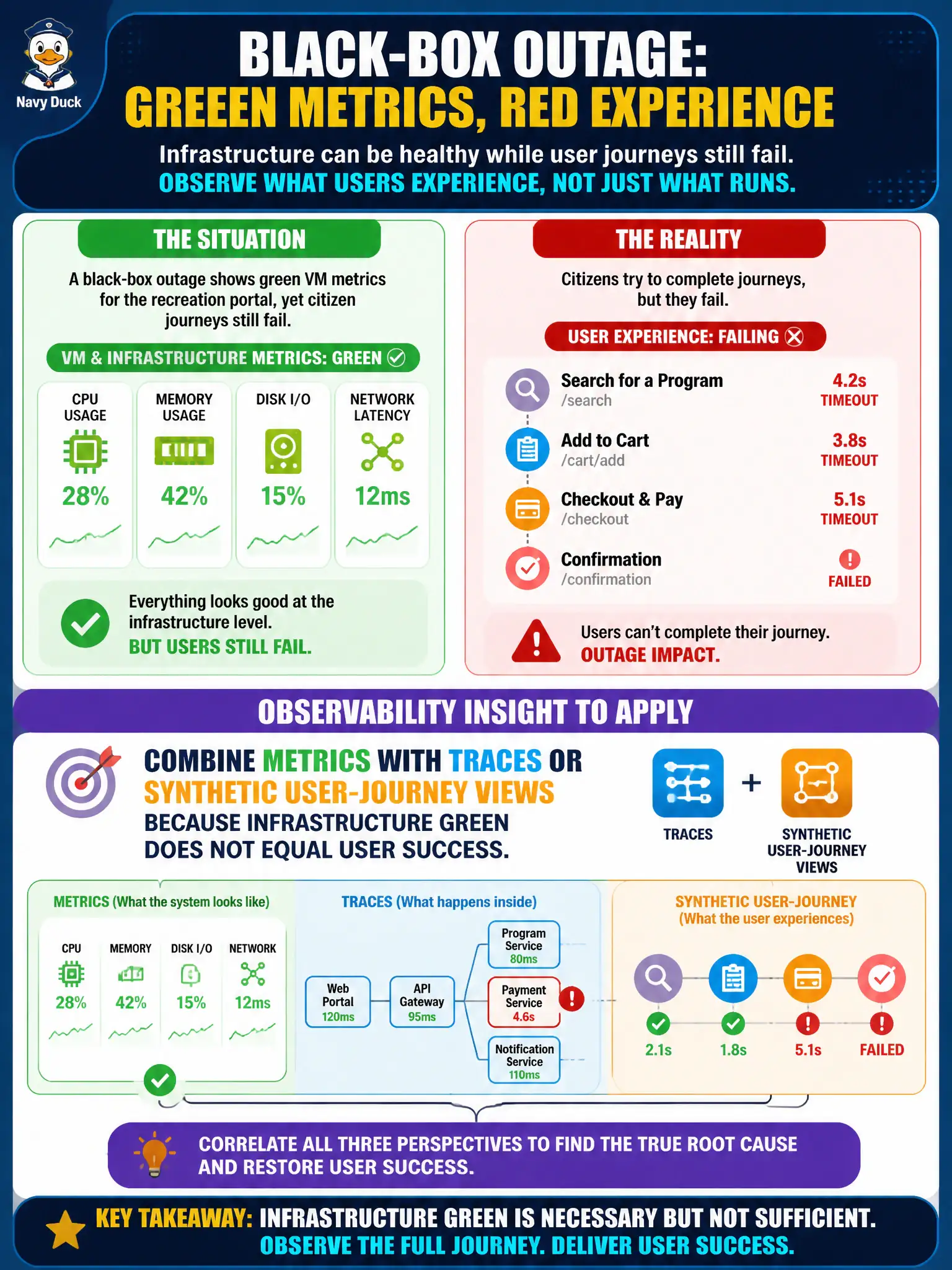
A black-box outage shows green VM metrics for the recreation portal, yet citizen journeys still fail. What observability insight should the team apply?
Select an answer to reveal the explanation.
Short Explanation
Green VM gauges with angry citizens is the classic “engine light off, car won’t start” moment. You need traces or synthetic checks that walk the real user path, not just CPU smiles. Infrastructure health is necessary—but not sufficient—for portal success.
Full Explanation
Combining metrics with traces or synthetic user-journey views is required because green infrastructure metrics for the recreation portal do not prove citizen journeys succeed; black-box path failures can coexist with healthy VM graphs. Treating green infrastructure metrics as proof that user journeys cannot fail misses application-path outages. Deleting synthetic checks because they conflict with VM CPU graphs removes the signal that catches citizen-visible failures. Only monitoring hypervisor memory and ignoring application paths fails end-to-end assurance. Exam caveat: infrastructure green ≠ user success; correlate metrics with traces/synthetics for civic UX. Operational check: add synthetic checkout journeys, page on journey failure even if CPU is green, and review correlated traces after portal incidents. In municipal platform operations, record the chosen control and the rejected alternatives in the change record so future on-call engineers understand the failure modes avoided for citizen services. Re-check the decision after the next provider feature change or compliance update to ensure the same answer still holds for the city's estate. Confirm monitoring, access reviews, and backup coverage still align with the selected approach before closing the civic hypercare period.