
Compliance requires the city to keep authentication logs for a defined period and then delete them. What should ops configure to balance that mandate with cost and privacy?
Select an answer to reveal the explanation.
Short Explanation
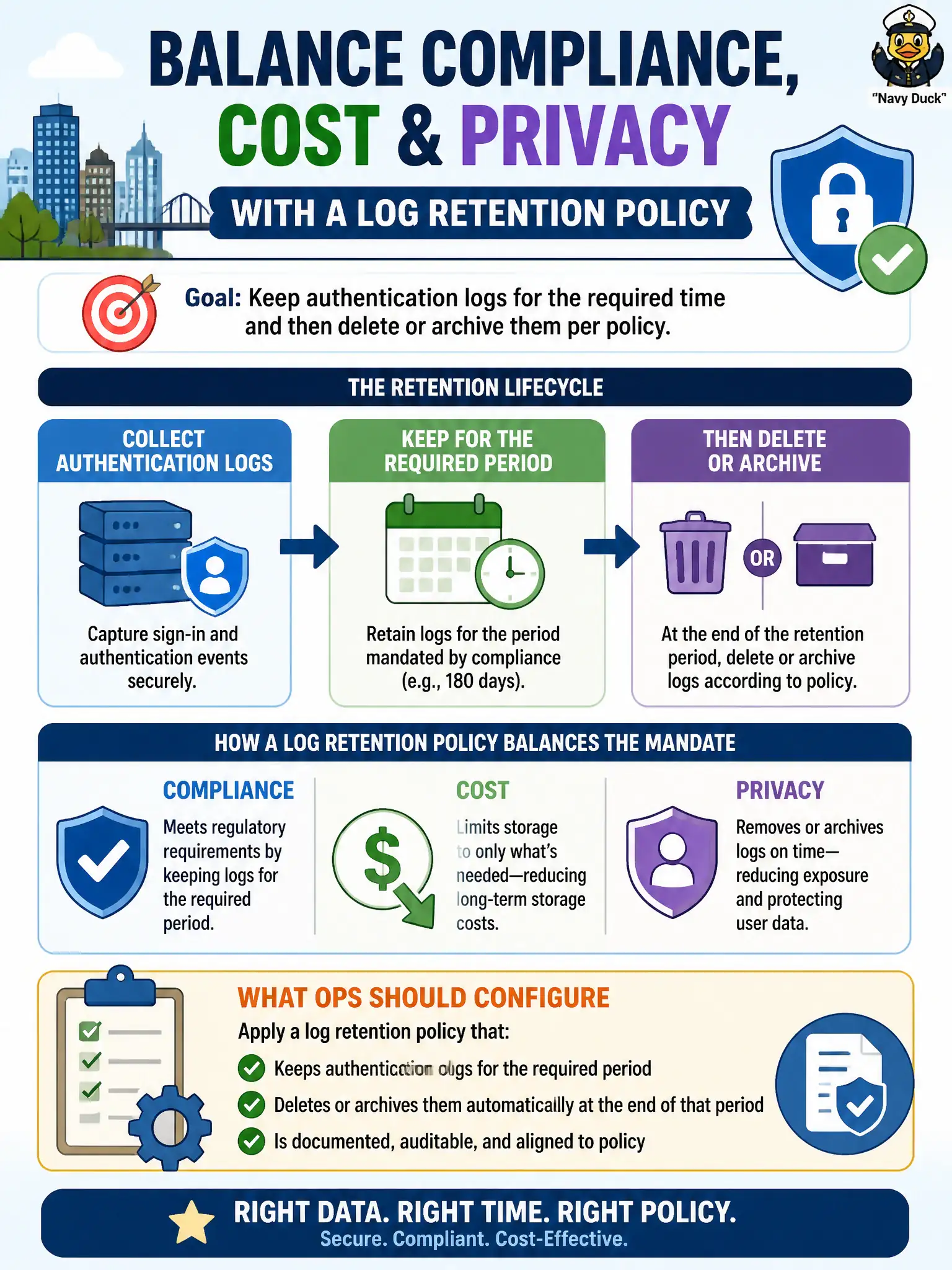
Retention is the library due-date for logs: keep them long enough for auditors, then clear the shelf so cost and privacy don’t explode. A retention policy encodes that keep-then-delete rule for authentication logs instead of hoping someone remembers. Forever-and-hopeful storage is neither compliant nor cheap.
Full Explanation
A log retention policy that keeps authentication logs for the required period and then deletes or archives them per policy balances compliance with cost and privacy for city identity telemetry. Mirroring authentication logs forever to every engineer’s laptop fails least privilege, privacy, and cost control. Turning authentication logging off after the first successful login each day fails continuous audit evidence. Publishing raw authentication logs to a public status page exposes sensitive civic access data. Exam caveat: retention is a deliberate compliance+privacy+cost control—not indefinite keep or public posting. Operational check: encode retention in the logging platform, auto-delete/archive on schedule, evidence deletion for auditors, and deny uncontrolled local copies. In municipal platform operations, record the chosen control and the rejected alternatives in the change record so future on-call engineers understand the failure modes avoided for citizen services. Re-check the decision after the next provider feature change or compliance update to ensure the same answer still holds for the city's estate. Confirm monitoring, access reviews, and backup coverage still align with the selected approach before closing the civic hypercare period.