
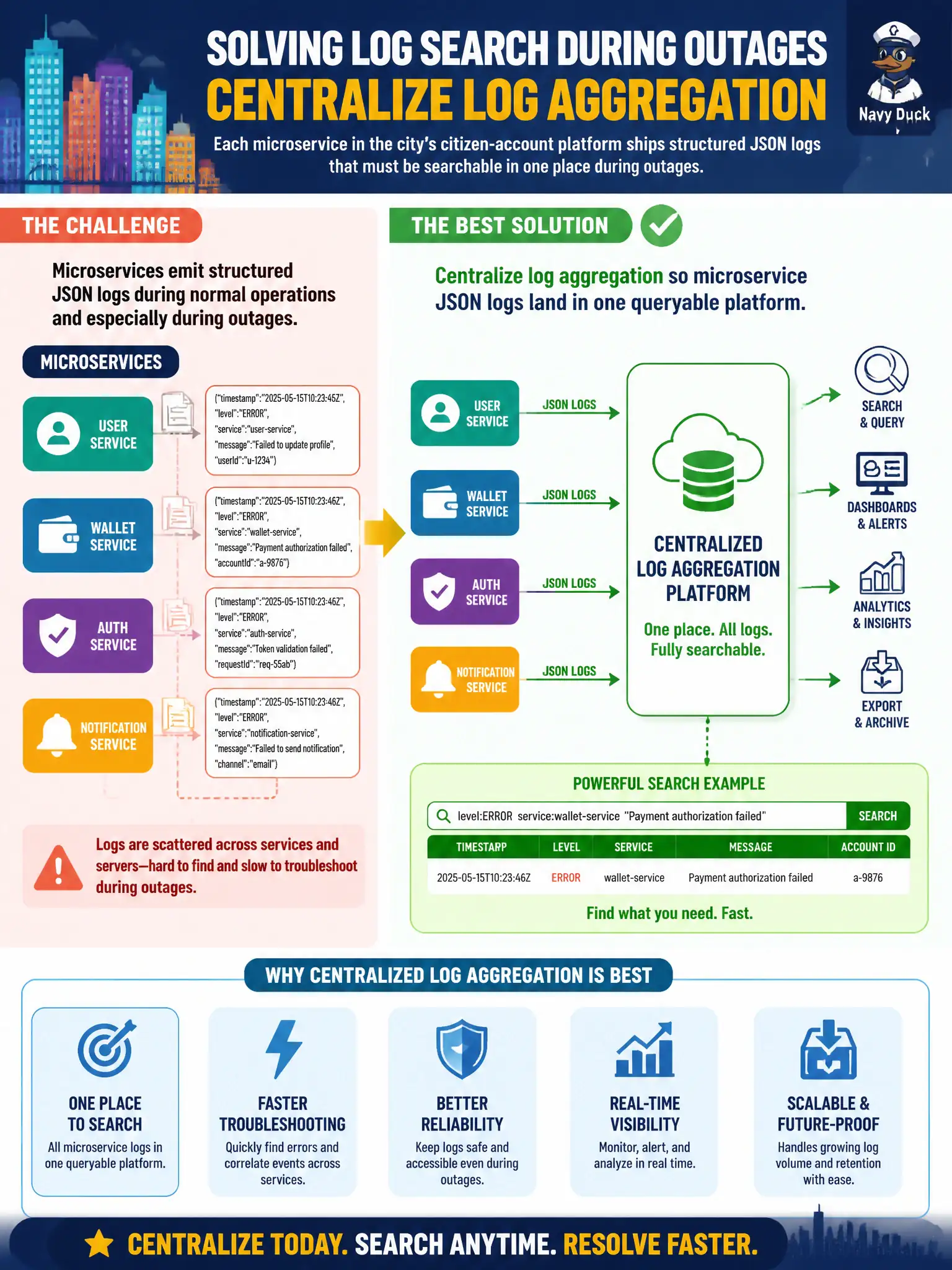
Each microservice in the city’s citizen-account platform ships structured JSON logs that must be searchable in one place during outages. Which configuration best meets that need?
Select an answer to reveal the explanation.
Short Explanation
Think of every microservice as a radio talking in JSON—you need one control room that hears them all. Log aggregation pipes those streams into a single searchable place so outages aren’t a scavenger hunt. Structured logs are useful only if you can actually query them together.
Full Explanation
Centralizing log aggregation so microservice JSON logs land in one queryable platform meets the need for searchable, structured logs across the city’s citizen-account services during outages. Asking each developer to paste log lines into a shared spreadsheet during incidents fails scale and reliability. Storing JSON logs only inside each container’s ephemeral filesystem loses data on restart and blocks fleet search. Converting all JSON logs to screenshots on a file share destroys structure and queryability. Exam caveat: structured logs help, but aggregation is what makes them searchable in one place—do not confuse format with centralization. Operational check: ship JSON to a central platform with retention and RBAC, create saved queries for account-login failures, and test during chaos drills. In municipal platform operations, record the chosen control and the rejected alternatives in the change record so future on-call engineers understand the failure modes avoided for citizen services. Re-check the decision after the next provider feature change or compliance update to ensure the same answer still holds for the city's estate. Confirm monitoring, access reviews, and backup coverage still align with the selected approach before closing the civic hypercare period.