
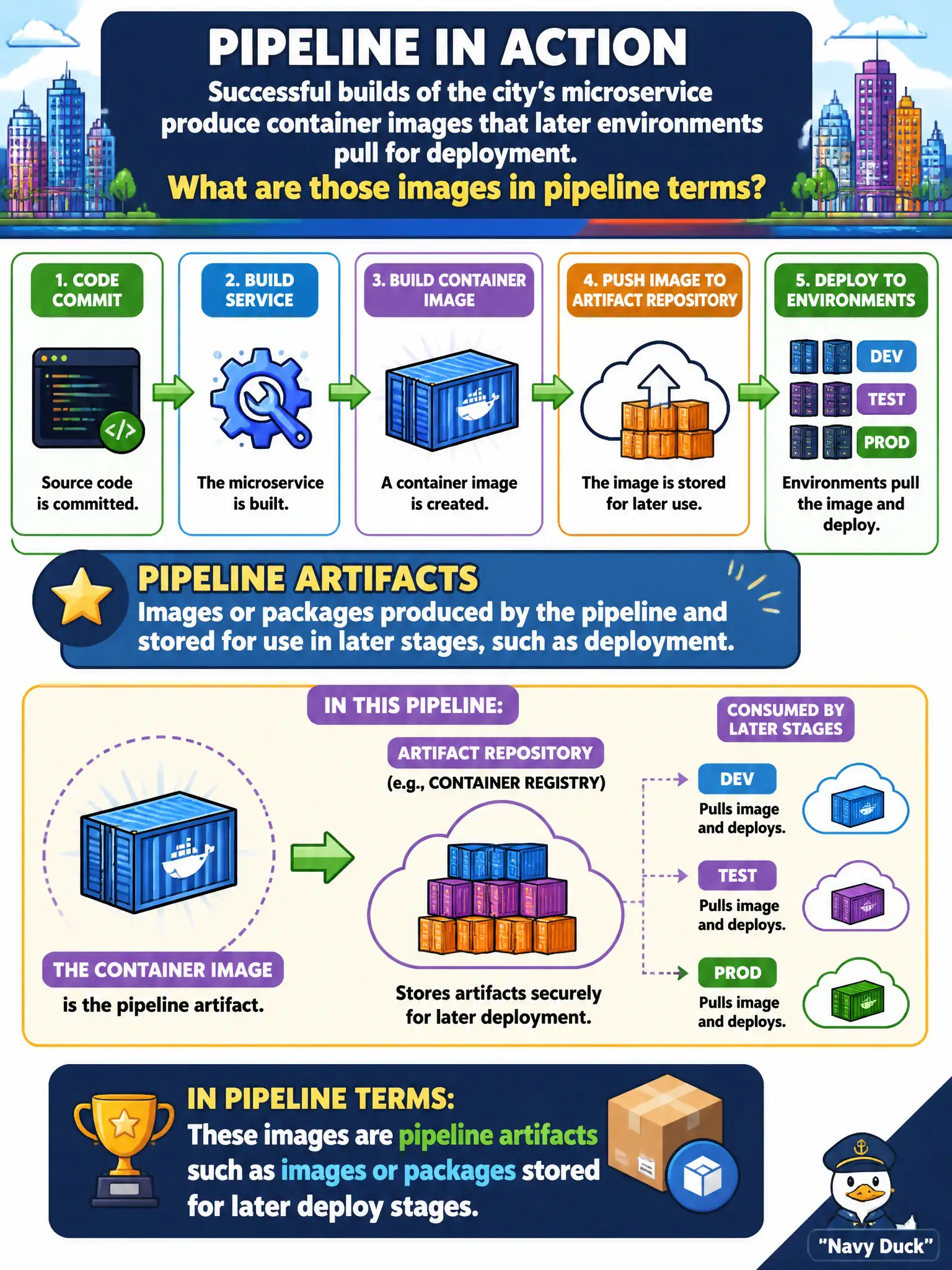
Successful builds of the city’s microservice produce container images that later environments pull for deployment. What are those images in pipeline terms?
Select an answer to reveal the explanation.
Short Explanation
Artifacts are the leftovers that matter—the image or package the build just made, parked where deploy stages can grab them. Chat logs and sticky-note screenshots aren’t deployable. Think ‘jar on the shelf,’ not ‘conversation in the hallway.’
Full Explanation
Successful builds of the city's microservice that produce container images later environments pull for deployment are pipeline artifacts such as images or packages stored for later deploy stages. Versioned artifacts decouple build from release and give municipal operations a reproducible unit to promote, roll back, and attest. Disposable chat logs with no retention outside runner memory are not deployable runtime artifacts. Unversioned desktop screenshots attached to sticky notes cannot be pulled by staging or production clusters. Provider invoice PDFs are billing documents, not executable runtime payloads for microservices. Exam caveat: retain provenance—commit SHA, build identifier, and image digest—so incidents can answer which bits ran in production for civic services under audit. Operational check: locate the image in the municipal registry after a green build, confirm the digest matches pipeline output, deploy that digest to staging, pin production to immutable digests or controlled tags, and record artifact identifiers on the release ticket. In municipal cloud operations, record the chosen control and the rejected alternatives in the change or incident ticket so future on-call staff understand which failure modes were avoided for city services. Re-validate after the next maintenance window that the same decision still holds under current provider limits, identity bindings, and application versions used by the civic platform team.