
The city’s pipeline refuses to promote a parks-map build when unit or integration tests fail. What role do those automated tests play?
Select an answer to reveal the explanation.
Short Explanation
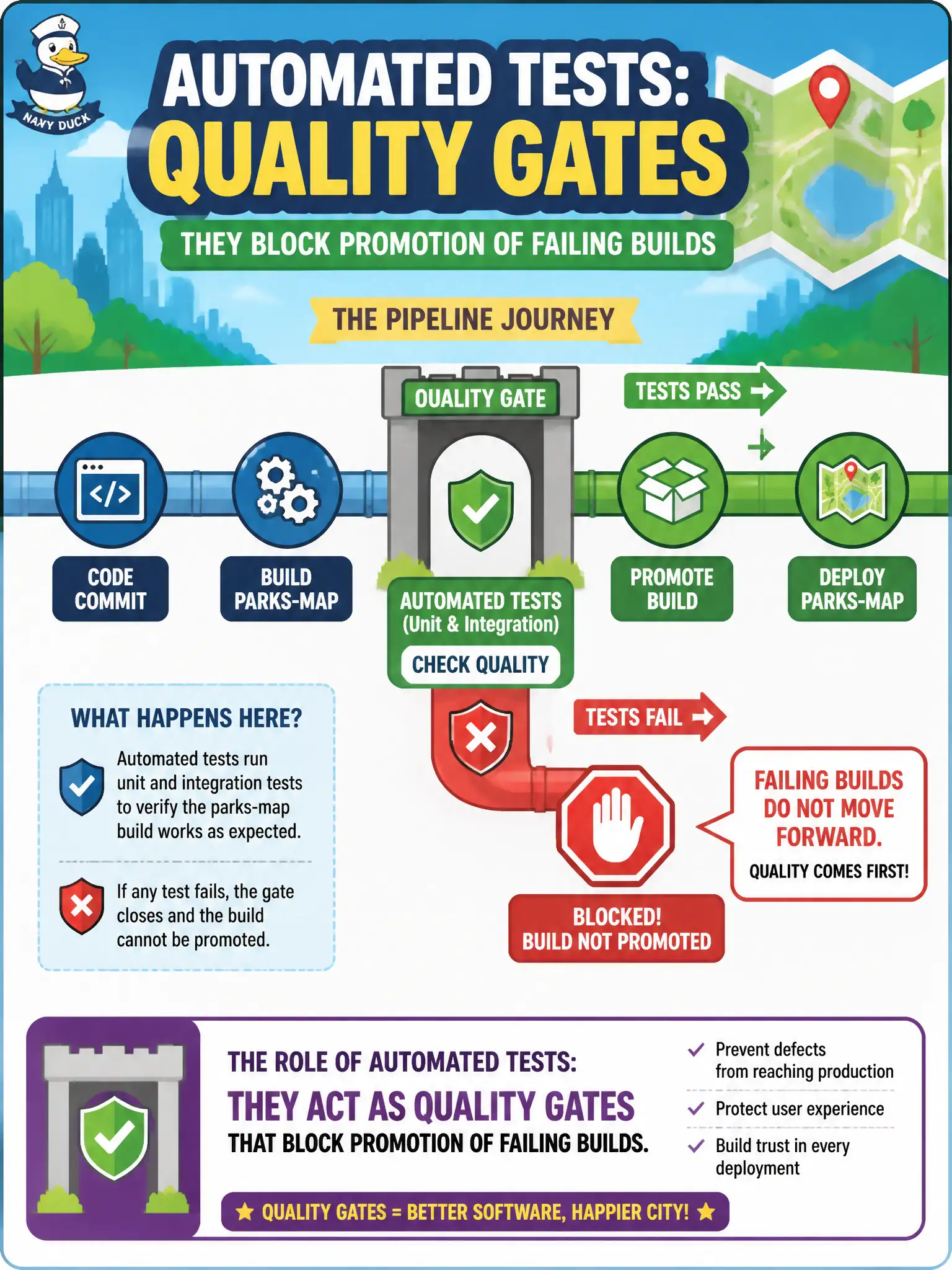
Failed tests are the red light at the intersection—don’t roll the build into the next environment. Automated unit and integration checks catch broken logic before citizens hit it. Green means go; red means fix, not force-promote.
Full Explanation
When the city's pipeline refuses to promote a parks-map build because unit or integration tests fail, those automated tests act as quality gates that block promotion of failing builds. Gates protect citizens from defective releases by stopping bad artifacts before they reach staging or production map services. Automated tests do not permanently delete the Git remote after any assertion error. They do not replace infrastructure security groups with unit-test mocks in production. They do not guarantee zero cloud spend regardless of instance size—quality gates address correctness, not FinOps ceilings. Exam caveat: flaky tests erode gate trust; municipal teams should fix or quarantine flakes quickly while keeping genuine failures blocking, or engineers will pressure to bypass the pipeline. Operational check: deliberately fail a unit test on a feature branch, confirm promotion stops, fix and re-run to green, verify staging only receives passing artifacts, and document required suites for parks-map in the pipeline README. In municipal cloud operations, record the chosen control and the rejected alternatives in the change or incident ticket so future on-call staff understand which failure modes were avoided for city services. Re-validate after the next maintenance window that the same decision still holds under current provider limits, identity bindings, and application versions used by the civic platform team.