
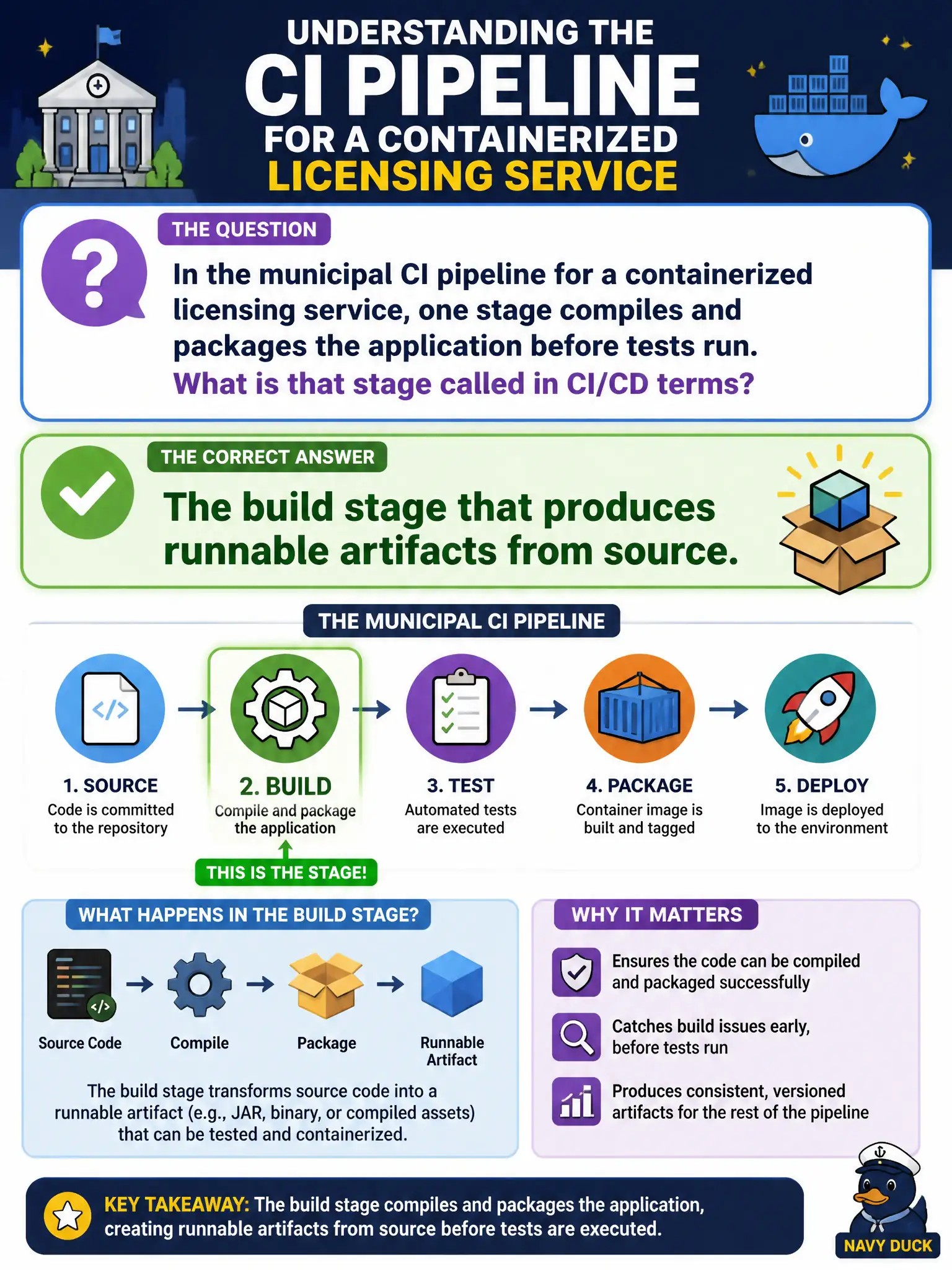
In the municipal CI pipeline for a containerized licensing service, one stage compiles and packages the application before tests run. What is that stage called in CI/CD terms?
Select an answer to reveal the explanation.
Short Explanation
Build is the kitchen: take source, cook up a runnable package or image. Tests come after you’ve actually produced something to run. No build stage means you’re promoting vibes, not artifacts.
Full Explanation
In the municipal CI pipeline for a containerized licensing service, the stage that compiles and packages the application before tests run is the build stage that produces runnable artifacts from source. Build converts a repository revision into a versioned image or package that later test and deploy stages consume for city services. A cost anomaly chargeback reconciliation stage is FinOps work, not compiling the licensing service. A physical badge-printer firmware flash stage is hardware operations outside this application pipeline. A DNS TTL extension stage for public websites is a network change, not an application packaging stage. Exam caveat: pipeline stage names vary by tool, but Cloud+ expects recognition that build precedes test and deploy and yields retained artifacts rather than only running untracked scripts on a laptop. Operational check: inspect the licensing pipeline, confirm a build job emits a tagged container image or package, ensure tests and deploys pull that artifact from the municipal registry, and record the image digest on the release ticket. In municipal cloud operations, record the chosen control and the rejected alternatives in the change or incident ticket so future on-call staff understand which failure modes were avoided for city services. Re-validate after the next maintenance window that the same decision still holds under current provider limits, identity bindings, and application versions used by the civic platform team.