
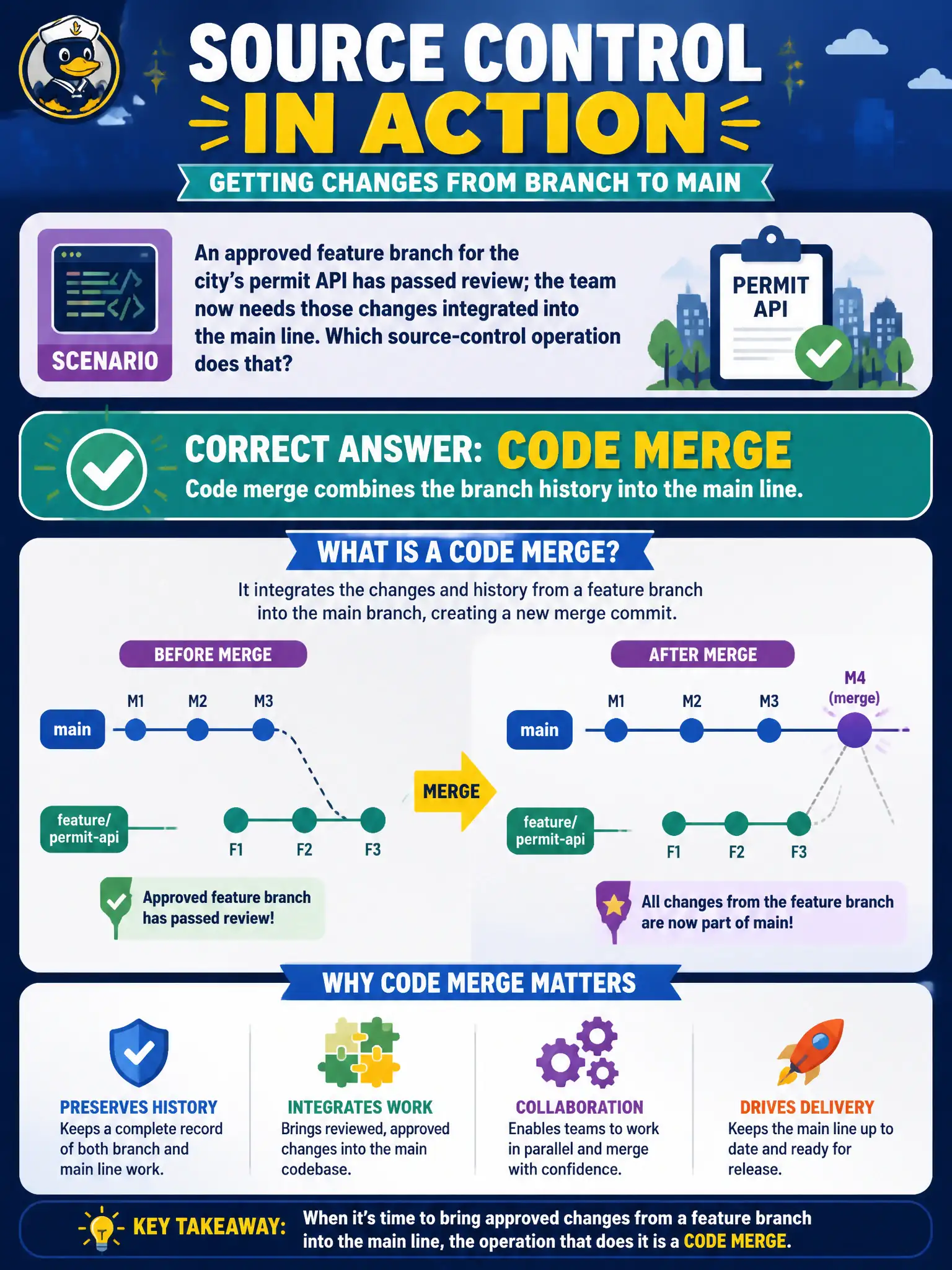
An approved feature branch for the city’s permit API has passed review; the team now needs those changes integrated into the main line. Which source-control operation does that?
Select an answer to reveal the explanation.
Short Explanation
Merge is how the feature branch moves into the family photo—main. After review, merge stitches the approved work into the shared line everyone deploys from. It’s integration, not exile or log archiving.
Full Explanation
When an approved feature branch for the city's permit API has passed review and the team needs those changes integrated into the main line, the source-control operation is a code merge that combines the branch history into main. Municipal delivery pipelines commonly treat a successful merge to the protected main branch as the signal that validated work may proceed into staging and production deploy stages. Detaching CI runners from the repository permanently does not integrate feature work into main. Archiving object storage logs into the Git notes field only is unrelated to bringing application commits onto the shared line. Revoking developer laptops' network access after each release is an access-control action, not a merge. Exam caveat: organizations may standardize on merge commits, squash merges, or rebase-and-merge; the concept under test is integrating reviewed work into the shared mainline, not a particular merge-commit shape. Operational check: after required approvals and green CI, merge to main, confirm the pipeline triggers, tag the release if that is the civic convention, update release notes with the merge identifier, and verify staging promotion references the merged revision of the permit API.