
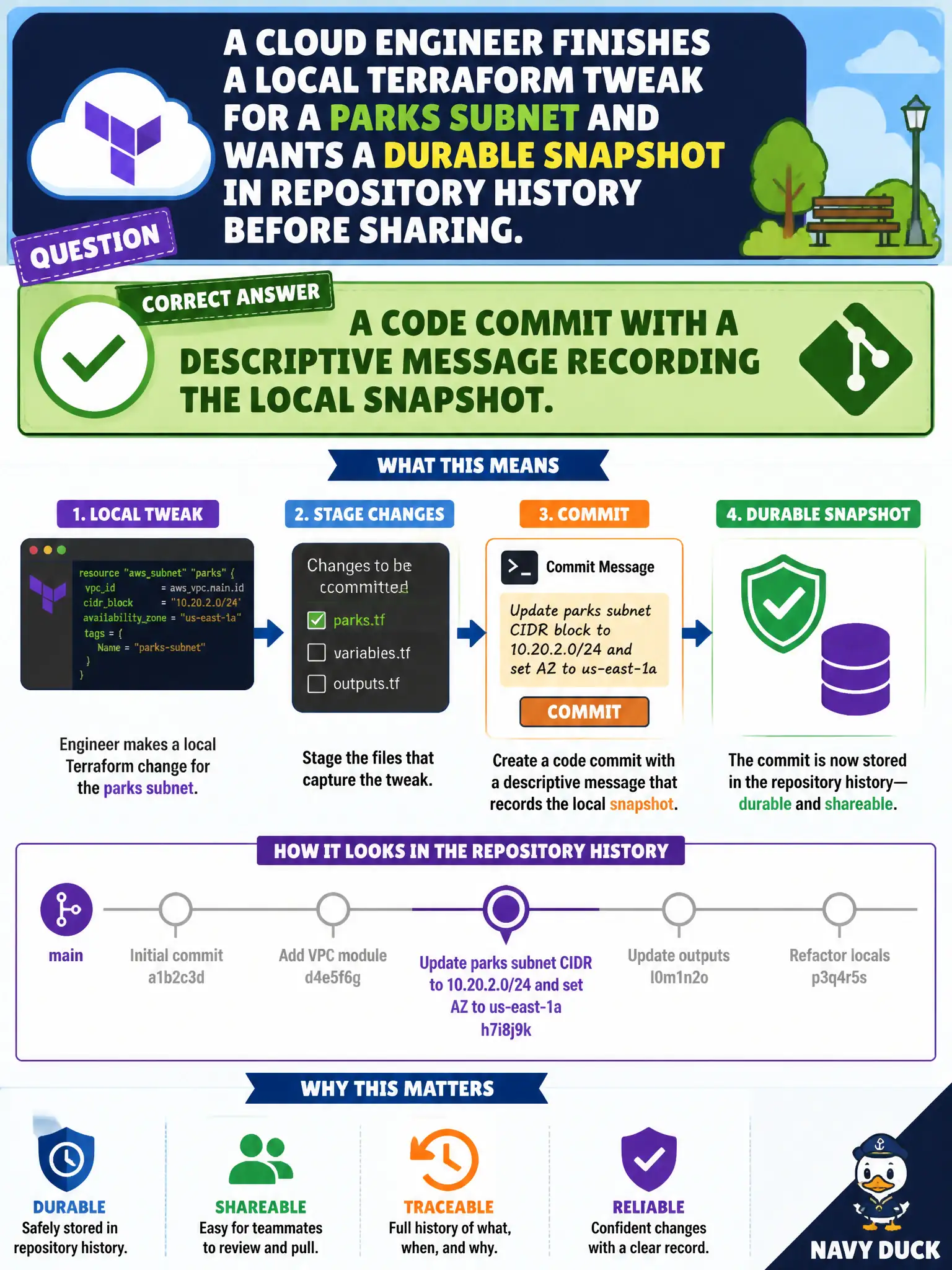
A cloud engineer finishes a local Terraform tweak for a parks subnet and wants a durable snapshot in repository history before sharing. What should they create?
Select an answer to reveal the explanation.
Short Explanation
A commit is a labeled snapshot: ‘here’s the parks subnet tweak’ with a message you can find later. Untracked scratch files and silent applies vanish from history. Commit first, then share—future you will say thanks.
Full Explanation
A cloud engineer who finishes a local Terraform tweak for a parks subnet and wants a durable snapshot in repository history before sharing should create a code commit with a descriptive message recording the local snapshot. That commit is the atomic, attributable unit of source-control history before pushes, reviews, or merges for municipal infrastructure-as-code. An untracked scratch file left outside any repository will not appear in audits, rollbacks, or peer review. A production apply run without any repository record creates undocumented drift between live cloud state and the code the city believes it manages. A deleted branch name reused as a password vault confuses version control with secrets management and is not a durable code snapshot. Exam caveat: civic contribution standards should reject empty or nonsense commit messages; clear messages speed incident response when engineers must reconstruct who changed a subnet definition and why. Operational check: stage only the intended Terraform files, commit with a clear parks-subnet message, run git show to confirm the diff, then push or open a pull request before any production apply, and store the commit SHA on the municipal change ticket.