
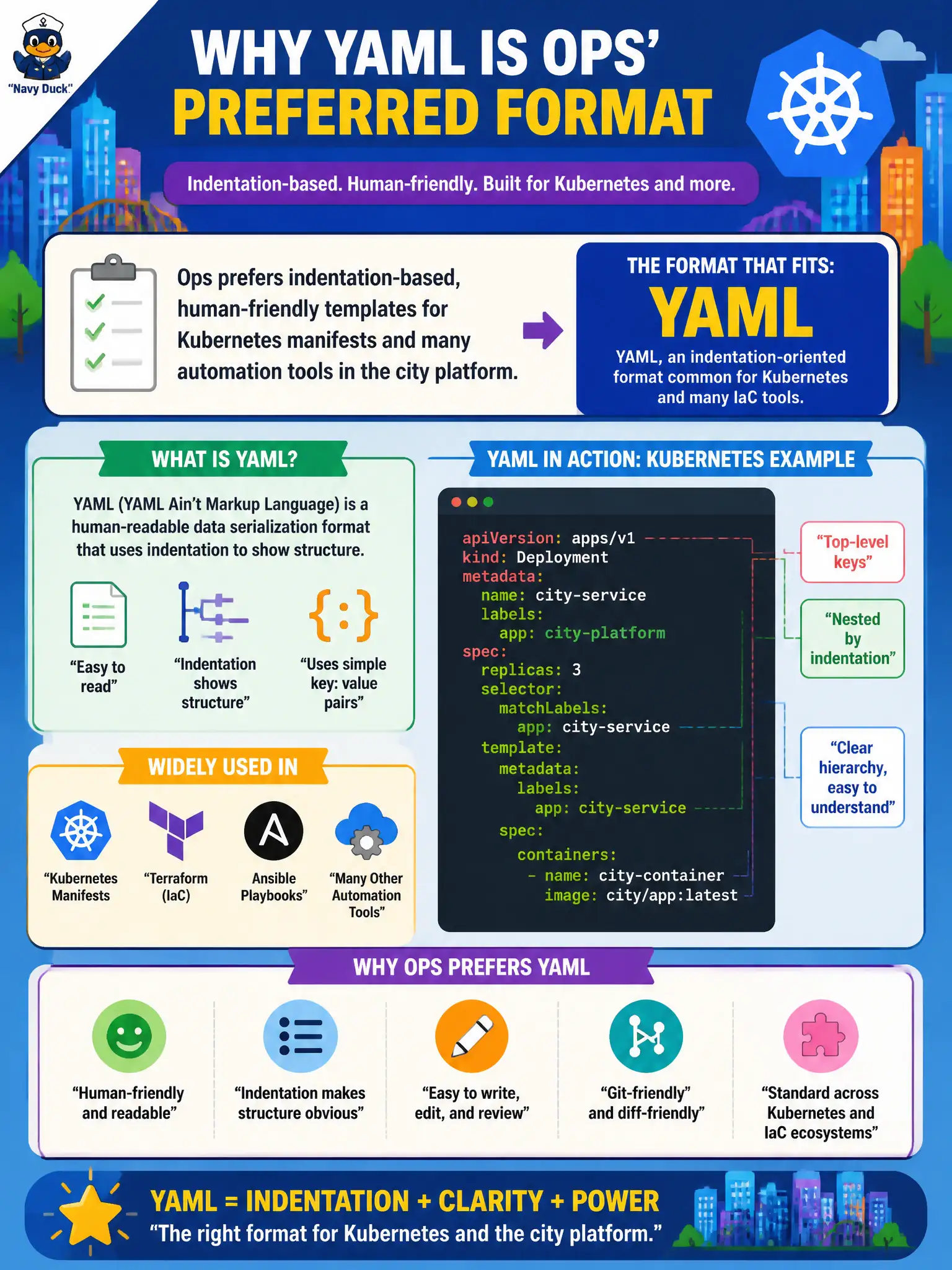
Ops prefers indentation-based, human-friendly templates for Kubernetes manifests and many automation tools in the city platform. Which format fits that preference?
Select an answer to reveal the explanation.
Short Explanation
YAML is the indented, people-friendly cousin that Kubernetes manifests and lots of ops tools love. If you are counting spaces instead of braces, you are probably in YAML land.
Full Explanation
YAML is an indentation-oriented, human-friendly serialization format commonly used for Kubernetes manifests and many automation tools on city platforms. Preferring indentation-based templates for those workloads selects YAML. Proprietary spreadsheet macros that cannot be diffed in Git fail collaboration and review. Base64-only strings with no structural hierarchy fail the human-friendly structured-template requirement. Raw Ethernet frames stored as configuration source fail entirely. Exam caveat: Cloud+ may contrast YAML and JSON; YAML’s hallmark is indentation-based hierarchy favored for Kubernetes and many IaC tools. Operational check: enforce linters for indentation and tabs versus spaces, render dry-runs before apply, and store manifests in Git with reviewers who understand YAML anchors if used; keep secrets out of plain YAML in civic repos. In municipal platform operations, record the chosen control and the rejected alternatives in the change record so future on-call engineers understand the failure modes avoided for citizen services. Re-check the decision after the next provider feature change or compliance update to ensure the same answer still holds for the city's estate. Confirm monitoring, access reviews, and backup coverage still align with the selected approach before closing the civic hypercare period.