
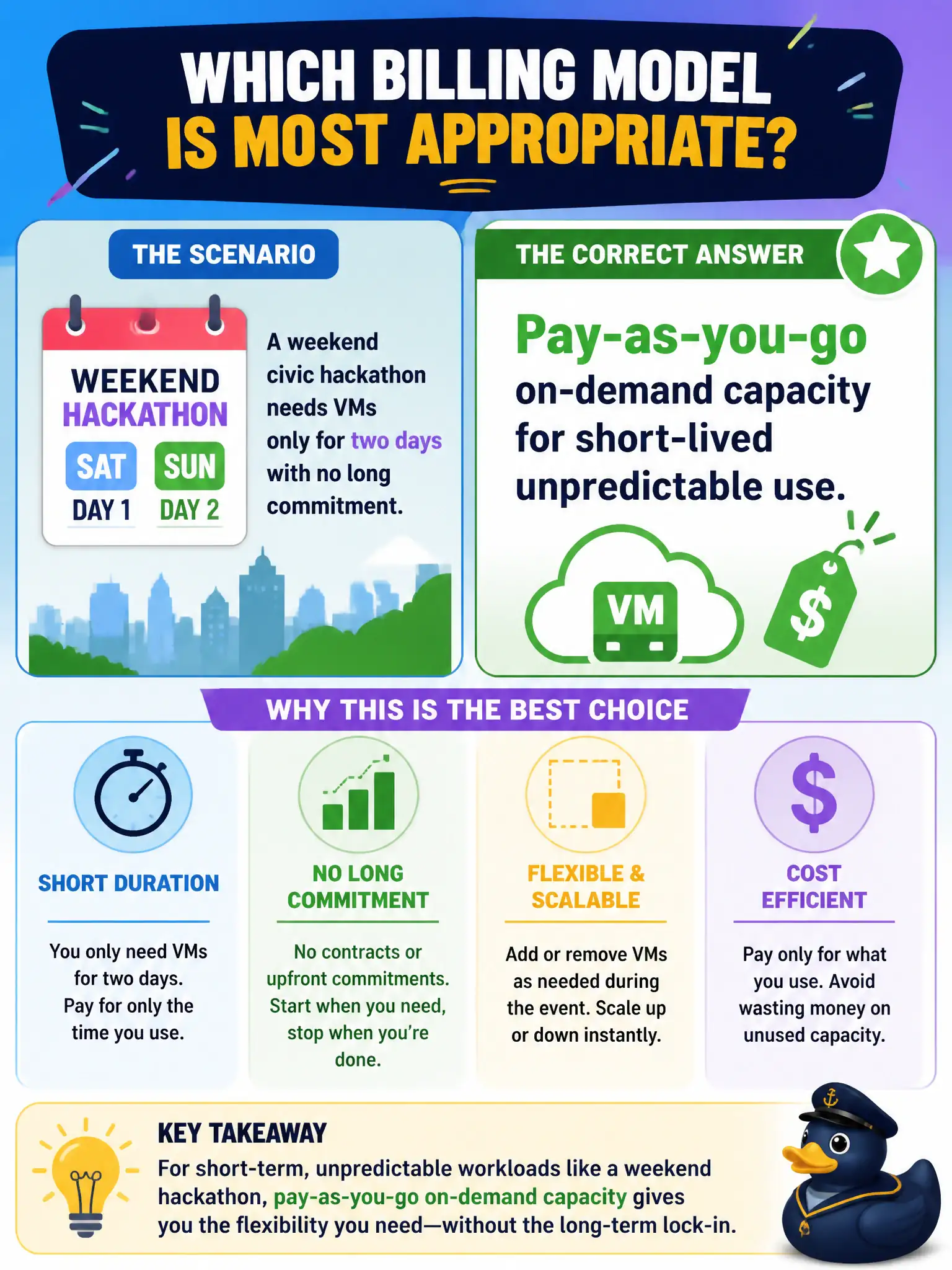
A weekend civic hackathon needs VMs only for two days with no long commitment. Which billing model is most appropriate?
Select an answer to reveal the explanation.
Short Explanation
A two-day hackathon is a weekend rental car—pay for the hours you drive, then turn it in. Multi-year reserved seats would be silly. On-demand keeps the invoice aligned with the event.
Full Explanation
Pay-as-you-go on-demand capacity bills for what you consume without a long-term commitment, which fits short-lived, unpredictable needs such as a weekend civic hackathon that only requires VMs for two days. Leaders should avoid overbuying term capacity they will not use after demos, judging, and teardown end. A three-year reserved instance purchase sized for peak hackathon CPU locks finance into unused commitment after the weekend and invents a multi-year liability for a two-day event. A dedicated host lease that remains allocated empty for the next quarter wastes budget relative to a two-day need and over-isolates ephemeral workloads. Always-on reserved GPUs that continue billing after the event ends similarly mismatch the short duration and may far exceed the civic value of the hackathon itself. Exam caveat: match pricing model to duration and interruptibility—on-demand for brief events, reserved for steady 24/7 systems, spot for flexible batch that can restart when reclaimed. Operational check: provision hackathon VMs on on-demand rates with clear owners, set budget alerts and auto-shutdown timers for Sunday night, snapshot any projects the city will keep, terminate remaining instances promptly, and confirm the billing console shows no lingering reserved or dedicated charges from the event.