
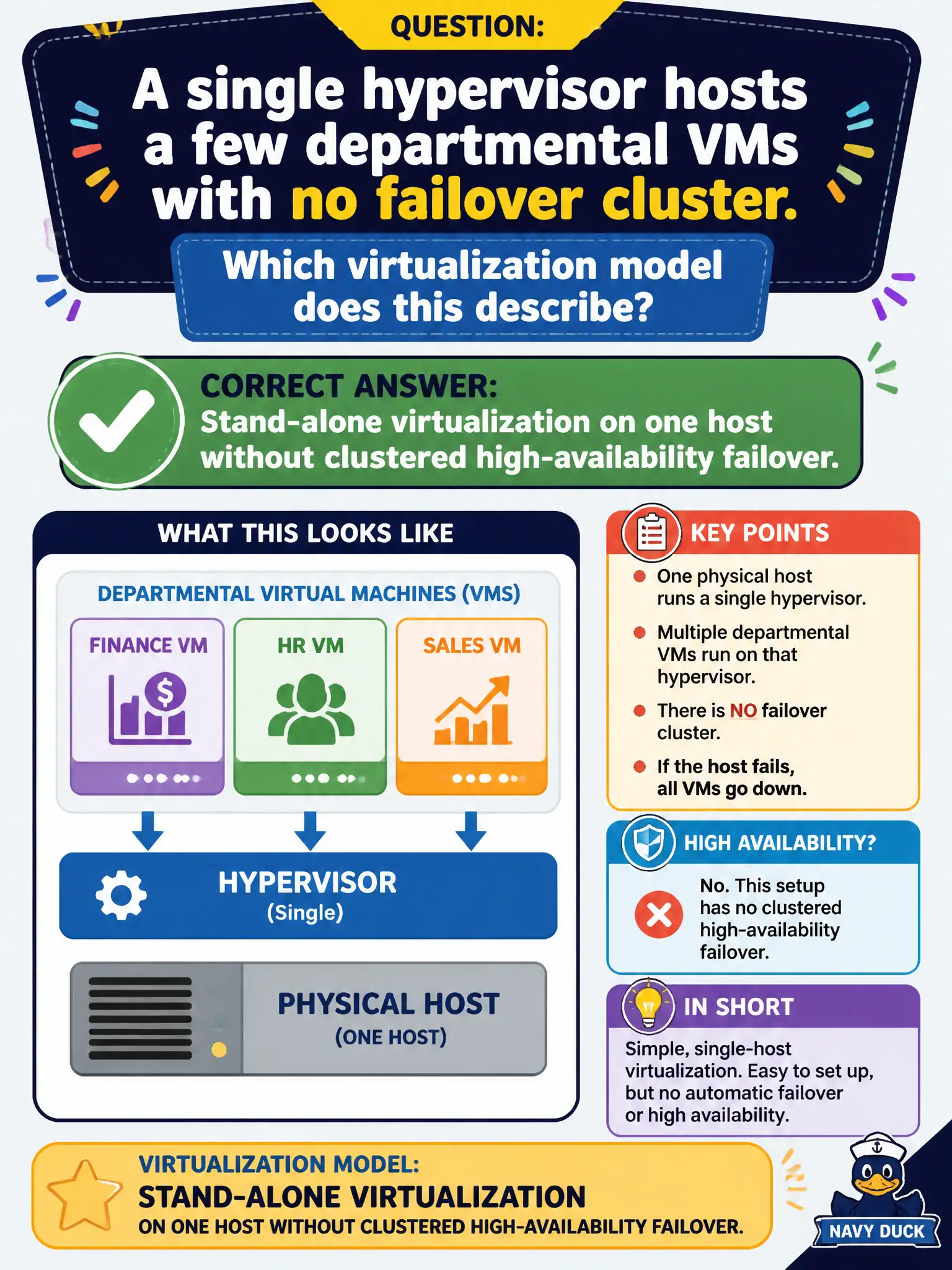
A single hypervisor hosts a few departmental VMs with no failover cluster. Which virtualization model does this describe?
Select an answer to reveal the explanation.
Short Explanation
One hypervisor, a handful of VMs, no cluster buddies—that is stand-alone virtualization. Fine for a quiet department lab; not the same as automatic failover pools. Know the difference before promising five-nines.
Full Explanation
Stand-alone virtualization runs virtual machines on a single hypervisor host without a clustered high-availability fabric that can restart those VMs automatically on another server. A single hypervisor hosting a few departmental VMs with no failover cluster matches that model and accepts host failure as a longer outage unless backups or manual recovery intervene. A stretched metro cluster with automatic cross-site VM restart describes clustered HA spanning facilities, not stand-alone virtualization. Multi-cloud Kubernetes federation schedules containers across regions and is a different platform model entirely. An always-on hot site that continuously mirrors every VM describes an elevated DR posture beyond a lone unclustered host. Exam caveat: stand-alone hypervisors remain common in small municipal pockets, but Cloud+ contrasts them with clustered HA whenever the stem demands automatic restart on another host after failure. Operational check: inventory which departmental VMs still sit on stand-alone hosts, ensure backup and restore SLAs match business tolerance, schedule host maintenance carefully, monitor host health aggressively, and plan migration to clustered pools for any service that cannot accept host-level downtime.