
Library makerspace testers say generated procedures skip tool-safety checks they always perform, so the prompt is updated to require that detail level. Which refinement practice is this?
Select an answer to reveal the explanation.
Short Explanation
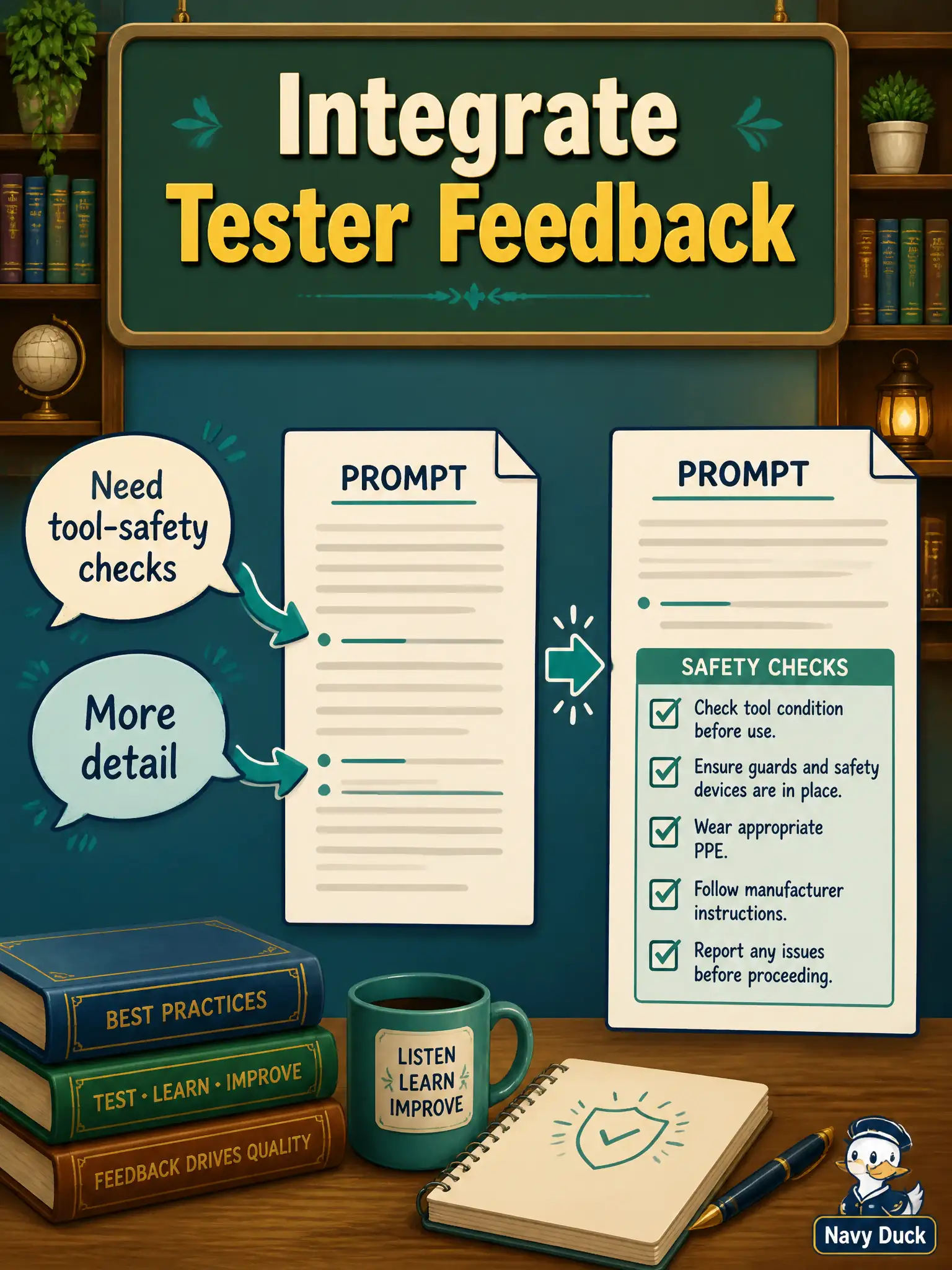
Testers said “you skipped our safety checks”—so bake that detail into the prompt. That’s integrating user feedback on usefulness.
Full Explanation
When library makerspace testers say generated procedures skip tool-safety checks they always perform, so the prompt is updated to require that detail level, the refinement practice is integrating tester feedback on usefulness and clarity—such as required detail level—into the prompt. Civic makerspace safety depends on procedures that match how public patrons must be protected, not merely fluent steps. Replacing tester feedback with metamorphic testing of a woodshop vision model fails by concept and ignores the usefulness complaint. Ignoring usefulness comments because fluency scores looked high fails overtrust in style metrics. Publishing weak procedures to stakeholders without changing the prompt fails stewardship. Exam caveat: human usefulness/clarity feedback is a first-class refinement input. Operational check: capture makerspace safety omissions in a feedback log, amend the prompt’s required detail checklist, regenerate procedures, and have a librarian-safety steward sign that civic tool-safety steps are present before publishing. Retain the municipal audit note so later testers can see why the decision protects public service quality and fairness. Retain the municipal audit note so later testers can see why the decision protects public service quality and fairness.