
A farmers-market stall-lottery script pack looks neat in review, yet half the scripts fail to start because of syntax or output-format errors. Which metric names this problem?
Select an answer to reveal the explanation.
Short Explanation
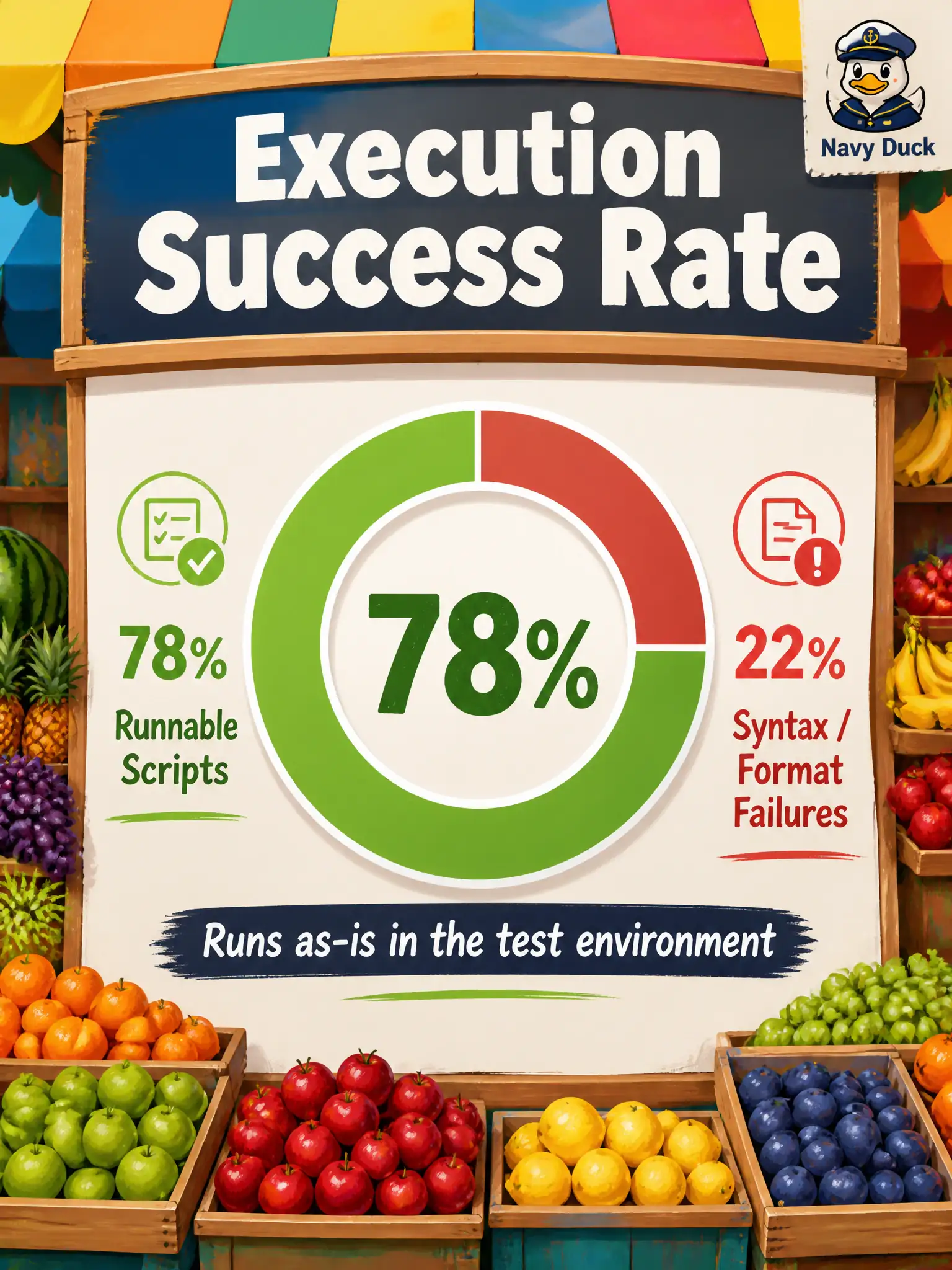
If half the scripts won’t even start, the score that hurts is execution success rate—runnability in the real test environment, not how pretty they looked.
Full Explanation
When a farmers-market stall-lottery script pack looks neat in review yet half the scripts fail to start because of syntax or output-format errors, the metric that names the problem is execution success rate—the proportion of generated test artefacts that can be executed successfully as-is. Civic lottery fairness testing cannot proceed on scripts that never launch, no matter how tidy they look. Product defect find-rate for business-rule bugs fails here because the immediate issue is artefact executability, not how many product defects were found. Measuring relevance only by whether titles rhyme fails as a frivolous proxy. Defining precision as training dataset size fails by swapping a generation metric for model biography. Exam caveat: execution success rate is about runnable artefacts, distinct from finding bugs in the market application. Operational check: dry-run the generated civic scripts, tally as-is starts, fix format/syntax via prompt constraints, and block promotion until execution success meets the stall-lottery team’s gate. Retain the municipal audit note so later testers can see why the decision protects public service quality and fairness. Retain the municipal audit note so later testers can see why the decision protects public service quality and fairness.