
A museum audio-guide checkout button id changed and an API login field was renamed. Which GenAI regression ask addresses that minor drift?
Select an answer to reveal the explanation.
Short Explanation
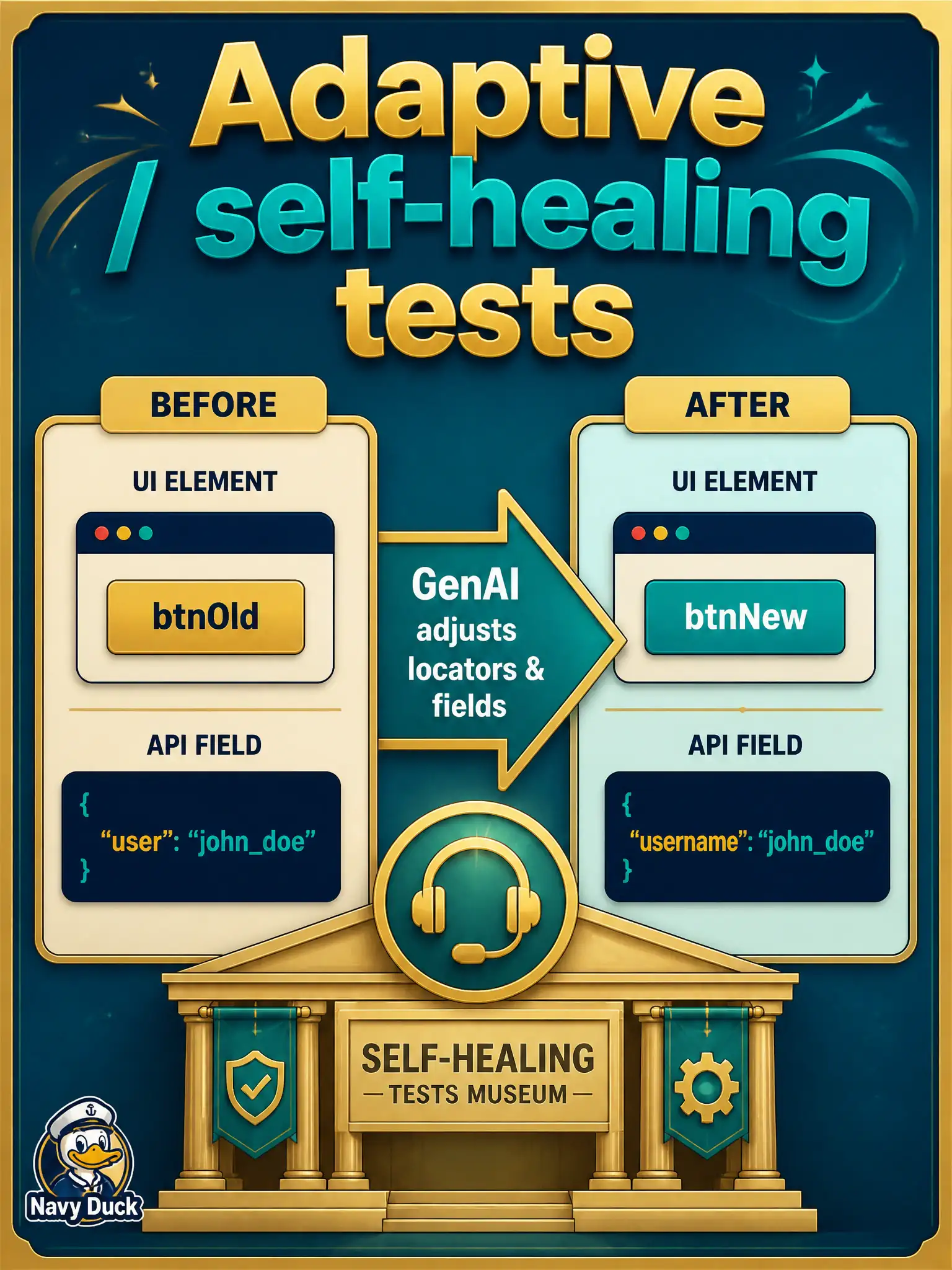
Renamed buttons and fields are small stage-prop moves, not a new play. Prompt GenAI to adapt locators or API request fields so minor UI/API drift does not fail the suite. That is self-healing regression help—not a marketing rewrite.
Full Explanation
When a museum audio-guide checkout button id changes and an API login field is renamed, the fitting GenAI regression ask is to adjust locators or request fields so minor UI or API drift does not break the suite—adaptive or self-healing maintenance. Civic museum operations need suites that absorb small interface renames without abandoning coverage of public guest workflows. Freezing all locators forever and failing on any id change without adaptation fails practicality and turns trivial redesigns into permanent red builds that block exhibits. Asking only for a new marketing slogan fails because branding is unrelated to locator or field maintenance for checkout. Requesting jailbreak payloads because locator drift means the LLM is under attack fails by concept: UI/API drift is application change, not evidence of a model jailbreak scenario. Exam caveat: GenAI-assisted self-healing addresses minor selector/field drift, not requirement rewrites or adversarial LLM testing. Operational check: provide old versus new ids/field names, let GenAI propose locator and request updates, run the museum suite in staging, have a steward approve civic script diffs, and monitor flaky heal suggestions that weaken assertions before promoting to the protected branch.