
A city-park picnic-permit release changed only the rain-date rule. Which GenAI regression ask best focuses the suite?
Select an answer to reveal the explanation.
Short Explanation
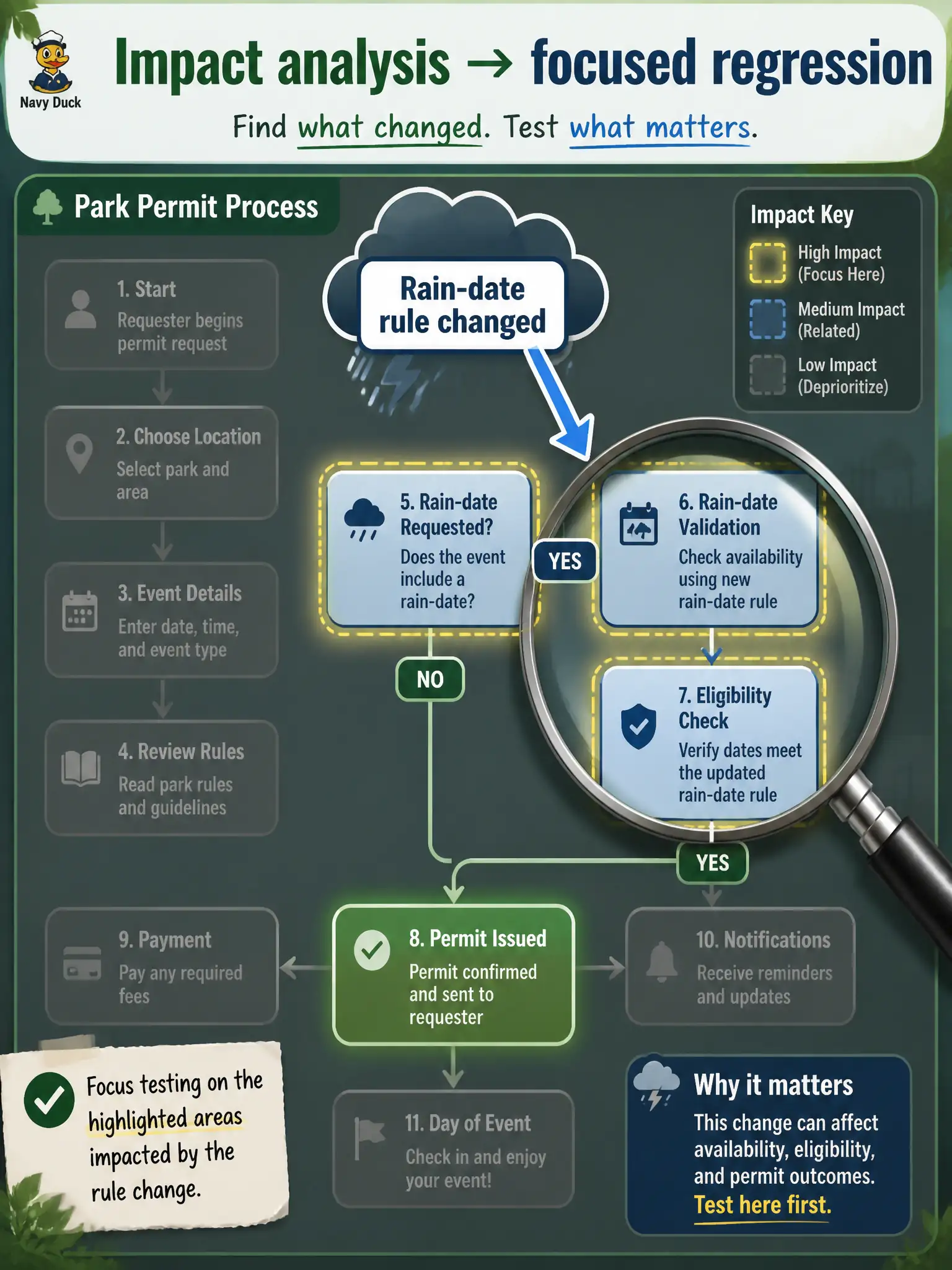
A single rain-date tweak is a small storm cell—aim the regression radar there. Ask GenAI for impact analysis that names high-risk areas so the suite focuses instead of boiling the ocean. Equal retesting of unrelated themes wastes the evening.
Full Explanation
When a city-park picnic-permit release changes only the rain-date rule, the best GenAI regression ask is to analyze the change and name high-risk areas so regression focuses there. Civic park permitting should concentrate scarce cycles on impacted rain-date logic and its neighbors rather than diluting signal across unrelated cosmetics. Rerunning every historical UI theme test equally while ignoring the rain-date change fails risk-based focus and wastes public QA capacity that could protect booking fairness after weather exceptions. Treating the LLM as the SUT and requesting metamorphic rain-date oracles on the model fails by concept: impact analysis targets the picnic-permit application change, not metamorphic testing of the assistant. Skipping impact analysis because any single-rule change has zero regression risk fails as false comfort—rule edits often break adjacent validation and messaging. Exam caveat: GenAI helps scope regression after change analysis, not justify blind full or empty suites. Operational check: feed the rain-date diff and suite inventory to GenAI, review named high-risk areas with parks staff, select targeted civic cases plus a thin smoke set, record the impact rationale in the release checklist, and re-run focused packs after hotfixes.