
An animal-shelter adoption suite has dependencies (create animal before adopt) and limited evening staff. Which GenAI ask best supports execution planning?
Select an answer to reveal the explanation.
Short Explanation
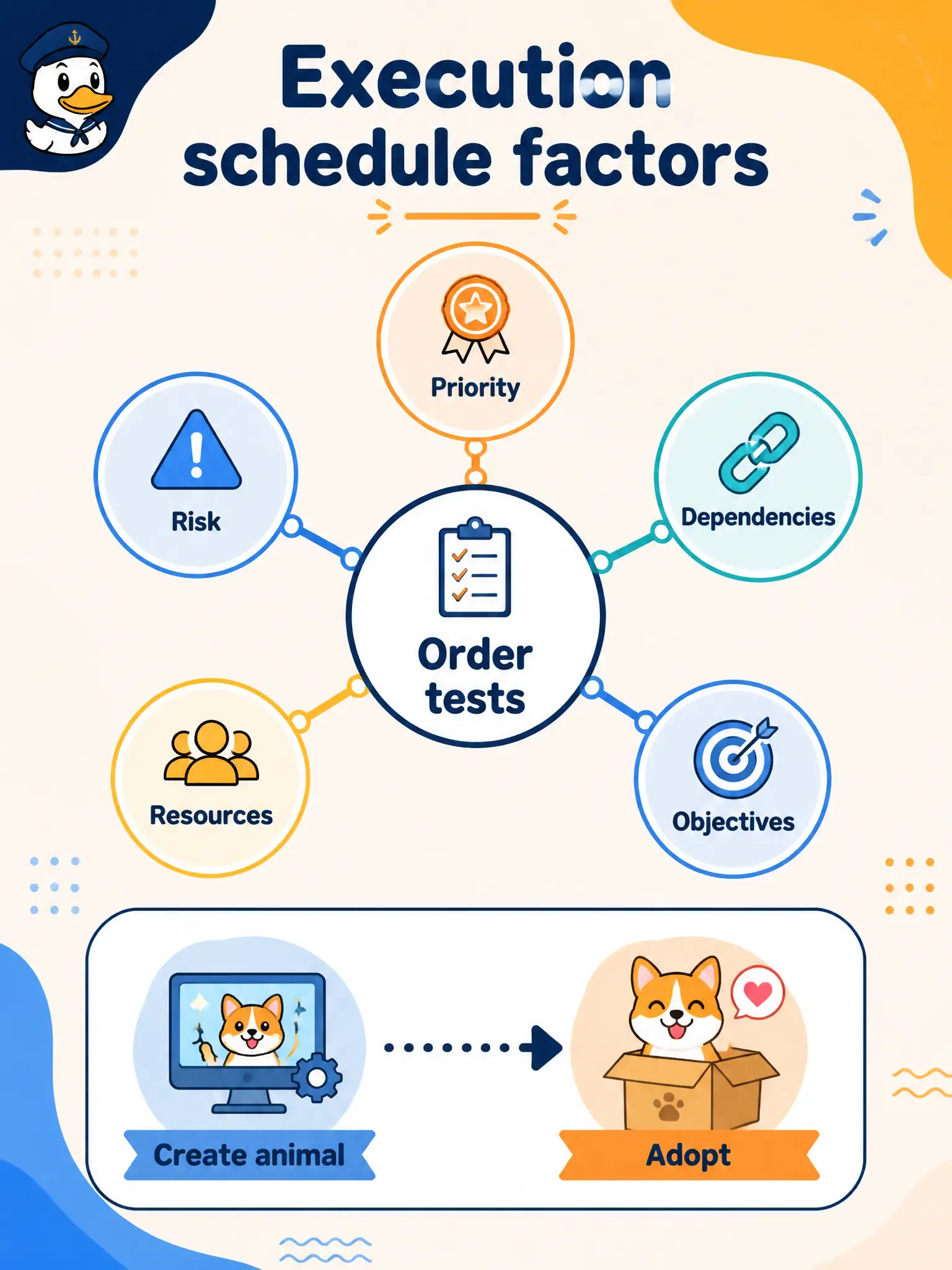
Shelter evening shifts are short, and “create animal” must come before “adopt.” Ask GenAI to schedule and prioritize using risk, dependencies, resources, and objectives. Random chaos is not a plan when staff hours are limited.
Full Explanation
An animal-shelter adoption suite with create-before-adopt dependencies and limited evening staff is best supported by asking GenAI to order execution by priority, risk, dependencies, resources, and objectives. Civic shelter operations need schedules that respect data prerequisites and scarce volunteer time so public adoption flows are tested reliably. Running every case in random order to maximize chaos fails because randomness can violate dependencies and waste constrained evening windows. Ignoring dependencies because GenAI can invent missing animals at runtime fails: fabricated preconditions are not a substitute for ordered setup and can hide real integration defects. Asking only for marketing copy about adoptable pets fails because promotional text does not produce an execution plan. Exam caveat: execution-planning prompts should explicitly weigh priority, risk, dependencies, resources, and objectives together. Operational check: provide GenAI the shelter suite with dependency notes and staff hours, review the proposed order for create→adopt sequencing, adjust for high-risk payment paths, publish the evening civic run sheet only after lead tester approval, and re-check dependencies if animal records were purged overnight.