
A blood-drive appointment tester first asks the model to draft a prompt, inserts two house examples into that draft, then splits “data then cases” with a check in between. Which statement best describes this approach?
Select an answer to reveal the explanation.
Short Explanation
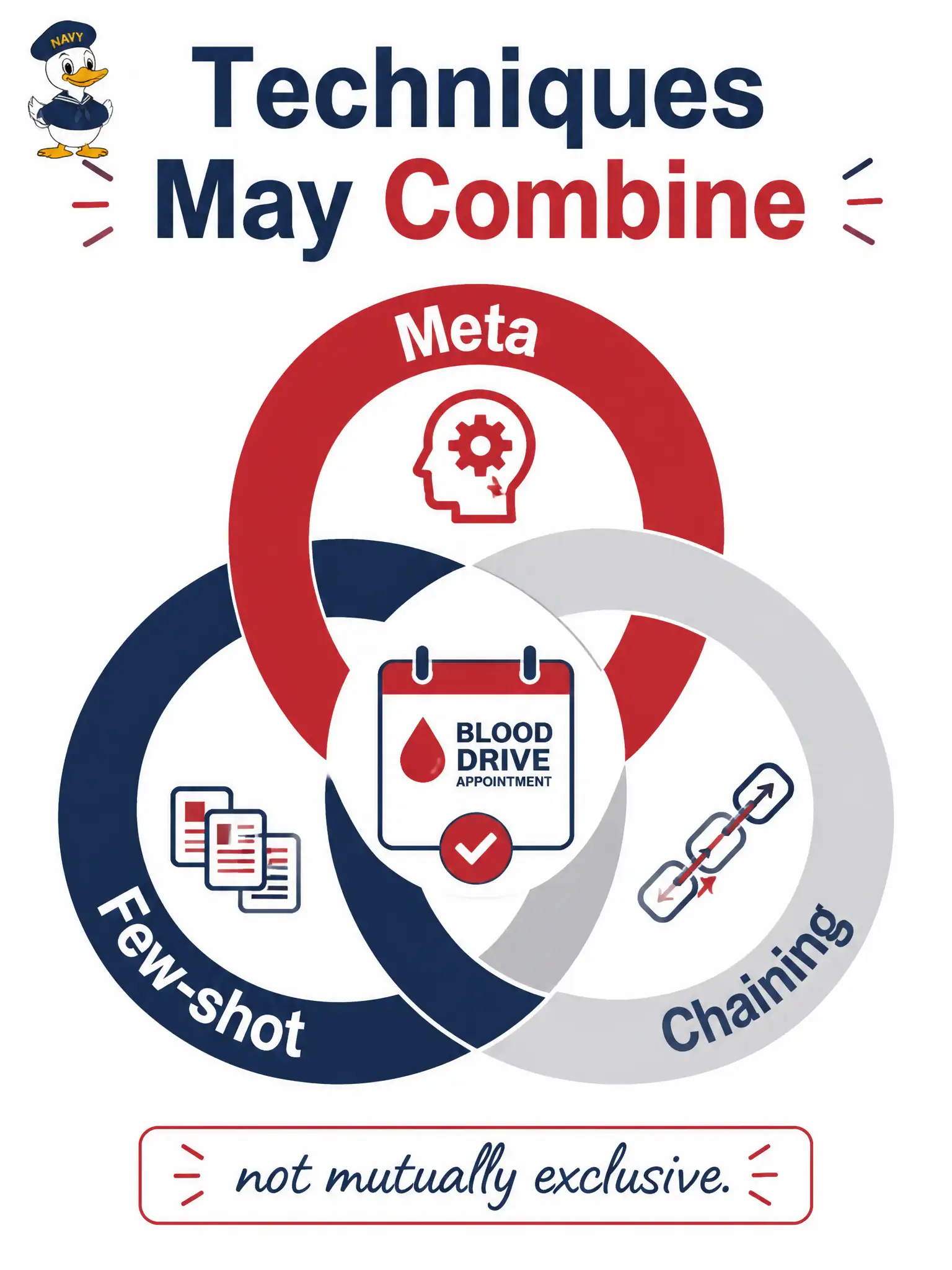
Techniques are tools on the same belt, not exclusive clubs. Drafting the prompt (meta), adding two house examples (few-shot), then data→cases with a check (chaining) is a valid combined workflow.
Full Explanation
In a civic blood-drive appointment workflow, official prompting techniques are complementary tools rather than mutually exclusive clubs. Asking the model to draft a prompt is meta prompting; inserting two house examples is few-shot prompting; splitting work into “data then cases” with a verification checkpoint is prompt chaining. Combining those moves in one municipal testing session is valid and often desirable because each technique addresses a different control need—structure, exemplars, and staged quality gates—while protecting public appointment integrity. Claiming only one technique may be used per session fails the concept because syllabus techniques are not exclusive licenses; mixing them does not invalidate a prompt. Asserting that examples after meta prompting convert the workflow into zero-shot fails because zero-shot means no examples; adding house examples is the opposite of zero-shot. Claiming chaining forbids earlier examples fails because chaining concerns sequenced subtasks and checks, not a ban on few-shot content in prior steps. Exam caveat: CT-GenAI items often tempt candidates to treat technique labels as single-choice radio buttons; the correct frame is purposeful combination under tester control. Operational check: for a county blood-drive suite, document which technique each stage uses, keep house examples aligned to posted policies, insert human review between chained stages, and refuse to ship cases until the checkpoint against civic appointment rules passes.