
A public-housing work-order tester pastes four example cases in one ask. A colleague instead runs “extract rules, then draft cases” as two checked steps. How do these techniques differ?
Select an answer to reveal the explanation.
Short Explanation
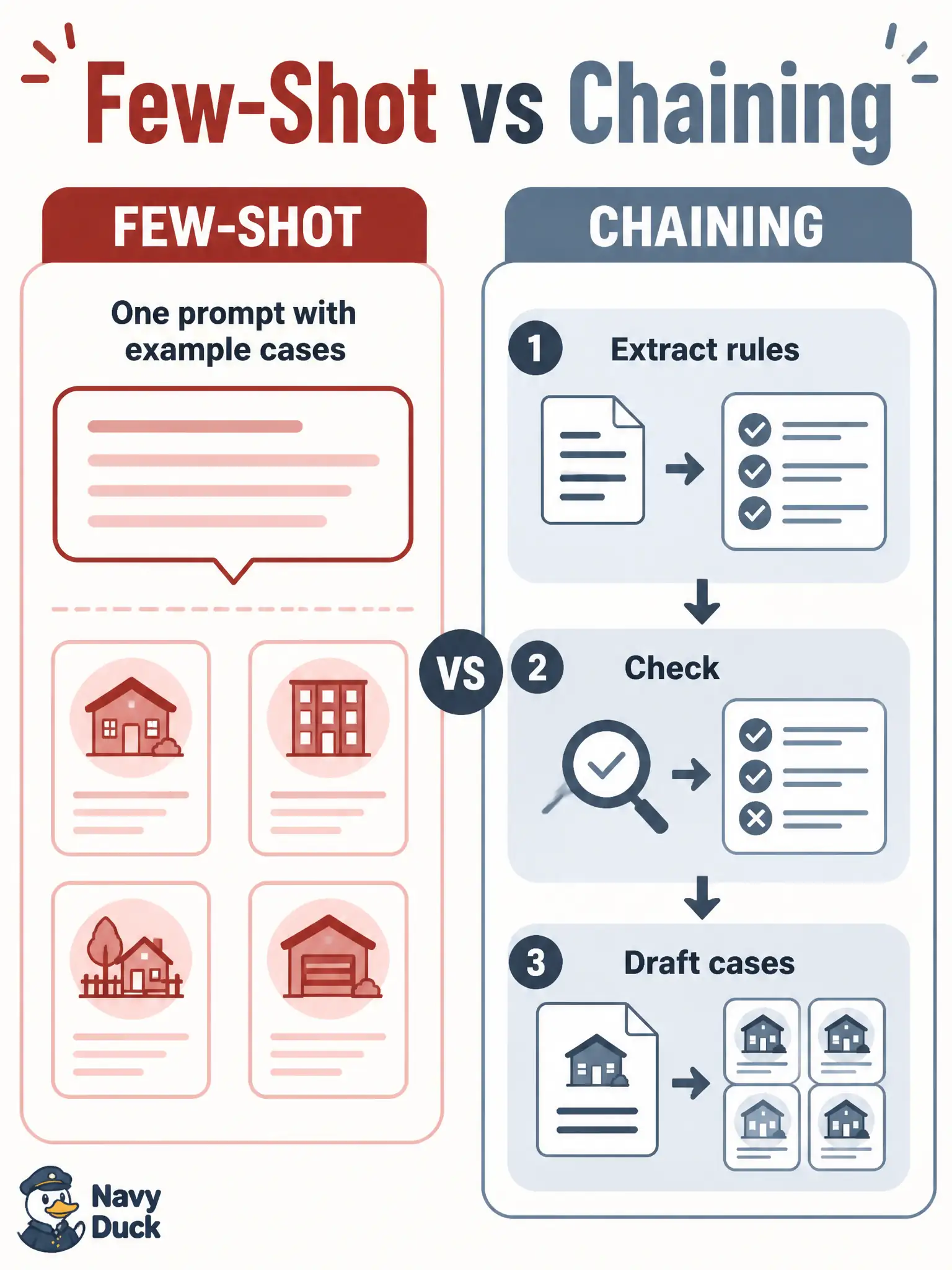
Examples in one prompt = few-shot. Decomposed steps with a check between them = chaining. Same work-order topic, two different techniques — do not conflate “several examples” with “several checked stages.”
Full Explanation
Four example cases pasted in one ask is few-shot prompting; “extract rules, then draft cases” run as two checked steps is prompt chaining. Public-housing work-order testers should distinguish example-count techniques from sequenced intermediate prompts with human checks between steps. Both can improve civic maintenance testware, but they solve different problems—style consolidation versus staged decomposition.
Calling both few-shot because each involves more than one sentence confuses sentence count with exemplar count or sequencing. Calling both chaining because any multi-part testing ask is chaining over-broadens chaining beyond intermediate checked steps. Calling four examples meta prompting and extract-then-draft zero-shot mislabels both techniques relative to CT-GenAI definitions.
Exam caveat: few-shot = multiple examples in the ask; chaining = sequenced prompts with checks between. Learn this contrast cold.
Operational check: label the four-example work-order prompt as few-shot in the guide; run extract-then-draft as two tickets with mandatory review between; prohibit training slides that merge the labels; quiz staff with this exact contrast before the next housing release.