
A community-college waitlist tester includes exactly one house-style case, then a new story. Which prompting technique is this?
Select an answer to reveal the explanation.
Short Explanation
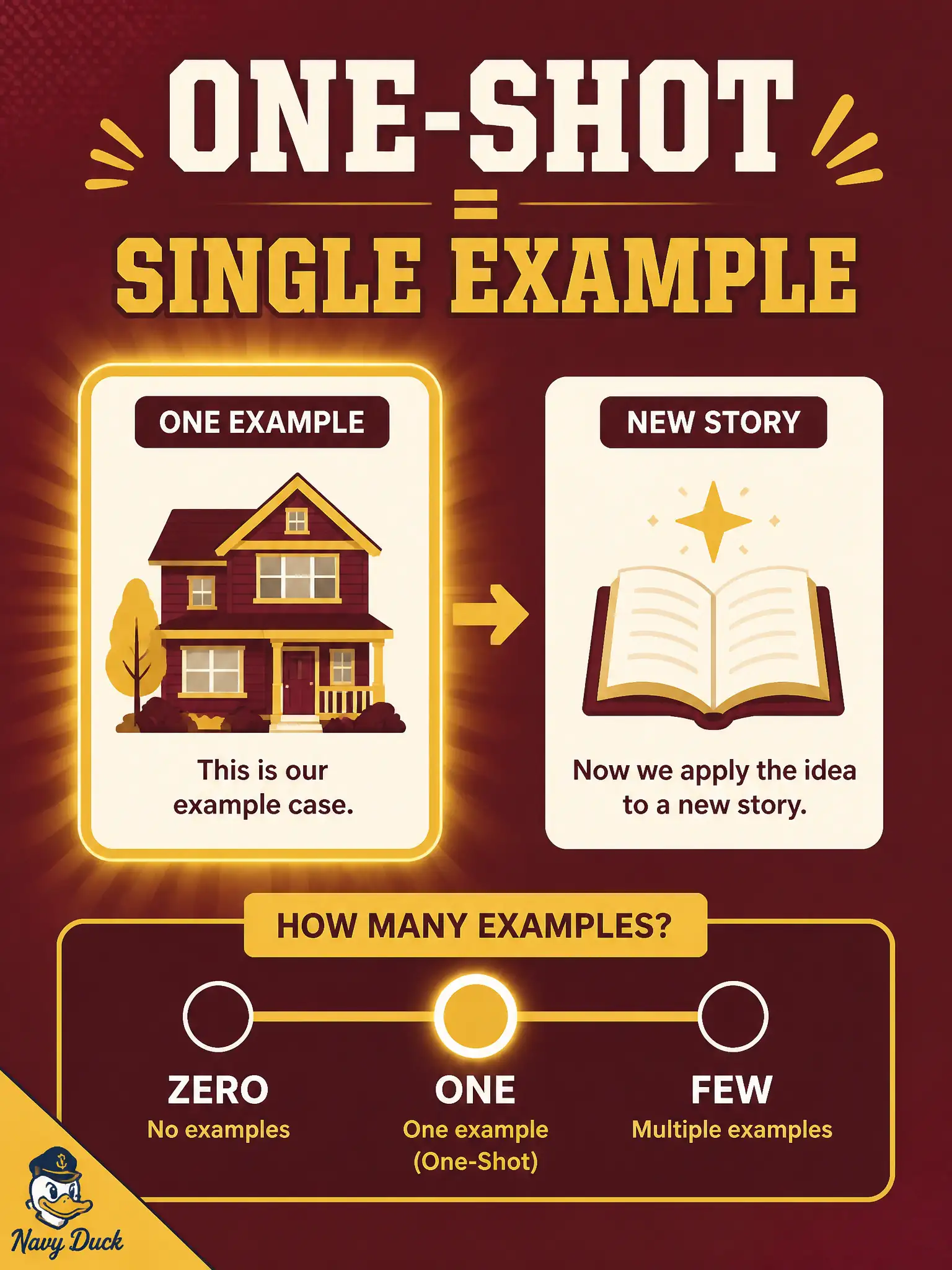
One worked house-style case before the new story is one-shot — a single demonstration of the expected pattern. Few-shot needs more than one; zero-shot needs none; meta asks for a better prompt.
Full Explanation
One-shot prompting uses a single example to demonstrate the expected result for a given input—here, exactly one house-style case before a new community-college waitlist story. Civic waitlist suites often keep one golden example to set tone and column habits without flooding the prompt window or burning context budget. The defining count is exactly one exemplar of the desired output pattern.
Few-shot requires more than one example; a single house-style case is not “multiple shots” even if the case text is long. Zero-shot means no example; one example is not treated as zero-shot. Meta prompting asks the model to rewrite the prompt; showing one case to imitate for a new story is demonstration of output pattern, not meta prompt authorship.
Exam caveat: exactly one exemplar → one-shot. Do not inflate one example into few-shot or shrink it to zero-shot on exam day or in municipal coaching.
Operational check: attach one approved waitlist case as the exemplar; generate for the new story; compare style and columns; if drift persists, escalate to few-shot with additional exemplars in the college municipal prompt pack and retest before suite import. College waitlist maintainers should document the single golden exemplar’s version so one-shot stays intentional rather than accidental.