
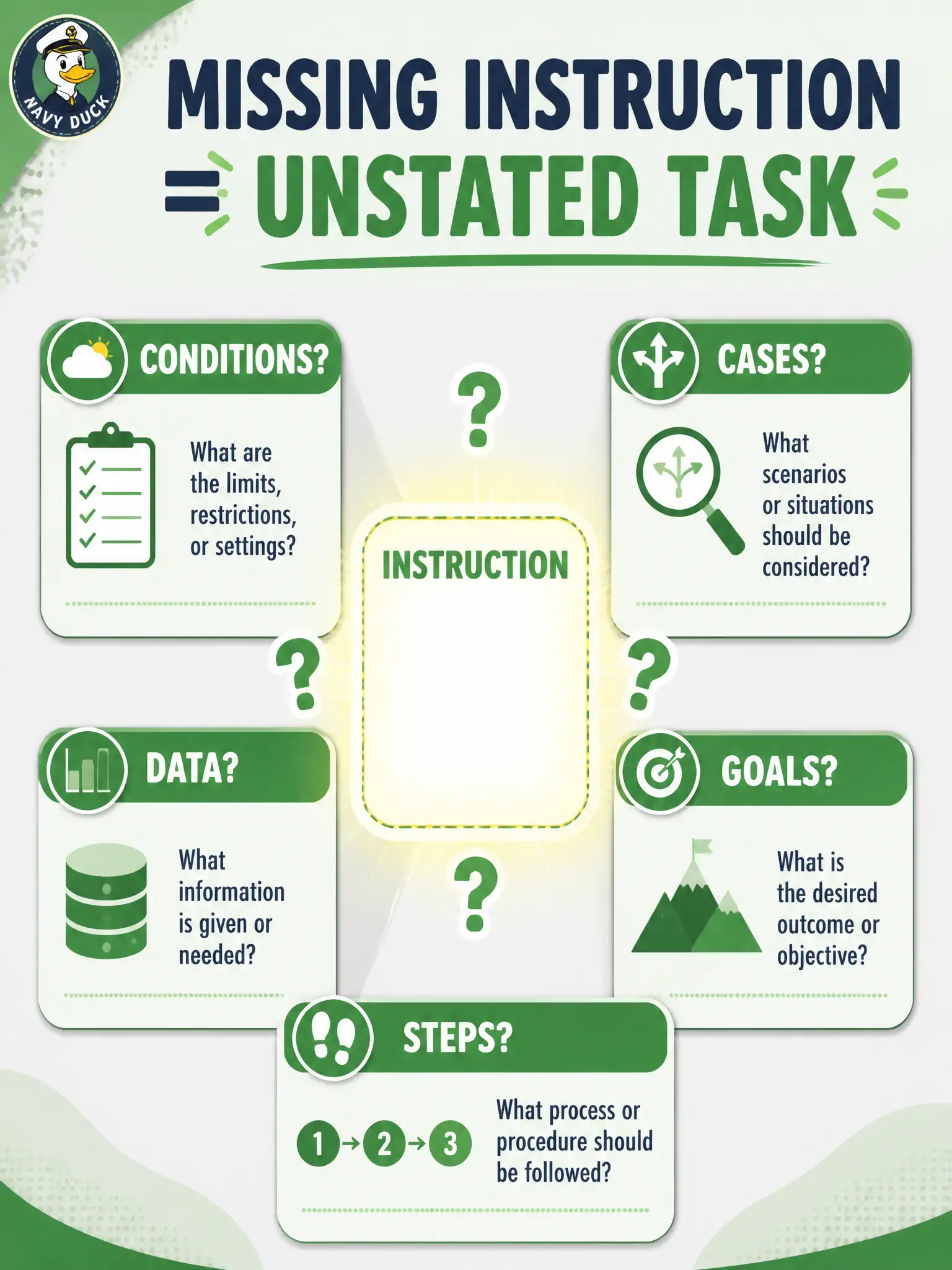
An animal-shelter adoption prompt includes role, kennel background, the story, a “no live-animal photos in output” limit, and a JSON shape — but never says whether to produce conditions, cases, or data. Which missing component left the task unstated?
Select an answer to reveal the explanation.
Short Explanation
You can dress the stage perfectly and still forget to say “go.” Role, context, story, constraints, and JSON shape were present; the imperative “produce conditions / cases / data” was not. That missing instruction leaves the task unstated.
Full Explanation
Missing Instruction left the task unstated when an animal-shelter adoption prompt included Role, kennel background Context, the story as Input data, a “no live-animal photos in output” Constraint, and a JSON Output format—but never said whether to produce conditions, cases, or data. Without an imperative task description, the model lacks a deliverable target and may wander across artefact types. Civic shelter teams must say what to produce.
Input data were present via the adoption story, so “no story attached” is false. Constraints about photos did not erase the need for a task line and should not be blamed for an unstated deliverable. Output format JSON can hold conditions, cases, or data—format alone does not choose which artefact the instruction should create.
Exam caveat: Instruction is mandatory on the six-component structure. Rich Role/Context/Input/Constraints/Format still fail when the imperative task is absent.
Operational check: add Instruction such as “draft test conditions for adoption booking as JSON objects with id and priority”; regenerate; verify the JSON matches the requested artefact type; update the shelter prompt checklist to block send without Instruction. Shelter leads should refuse to send any adoption prompt that cannot point to a single imperative Instruction sentence before GenAI runs.