
A county weigh-station draft item begins: “Open the accredited-course energy simulator and enter token counts.” Why should that stem be rejected for the written CT-GenAI bank?
Select an answer to reveal the explanation.
Short Explanation
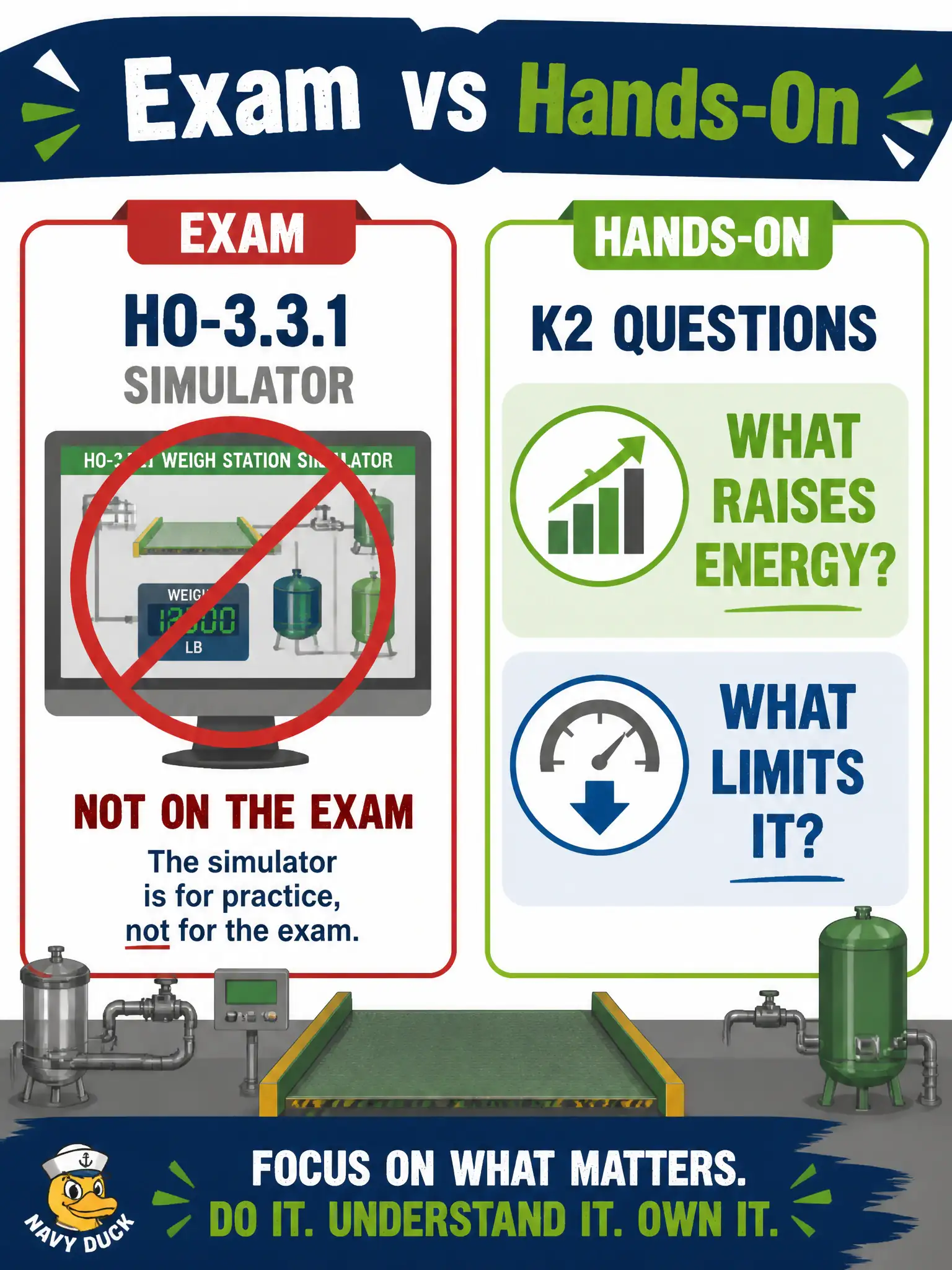
The lab tool is for class practice, not a written-exam treasure hunt. HO-3.3.1 stays out of the bank; the exam asks the K2 idea—what raises energy or what limits it. Reject stems that demand opening the simulator.
Full Explanation
County weigh-station draft items that begin “Open the accredited-course energy simulator and enter token counts” should be rejected for the written CT-GenAI bank. HO-3.3.1 simulator work is a non-examinable hands-on; written items should ask which task or usage pattern raises energy or which practice limits it.
Claiming energy topics are entirely out of syllabus scope fails—energy is in scope as K2 ideas, not as simulator operation. Claiming token counts may only appear in Chapter 4 LLMOps items fails as a blanket rule. Claiming the simulator is examinable and required on every energy question fails the hands-on/non-examinable distinction.
Exam caveat: know the practice concepts (what raises energy, what limits interactions); do not write stems that require opening HO-3.3.1.
Operational check: peer-review the written bank for simulator instructions; rewrite such stems into usage-pattern questions; keep simulator steps in lab guides only; train item writers on the non-examinable boundary. Item-writing checklists for CT-GenAI must flag any stem that instructs candidates to open HO-3.3.1 or enter token counts into a simulator, rewriting those stems into K2 usage-pattern questions. Lab manuals may keep simulator steps; the written bank may not treat them as examinable procedure.