
A municipal yard-waste tester wants to execute a freshly generated keyword script in the shared garage because it compiled cleanly. Given malicious code generation as a named risk, what is the correct stance?
Select an answer to reveal the explanation.
Short Explanation
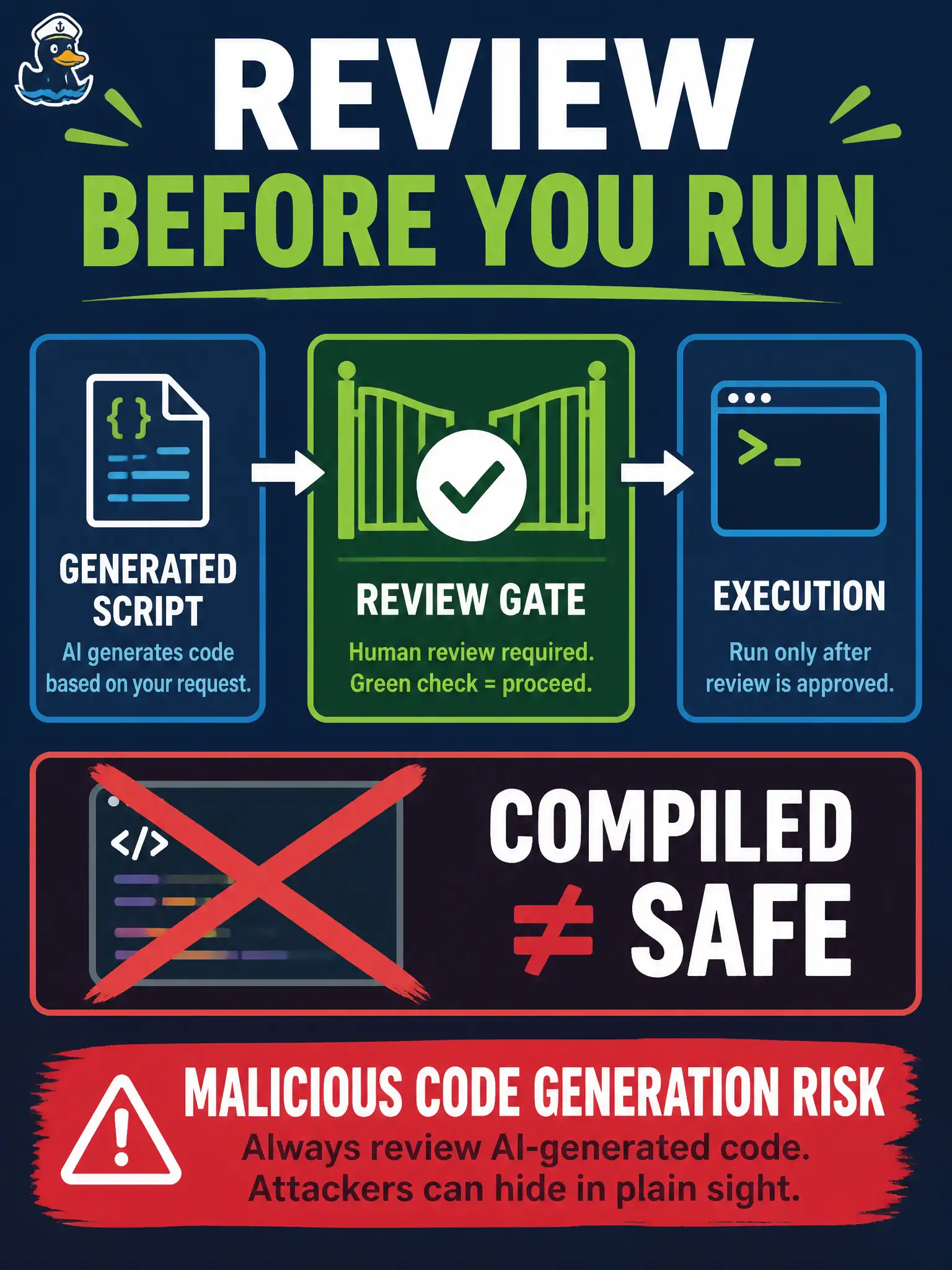
Compiling is like a door that closes — it does not mean nothing dangerous is behind it. Generated scripts still need a human or structured review before they run. Malicious code generation is why “it built” is not “it is safe.”
Full Explanation
Municipal yard-waste keyword scripts that merely compile are not thereby safe. Given malicious code generation as a named risk, the correct stance is systematic review before execution; compile success is not proof of safety. Civic garage shared runners must not become open execution points for unreviewed GenAI scripts.
Running immediately because compilation guarantees absence of harmful side effects fails by concept: compilers do not certify intent or side channels. Skipping review when temperature is low fails because temperature does not remove malware-like content risk. Executing first in production fails by using real yard-waste systems as the proving ground.
Exam caveat: “it built” never equals “it is safe to run” for LLM-generated automation in municipal environments.
Operational check: mandate peer or automated security review gates before any shared-garage execution; deny production credentials to unreviewed scripts; log authorship as “LLM-assisted” plus human approver; quarantine scripts that request unexpected external endpoints. Yard-waste shared runners need an execution allowlist: only human-approved LLM-assisted scripts may run, and compile logs alone never grant that approval.