
A municipal parking-boot desk is warned that planted files in the test-data drop could push the assistant into wrong conclusions about who is booted. Which risk does this warning name?
Select an answer to reveal the explanation.
Short Explanation
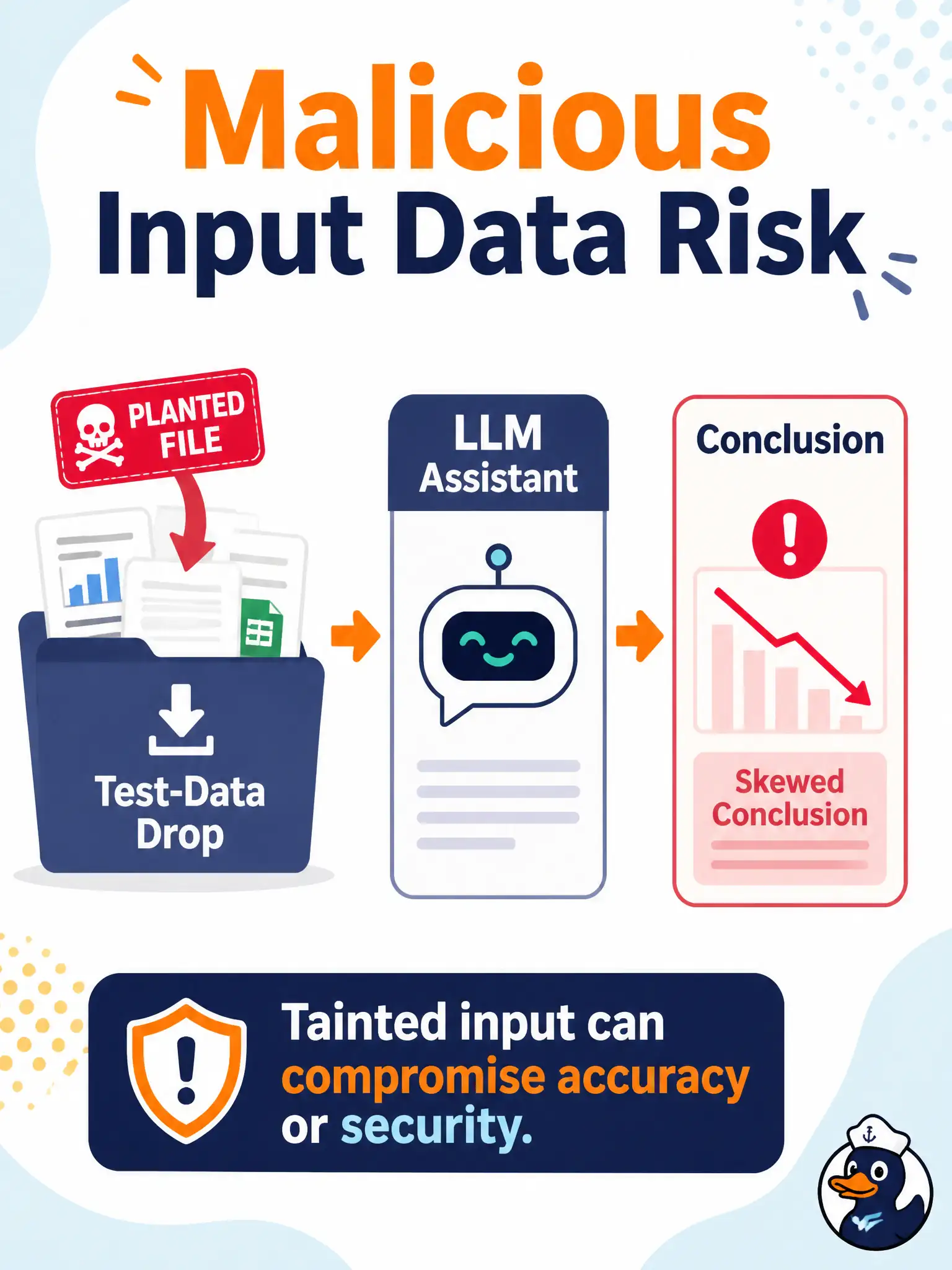
If someone slips a doctored file into the drop folder, the assistant can be led astray — like a map with a fake street glued on. That is malicious input data as a risk class. Testers watch for tainted inputs that warp accuracy or security.
Full Explanation
Parking-boot desks warned about planted files in the test-data drop are being pointed at malicious input data that can compromise accuracy or security of GenAI-assisted testing. A doctored file can steer conclusions about who is booted—accuracy and integrity risk through the data path.
GDPR lawful-basis approval for every synthetic plate fails by concept: that is privacy compliance framing, not the named malicious-input risk. Random-seed reuse fails because seeds replay sampling; they do not plant tainted files. Explanation verbosity settings fail because verbosity does not invent boot lists without input influence.
Exam caveat: malicious input data is about integrity of what the model is given to reason over—distinct from privacy retention and from code-generation side effects.
Operational check: control write access to the boot test-data drop; checksum or review inbound files; quarantine untrusted uploads; re-run golden boot scenarios after any bulk data refresh before trusting severity or ownership conclusions. Boot-desk data drops should use signed manifests and reject files that lack a known source hash before any GenAI assistant is allowed to summarize who is booted. Keep the civic test basis authoritative over fluent model wording whenever the two disagree.