
A county jury-summons tool embeds an LLM beside the juror file used in test workflows. Beyond ordinary application bugs, what security risk should testers recognize?
Select an answer to reveal the explanation.
Short Explanation
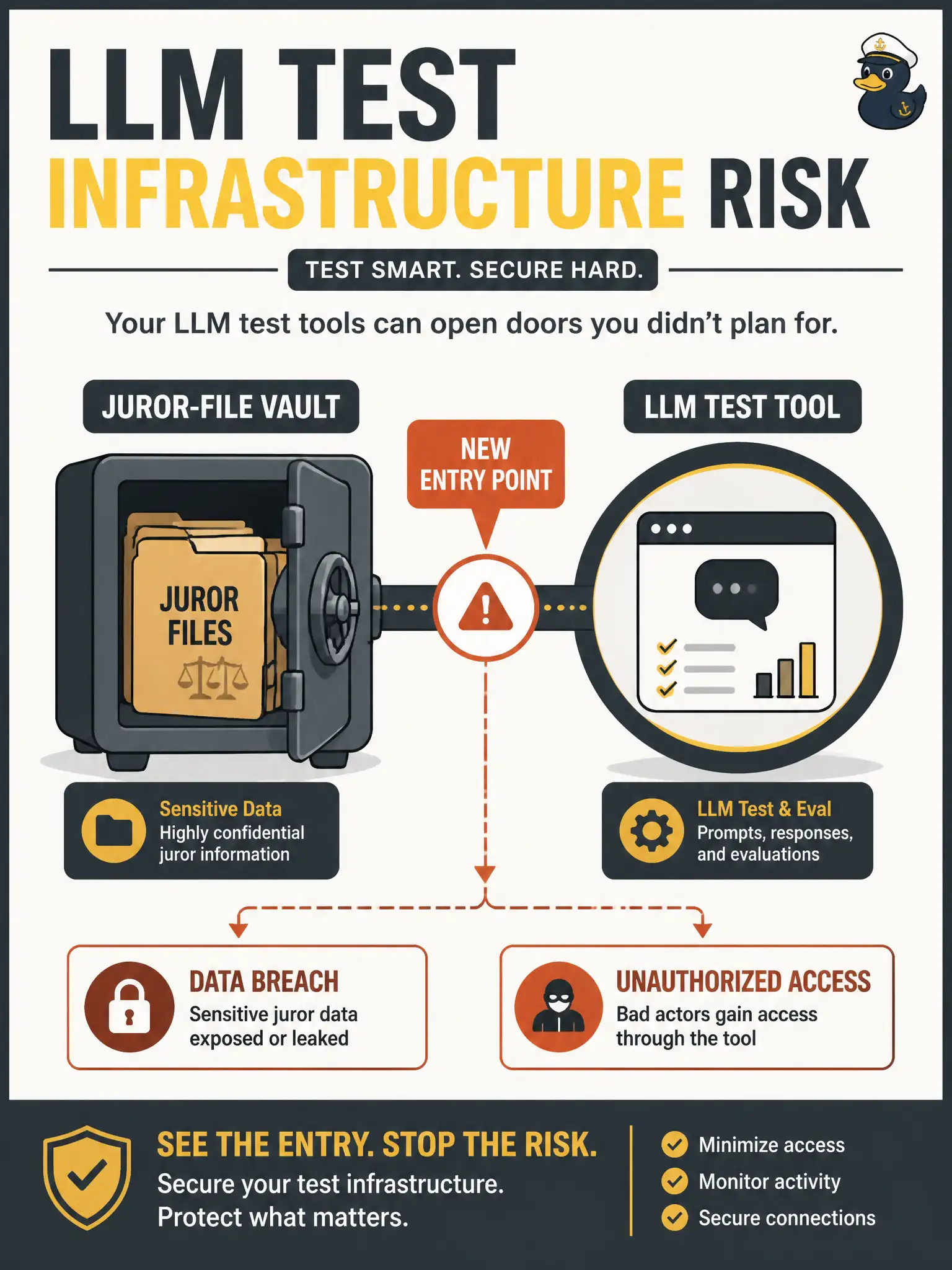
Bolting an LLM next to the juror file adds another door on the building. That door can be a breach path even when the main app looks fine. Treat GenAI test infrastructure as part of the security surface.
Full Explanation
Jury-summons tools that embed an LLM beside the juror file expand the attack surface. Beyond ordinary application bugs, testers should recognize that LLM-powered test infrastructure can become a new entry point for data breaches or unauthorized access. The assistant, its prompts, logs, and connectors sit next to sensitive civic records.
Claiming zero temperature makes breach impossible fails by concept: temperature is not an access-control mechanism. Claiming only the production portal can be breached fails because test tooling with juror data is squarely in scope. Claiming seeds immunize infrastructure fails because seeds affect sampling replay, not authentication or authorization.
Exam caveat: treat GenAI test infrastructure as part of the security perimeter whenever it can reach or hold sensitive municipal data—even if it is “only for testing.”
Operational check: inventory LLM components touching juror or summons data; apply SSO, least privilege, encryption, and logging; include the test assistant in threat models and penetration scope; revoke access paths that bypass normal case-file controls. Summons programs should place the LLM connector behind the same identity provider as the juror file and alert on downloads or prompt exports containing juror fields.