
A public-school bus-routing pack will feed a safety-critical stop list. A colleague wants the same light skim used on a cafeteria-menu wording draft. What should the tester select?
Select an answer to reveal the explanation.
Short Explanation
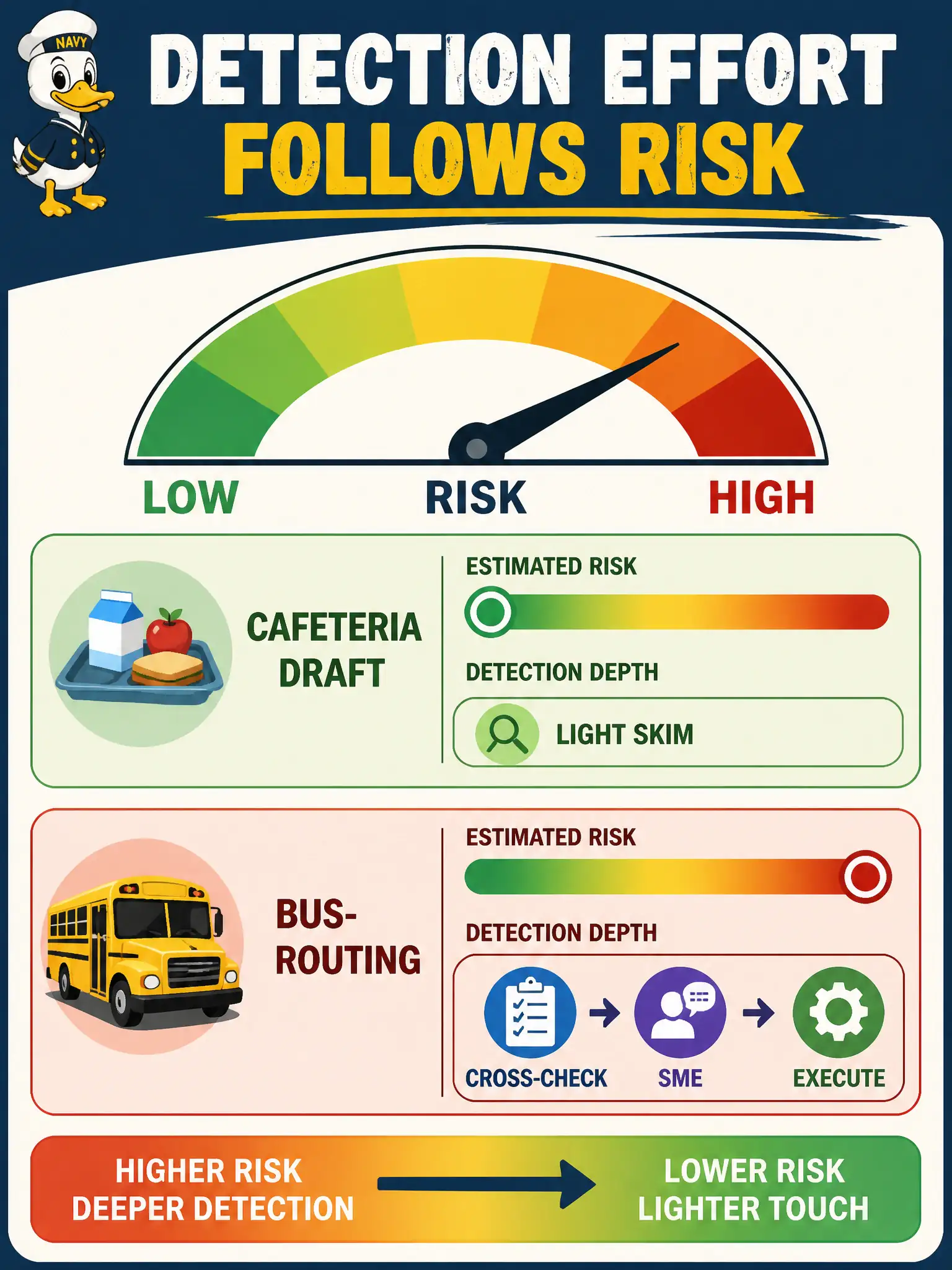
A wrong bus stop hurts more than a wrong menu adjective. Higher risk means deeper detection—not the same skim just because the model sounded sure.
Full Explanation
Public-school bus-routing artefacts can put children at the wrong curb; cafeteria menu wording cannot. Detection intensity must follow estimated risk of hallucination, reasoning error, or bias for the GenAI test task. The correct choice is deeper detection—cross-check, SME review, and execution—because estimated risk is higher when the pack will feed a safety-critical stop list. Model confidence in the reply is not a risk meter; civic duty of care is.
Selecting the same light skim because the model sounded equally confident fails by concept: confidence language is not calibrated evidence of correctness, and equal tone across unequal-risk artefacts ignores impact. Skipping all review when temperature is low fails because temperature only narrows sampling randomness; it does not verify stops against routes, maps, or transportation policy. Only tone-polishing stop names fails because cosmetic editing never checks whether a stop is wrong, unsafe, or misaligned with the district roster.
Exam caveat: “deeper detection” does not mean every GenAI artefact needs the same heavyweight process. The tested idea is proportional response: raise verification depth when estimated risk rises, not when the model sounds persuasive.
Operational check: classify GenAI test artefacts by impact (safety, rights, money, reputation), define minimum detection depth per class, require SME sign-off and executed checks for safety-critical packs, and refuse to reuse light-skim procedures from low-impact wording drafts on high-impact civic outputs.