
A municipal bee-friendly lawn-waiver shop will buy a test tool that already embeds GenAI for case drafts. Beyond shared privacy, security, and cost concerns, what else should that path evaluate?
Select an answer to reveal the explanation.
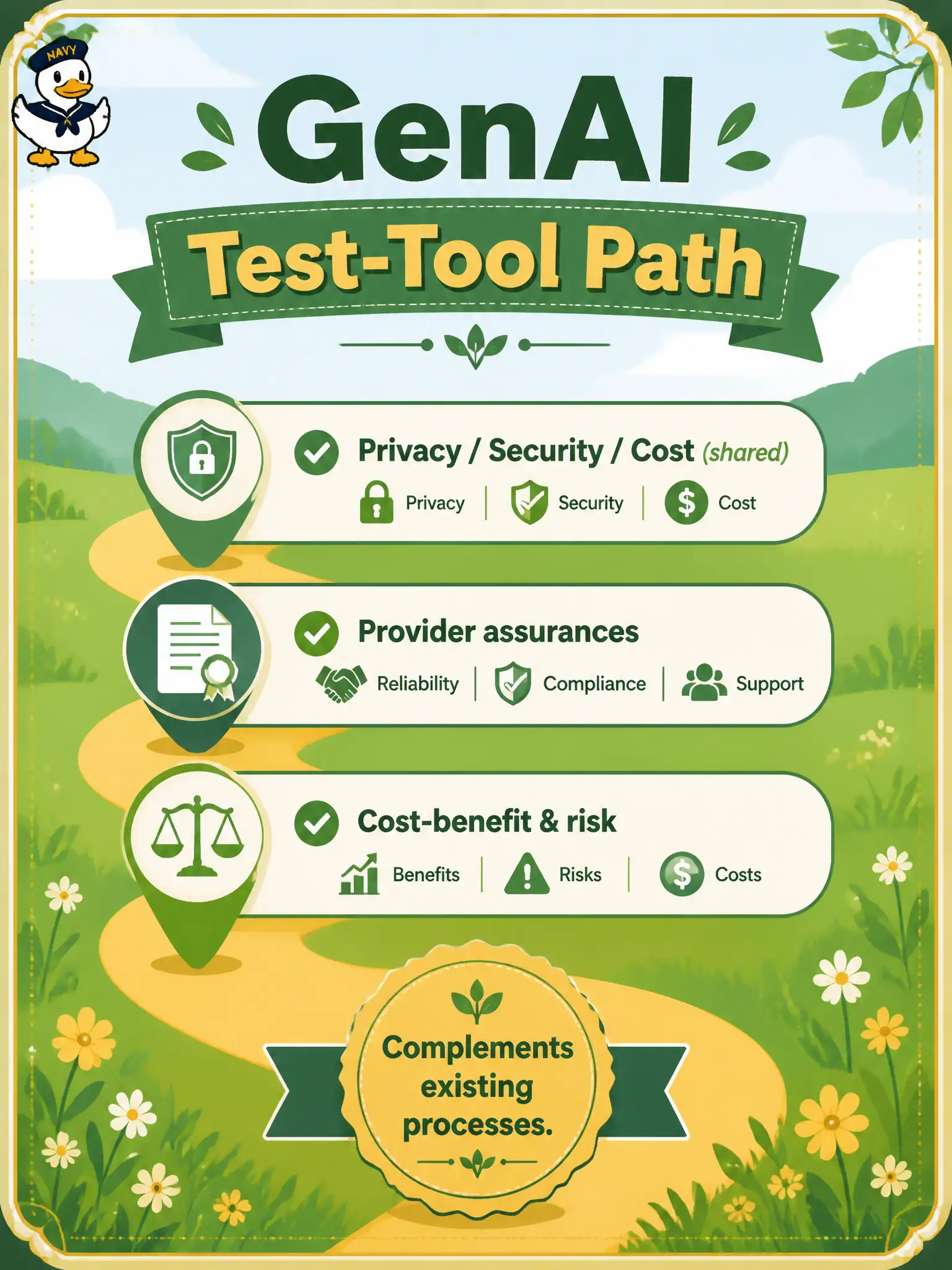
Short Explanation
Buying a GenAI-embedded test tool still means checking the provider’s assurances and weighing cost, benefit, and risk. Privacy, security, and cost carry over from the chatbot path. The tool should complement — not blindly replace — existing test processes.
Full Explanation
The commercial or embedded GenAI test-tool path shares privacy, security, and cost concerns with chatbots and adds evaluation of the provider’s data-security and performance assurances plus cost-benefit and risk analysis, because such tools complement existing test processes. A municipal bee-friendly lawn-waiver shop buying a tool that already embeds GenAI for case drafts must look beyond chat-pane cosmetics to those assurances and trade-offs. Evaluating only the front-end font size of the tool’s chat pane ignores security, performance, and economic fit for civic waiver testing. Asking whether neuron coverage of the embedded model meets CT-AI SUT gates shifts into testing the model as SUT rather than selecting a GenAI-enabled test tool for GenAI-in-testing. Requiring a full rebuild from scratch before any pilot rejects the complementary commercial path the syllabus recognizes. Exam caveat: this is not a product-brand exam item; focus on assurances, cost-benefit, and risk rather than naming SKUs. Operational check: before purchasing, review the provider’s data-security and performance statements and document a cost-benefit and risk look against how the tool will complement the lawn-waiver test process.