
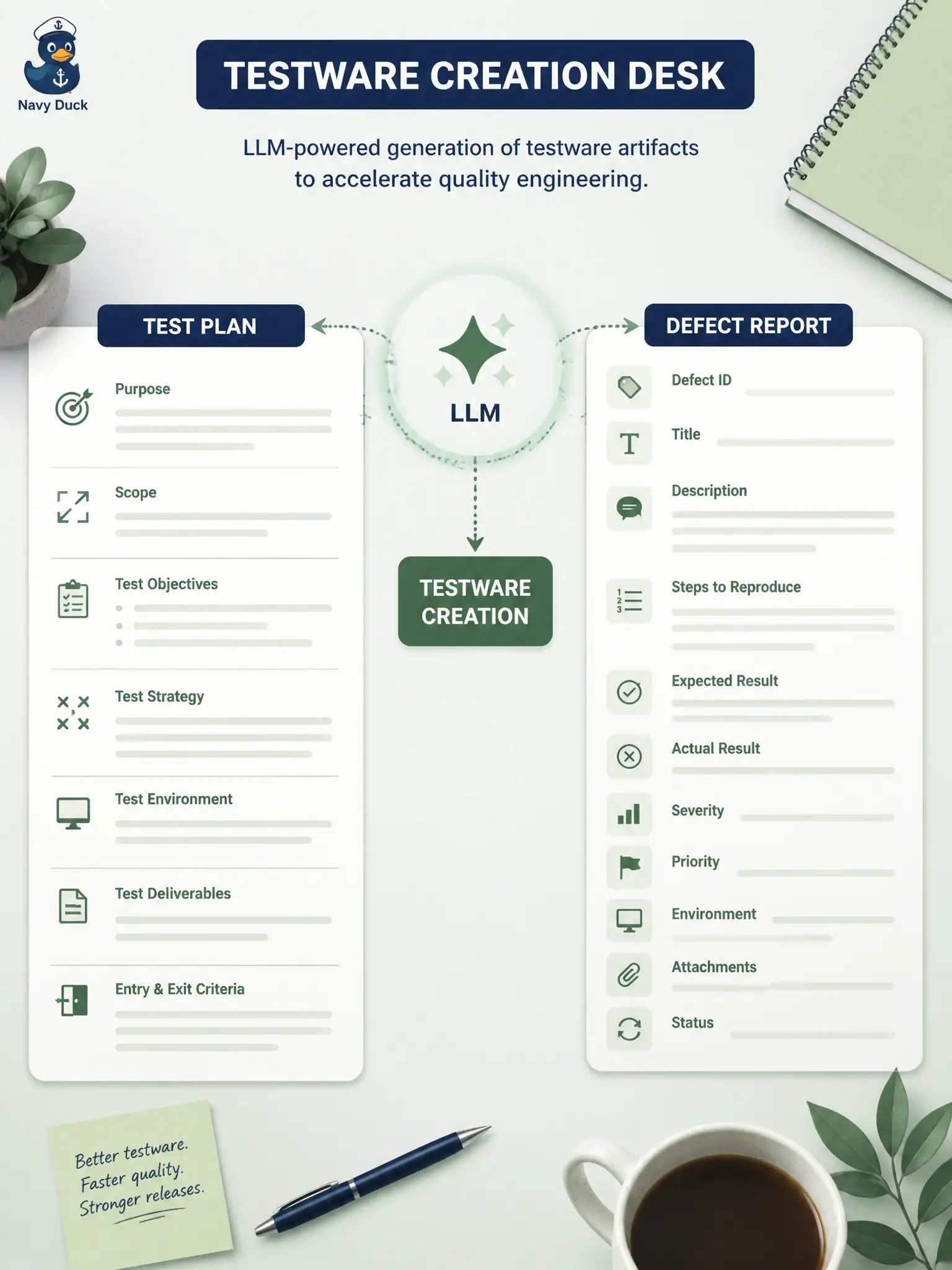
A garden-plot release is slipping, and the tester asks an LLM for an updated test-plan paragraph plus a defect-report skeleton. Which capability is this primarily?
Select an answer to reveal the explanation.
Short Explanation
Plans and defect skeletons are paperwork that still keeps testing honest when the schedule slides. Asking an LLM to draft or refresh that testware is documentation support—not wireframe vision work or model-as-SUT scoring. Edit the drafts before they go official.
Full Explanation
Asking an LLM for an updated test-plan paragraph plus a defect-report skeleton while a garden-plot release is slipping primarily illustrates testware / documentation creation and upkeep. Plans and defect skeletons are official GenAI-for-testing documentation support that keeps testing honest under civic schedule pressure. Human ownership, editing, and approval of released documents remain required before anything becomes official.
Multimodal wireframe comparison against unlabeled map controls is a different capability focused on visual-versus-basis analysis. Reasoning-model evaluation using neuron coverage as the scored metric treats the model as product under test and is the wrong syllabus focus here. API-only case generation with no documentation artefacts involved denies the documentation capability the stem actually demonstrates.
Exam caveat: testware upkeep—test plans, status reports, defect forms—is in-scope GenAI support; edit and approve before official municipal use.
Operational check: draft the plan paragraph and defect skeleton; edit for garden-plot scope, risks, environments, and exit criteria; obtain lead approval; publish to the municipal test repository only after that review cycle completes.