
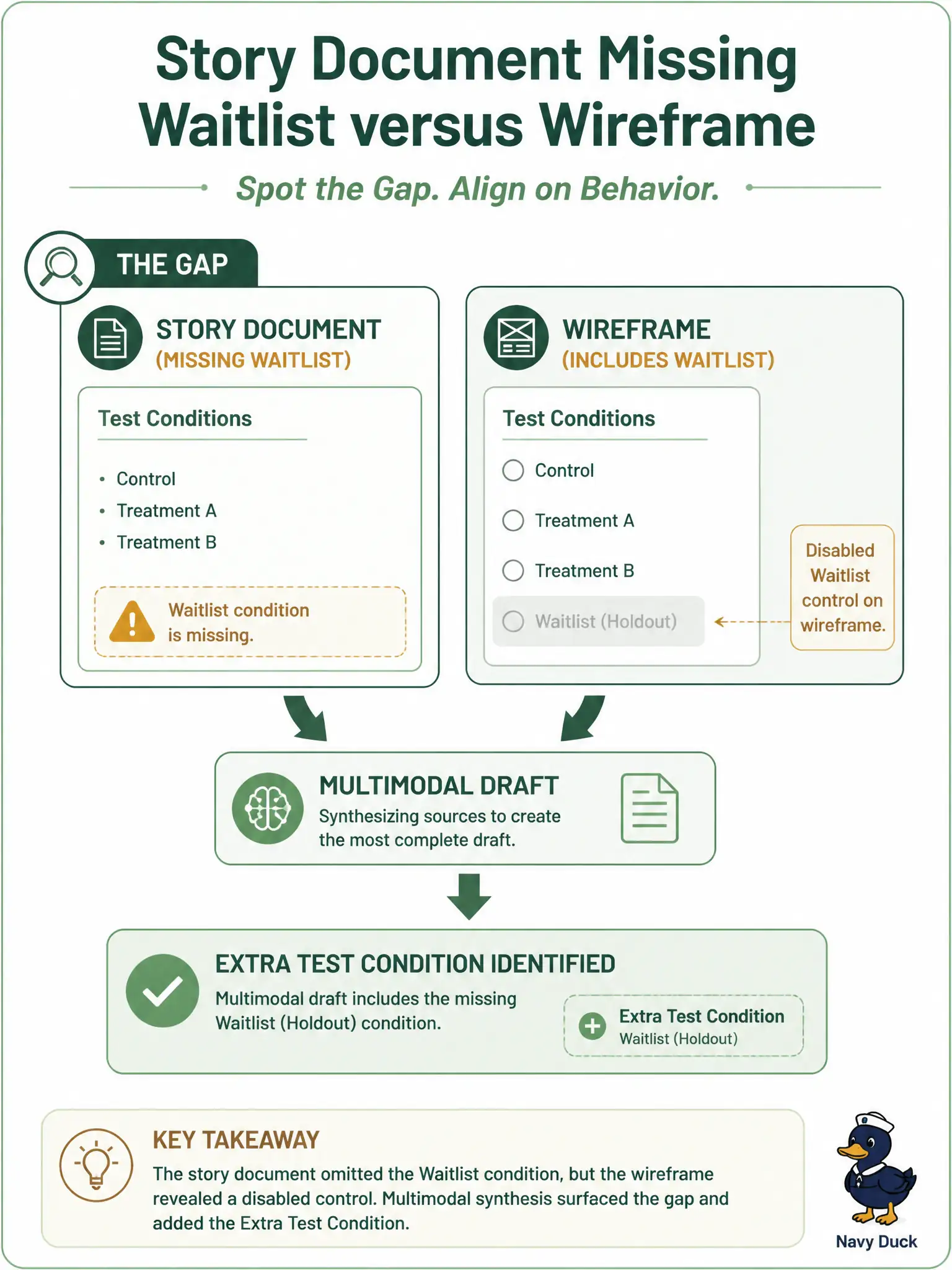
A garden-plot map wireframe shows a disabled “Waitlist” control that the user story never mentions. Why would a tester feed both the wireframe image and the story into a multimodal model when drafting cases?
Select an answer to reveal the explanation.
Short Explanation
Stories do not always name every control the wireframe shows—like a quiet Waitlist button sitting disabled on the map. Image plus story lets the draft catch that extra visual condition. Text-only prompts would happily ignore what they never see.
Full Explanation
Testers feed both the garden-plot map wireframe and the user story into a multimodal model so drafted cases can cover extra visual controls—such as a disabled Waitlist the story never mentions—not only the prose conditions. Civic booking UIs often show states and controls absent from thin stories; image-plus-story drafting widens condition coverage while remaining human-reviewed support for the plot-map product under test.
Using the exercise to measure neuron coverage of the Waitlist control as the system under test misreads the LLM as the product and imports CT-AI white-box techniques into the wrong certification focus. Letting story text alone invent pixel layouts without any image input cannot see the disabled Waitlist at all. Replacing exploratory testing with an unattended production deploy gate overclaims GenAI’s role and removes human exploratory judgment on the civic garden release.
Exam caveat: multimodal drafting expands coverage of visible-but-unwritten controls; it does not redefine the model as the SUT, invent pixels from prose alone, or eliminate review and exploration.
Operational check: compare wireframe to story in one multimodal prompt; require a list of visual-only conditions including disabled Waitlist; add confirmed cases to the suite; keep scheduled exploratory sessions on the garden-plot build rather than treating model output as a production deploy gate.