
A harbor-slip reservation tester’s pasted API log is silently cut off mid-stack-trace. Why should testers care whether prompt plus history fit the context window?
Select an answer to reveal the explanation.
Short Explanation
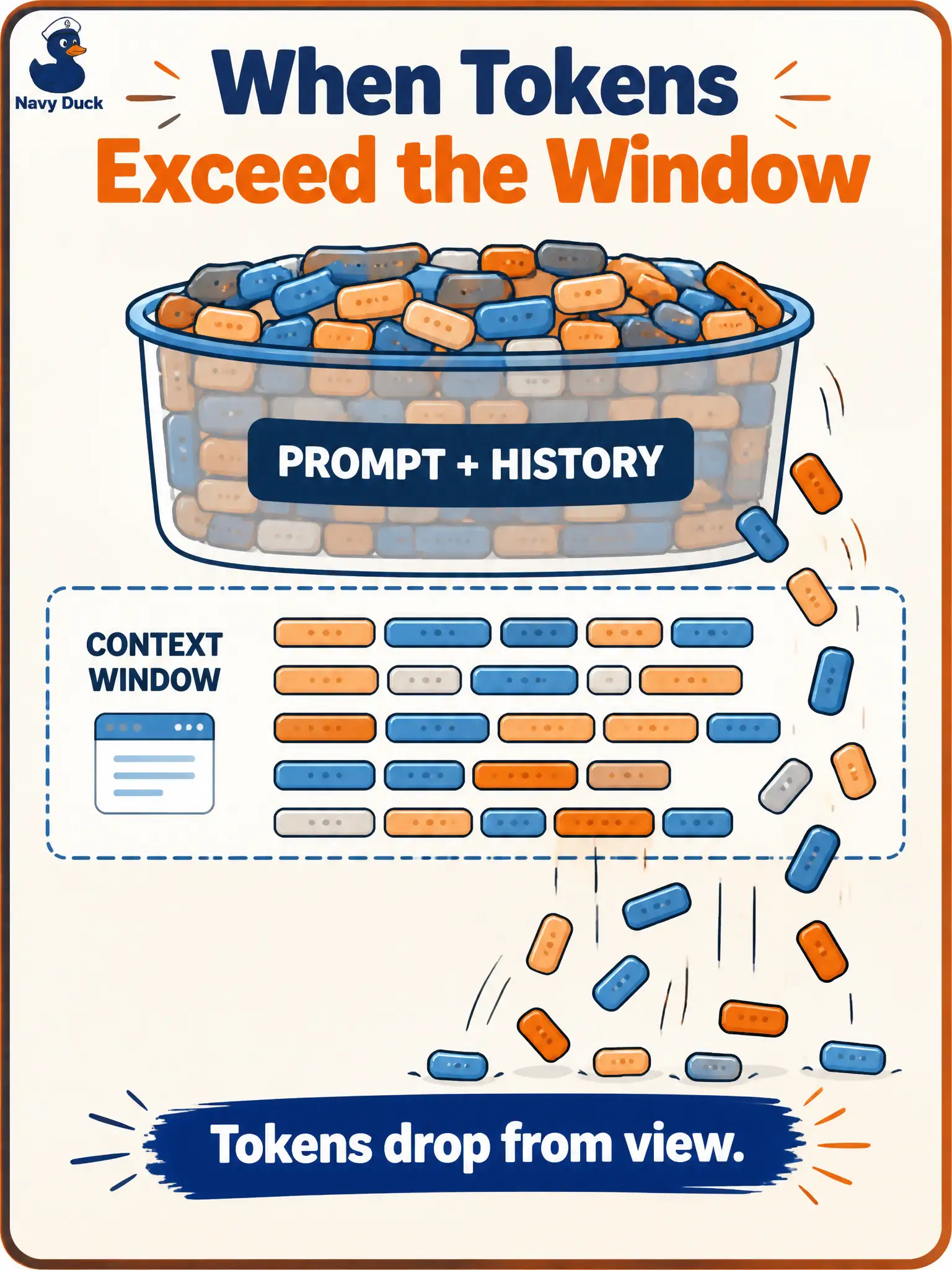
If the suitcase is overfull, something gets left on the bed—often without a loud alarm. When tokens exceed the window, parts of the prompt or history drop. Testers care because a mid-log cutoff hides evidence the model never saw.
Full Explanation
Testers care whether prompt plus history fit the context window because the combined token count can exceed capacity so some tokens drop from what the model sees. A harbor-slip reservation API log silently cut off mid-stack-trace is a civic symptom of that overflow: failure evidence the model never considered. Silent loss of trace lines corrupts analysis, severity judgment, and any drafted follow-up cases.
Treating a hands-on tokenizer lab as the mandatory examinable skill fails Chapter 1’s conceptual level—awareness that overflow drops tokens matters more than building a counter. Claiming overflow converts the LLM into a classical ML classifier invents a fantasy type change. Claiming stack traces never consume tokens fails because traces are text and tokenize like any other pasted log content.
Exam caveat: conceptual awareness of prompt-plus-history versus the context window is in scope. Building a tokenizer from scratch or running a graded counting lab is not the point of this item.
Operational check: before pasting a long slip-reservation log, trim to the failing request and nearby frames; if truncation persists, chunk and summarize earlier context; verify critical stack lines appear in the model’s restatement before relying on its analysis for the municipal defect.