
A school-lunch allergy team is quoted three weeks to “train a model on our menus” before anyone may ask for test cases. What practical tester benefit of pre-trained LLMs answers that delay?
Select an answer to reveal the explanation.
Short Explanation
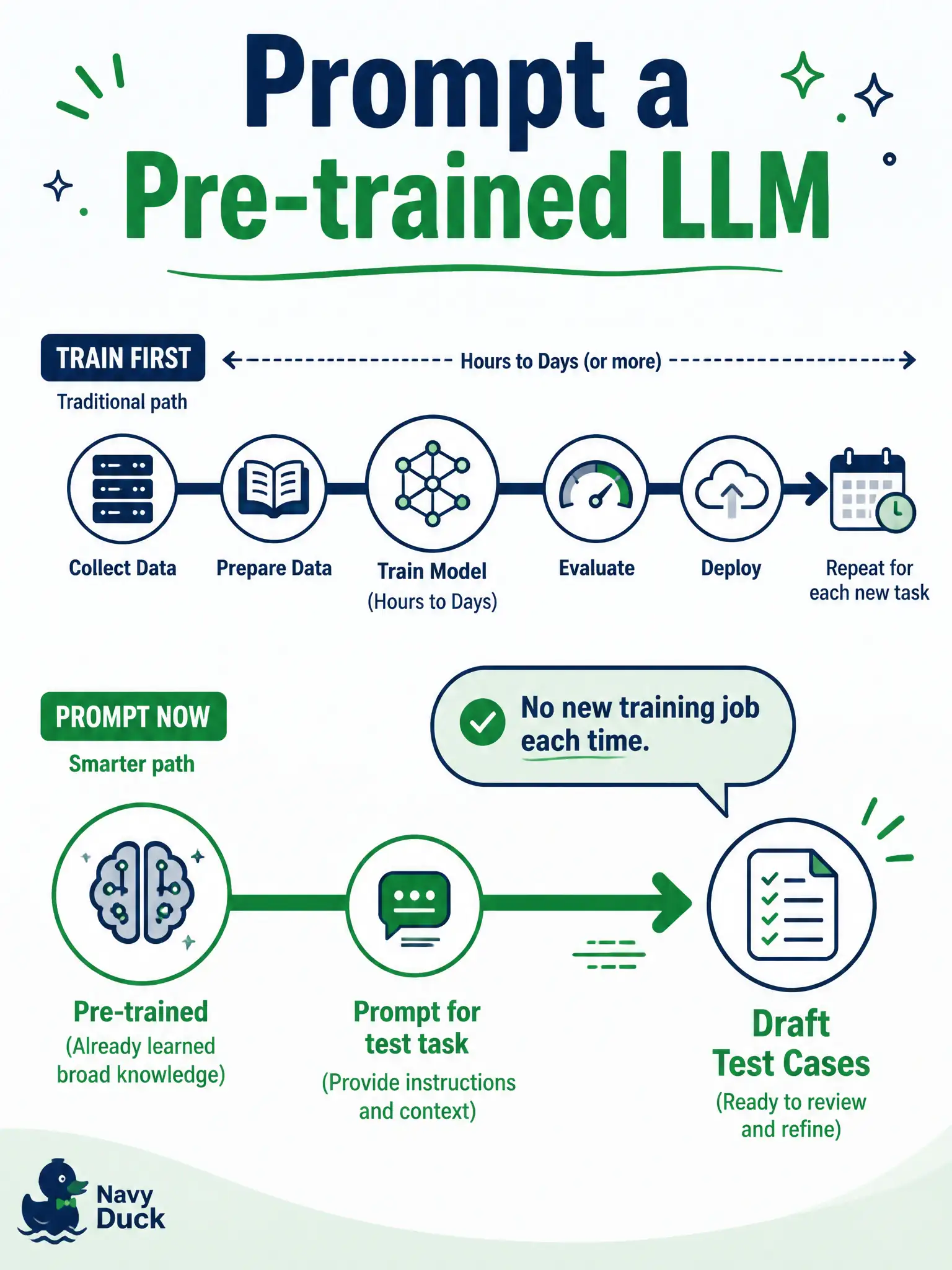
You ask a librarian who already studied; you do not rebuild the library first. Pre-trained LLMs are usually prompted for the test task rather than retrained per request. That benefit is about access speed, not skipping review of allergy-sensitive outputs.
Full Explanation
Pre-trained LLMs let testers typically prompt for the test task instead of starting a new training job each time. A school-lunch allergy team quoted three weeks to “train a model on our menus” before anyone may ask for test cases is mixing classical training expectations with how civic testers normally use LLMs. The practical Chapter 1 benefit is faster access to drafting help on menu and allergy stories; checking outputs against official allergy rules remains mandatory because children’s safety is non-negotiable.
Requiring a full classical training job before every prompt denies the pre-trained benefit the item targets. Claiming pre-trained LLMs remove all need to check outputs against allergy rules endangers students and contradicts syllabus review limits. Claiming only symbolic AI can draft cases falsely excludes LLMs from prompted test tasks.
Exam caveat: pre-trained prompting accelerates drafting; it does not authorize skipping domain-rule verification in safety-sensitive civic contexts such as school allergy boards.
Operational check: prompt a pre-trained LLM for lunch-allergy cases as soon as the story is ready; route every allergen assertion through the official board rules and nurse-approved list; reject any project schedule that blocks all prompting solely to wait on a new menu-training project.