
A community-garden plot tester wants every historic booking CSV in one prompt “so nothing is missed.” What trade-off about a larger context window should they understand?
Select an answer to reveal the explanation.
Short Explanation
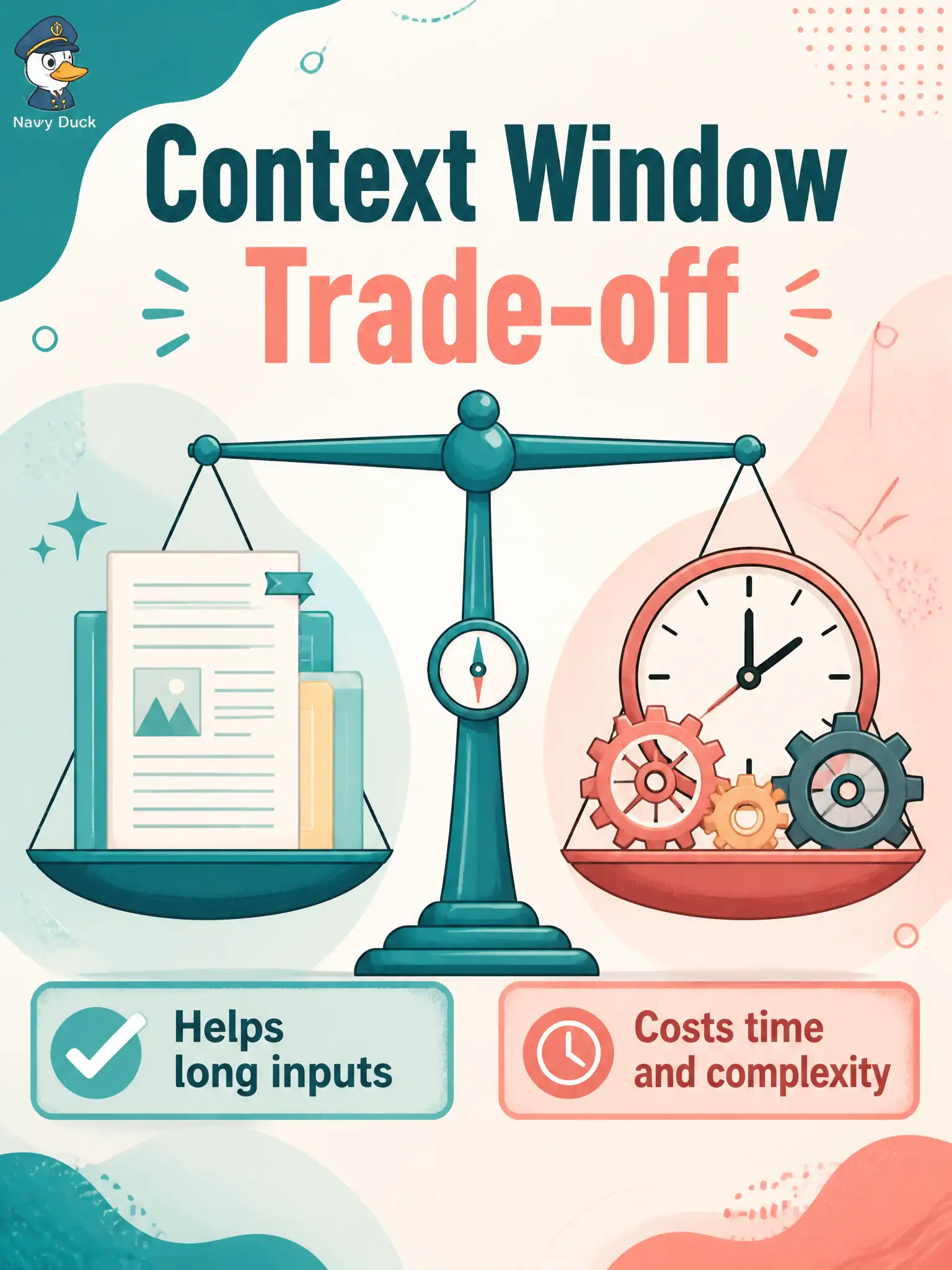
A bigger backpack holds more gear and also weighs more on the hike. Wider windows help long test artefacts stay in view, yet they cost processing complexity and time. Stuffing every historic CSV is not free and still needs judgment.
Full Explanation
A larger context window can keep coherence over long artefacts but also raises processing complexity and time. A community-garden plot tester who wants every historic booking CSV in one prompt “so nothing is missed” must understand that trade-off: more of the civic record stays in view, yet cost and latency rise—and correctness is still not guaranteed. Stuffing everything remains an engineering and review judgment, not a free accuracy upgrade.
Claims that a larger window always guarantees correct test cases with no review fail because capacity is not verification. Claims that a larger window converts classical ML models into symbolic rule engines invent an impossible type conversion. Claims that a larger window removes tokenization so CSVs cost zero tokens fail because tokenization still produces tokens that consume the window budget.
Exam caveat: bigger windows help long-artefact coherence for municipal CSVs and logs; they do not abolish review, tokenization costs, or model-type boundaries on the syllabus.
Operational check: compare a summarized CSV prompt versus a full historic dump when drafting garden-booking cases; measure latency and note any missed early rows; choose the smallest window-filling strategy that keeps critical civic fields visible and human-reviewed before suite entry.