
A community steam-room booking success with GenAI-assisted testing is lost when that tester leaves. What cultivation practice reduces that risk?
Select an answer to reveal the explanation.
Short Explanation
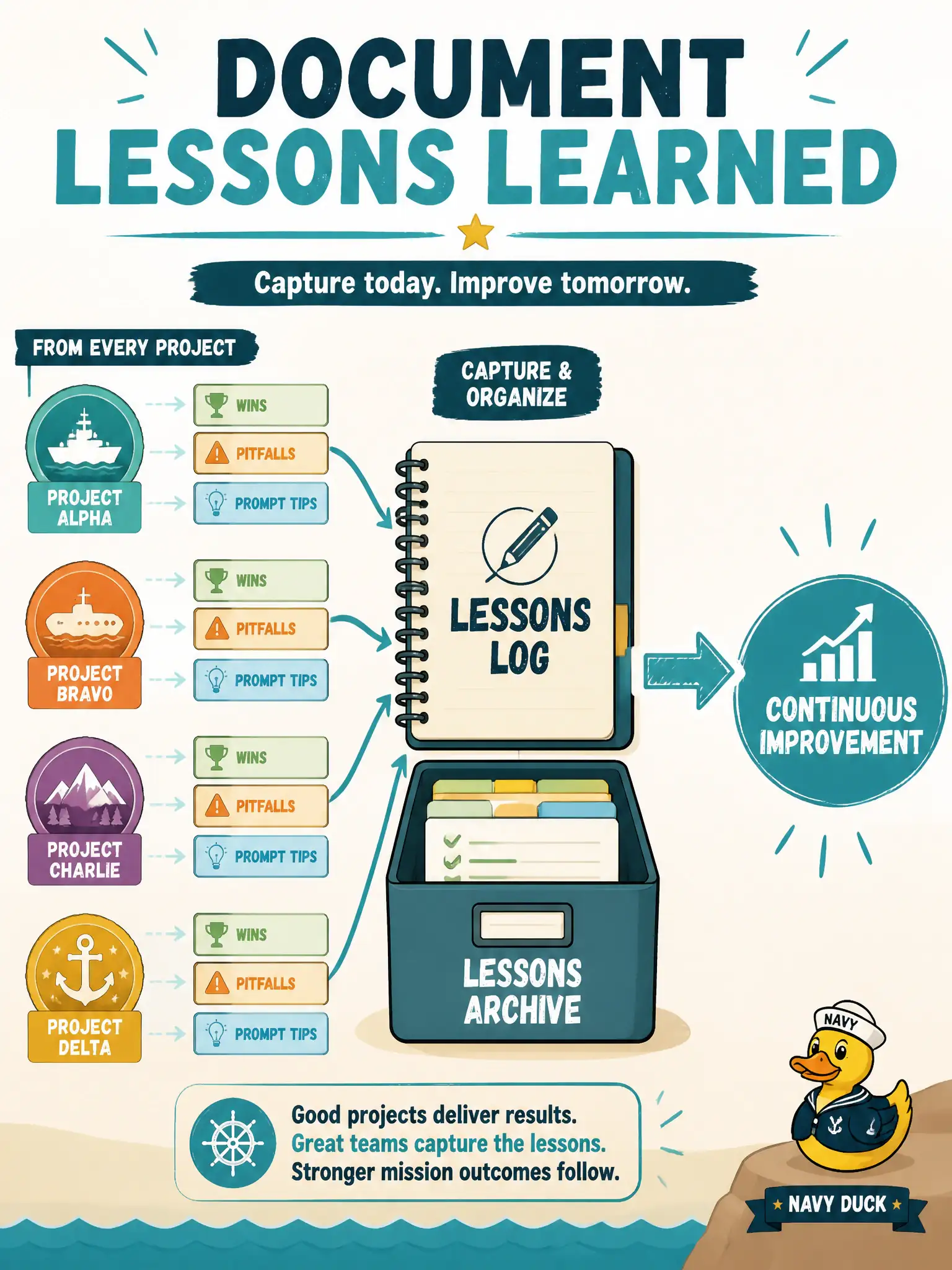
If the know-how walks out with one person, the next crew reinvents the wheel. Document lessons learned across projects so improvement sticks. Writing it down is part of cultivation.
Full Explanation
Documenting lessons learned from GenAI-for-test work across projects and domains reduces single-person knowledge loss. When a community steam-room booking success with GenAI-assisted testing disappears as that tester leaves, missing documentation is the failure mode. Relying only on oral tradition so nothing is written down recreates the loss. Banning reuse of lessons so each project starts blank wastes proven civic patterns. Storing lessons only in one person’s private chat history keeps the same bus-factor risk. Exam caveat: lessons learned are an organizational cultivation practice, not private folklore. Operational check: after steam-room GenAI wins, write transferable lessons into a shared store covering prompts, review findings, and pitfalls for other domains. Keep civic testware subject to the same review discipline you would apply to human-authored packs. On the written exam, prefer syllabus terminology over vendor marketing language or lab choreography. Treat fluent output as a draft until organizational quality gates and data-handling rules are satisfied. Align the choice with GenAI-for-testing strategy rather than with CT-AI model-as-SUT measurement unless the stem asks for that lane.