
Testers from several municipal warming-hut projects never meet to compare which GenAI-for-test prompts worked. Which cultivation practices address this?
Select an answer to reveal the explanation.
Short Explanation
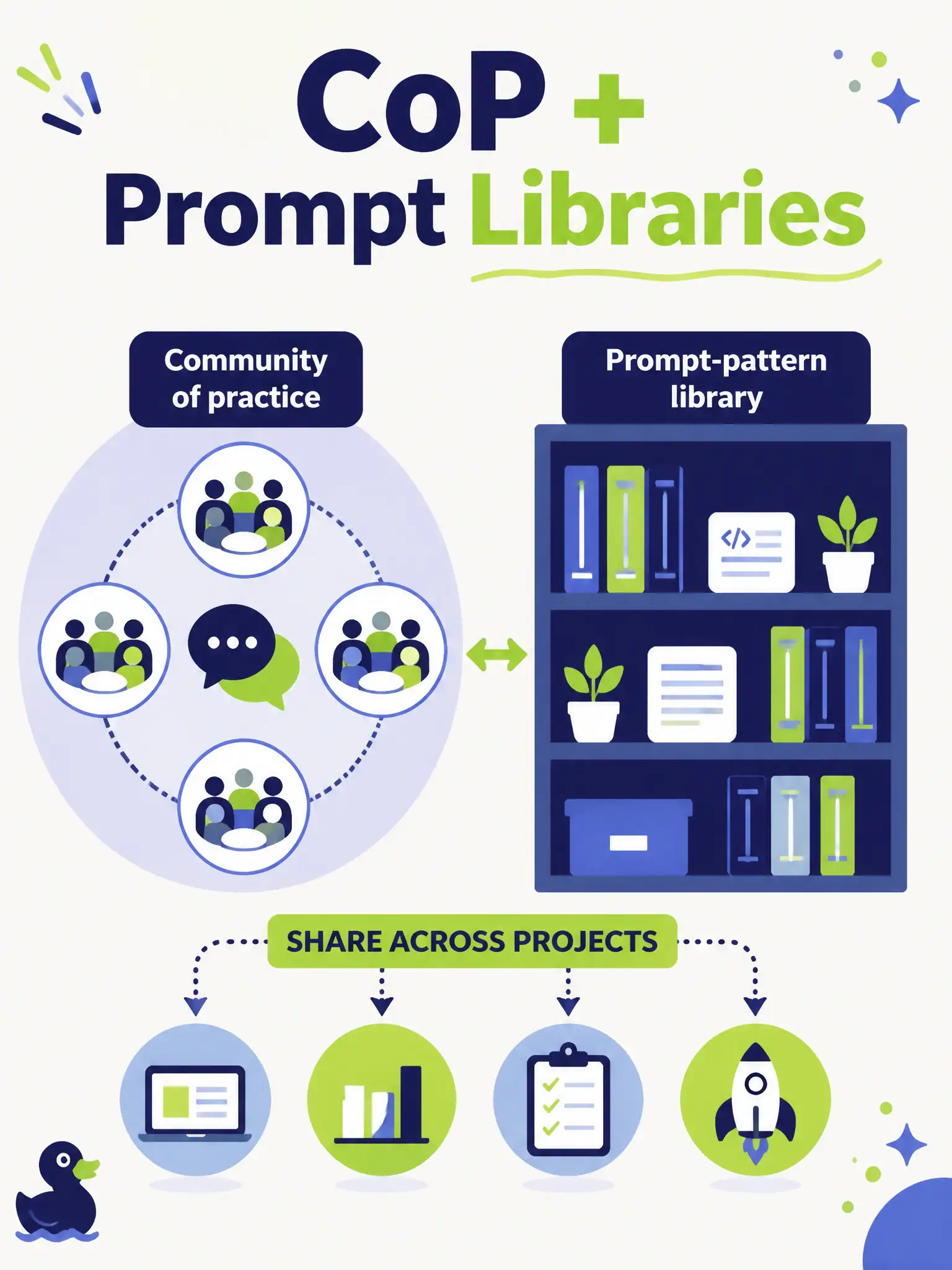
When projects never compare notes, good prompts die in silos. Communities of practice with regular meetings plus shared prompt-pattern libraries spread what works. Isolation is the opposite of cultivation.
Full Explanation
Cultivation practices include internal communities of practice with regular meetings, plus sharing prompt-pattern libraries. Testers from several municipal warming-hut projects who never meet to compare which GenAI-for-test prompts worked miss both the community forum and the shared library. Isolating each project so no prompts are compared across teams blocks organizational learning. Deleting successful prompts after each release to force originality destroys reusable patterns. Outsourcing all GenAI learning so internal forums are unnecessary leaves house-specific civic know-how unshared. Exam caveat: communities of practice and pattern libraries are complementary cultivation practices, not optional isolation. Operational check: stand up a warming-hut GenAI community of practice with regular meetings and a shared prompt-pattern library across projects. Keep civic testware subject to the same review discipline you would apply to human-authored packs. On the written exam, prefer syllabus terminology over vendor marketing language or lab choreography. Treat fluent output as a draft until organizational quality gates and data-handling rules are satisfied. Align the choice with GenAI-for-testing strategy rather than with CT-AI model-as-SUT measurement unless the stem asks for that lane.