
A community spinning-wheel booking pack is accepted because it “sounds like a tester wrote it.” What essential GenAI testing skill does this shop still need?
Select an answer to reveal the explanation.
Short Explanation
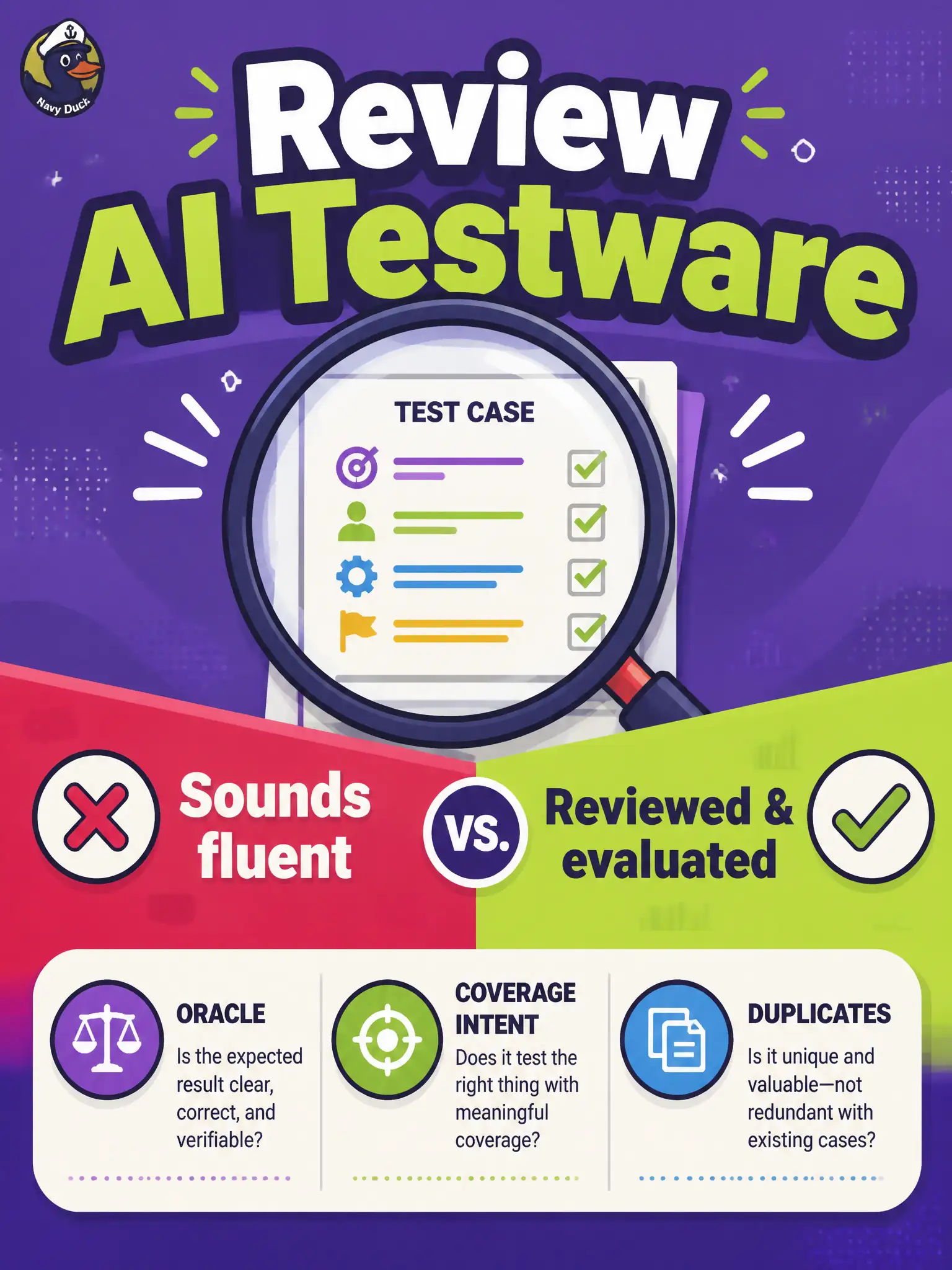
Smooth prose is not a quality gate—polished wrong cases still waste runs. Testers must build review methods and actually evaluate AI-generated testware. Fluency alone is a trap, not a pass.
Full Explanation
Working with GenAI requires skills to review and evaluate AI-generated testware rather than accepting fluent output as correct. A community spinning-wheel booking pack accepted because it “sounds like a tester wrote it” still needs structured review methods that catch gaps, duplicates, and wrong oracles that sounding “tester-like” hides. Treating fluent wording as automatic proof that AI-generated testware is correct is exactly the failure mode. Measuring neuron coverage of the language model that drafted the pack shifts into CT-AI SUT measurement. Replacing human review with unattended nightly generation only removes the required evaluation skill. Exam caveat: neuron-coverage measures of a model as SUT and fully unattended acceptance without review conflict with that skill need. Operational check: before accepting spinning-wheel packs, run a review checklist on coverage, oracles, and duplicates regardless of how fluent the wording sounds. Keep civic testware subject to the same review discipline you would apply to human-authored packs. On the written exam, prefer syllabus terminology over vendor marketing language or lab choreography. Treat fluent output as a draft until organizational quality gates and data-handling rules are satisfied.