
A municipal chipper-day tester knows CTFL techniques well but pastes an entire season log that will not fit the model and then writes only “test this.” Which skill areas does this highlight as essential for GenAI-assisted testing?
Select an answer to reveal the explanation.
Short Explanation
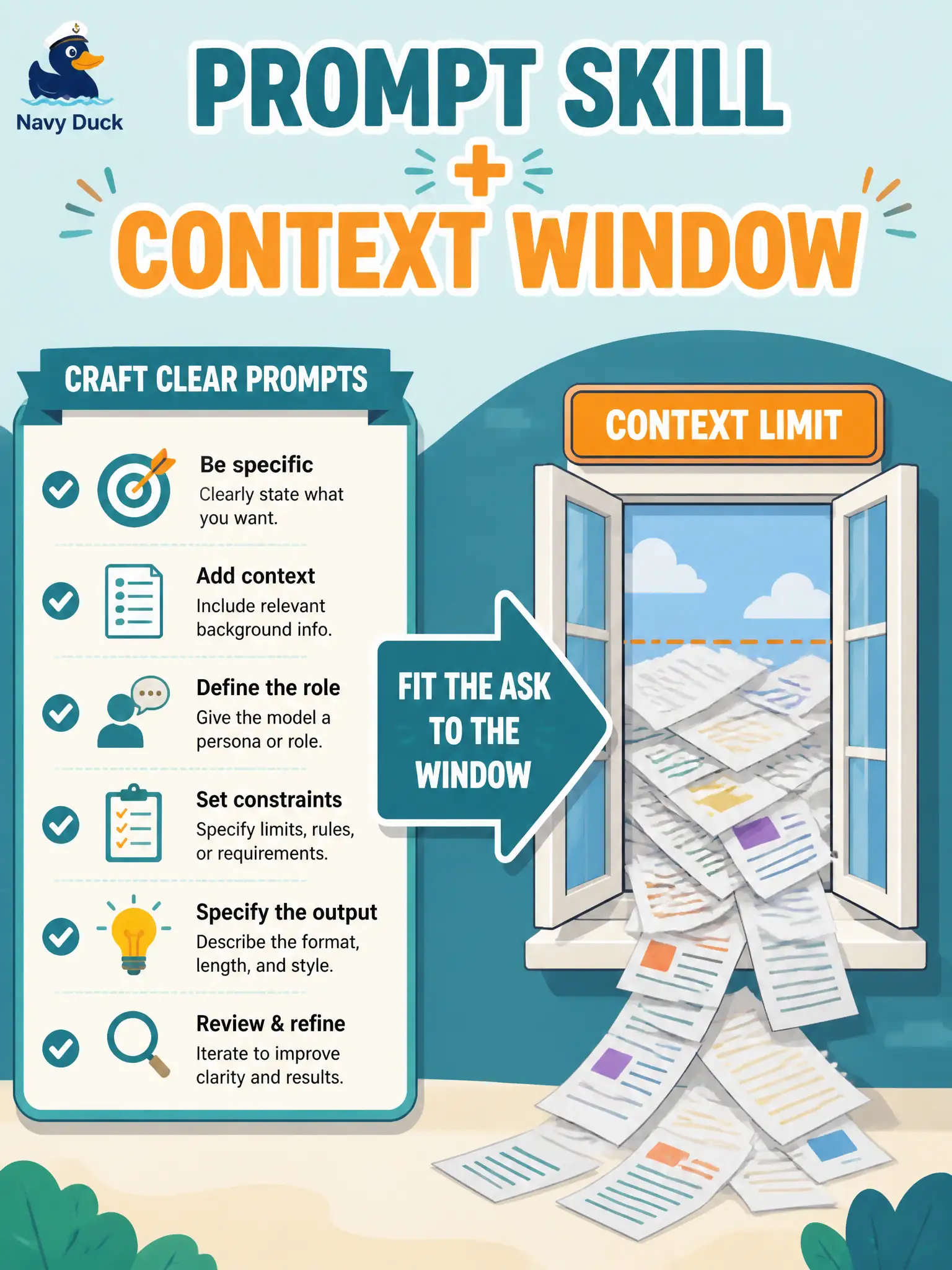
A model has a limited “desk size”—stuff the whole season on it and the useful notes fall off. Testers need prompt-engineering craft plus awareness of context windows so asks fit and guide the model. That is different from testing the model itself or picking CTFL techniques.
Full Explanation
Working with GenAI requires prompt-engineering skill and understanding of model context windows. A municipal chipper-day tester who knows CTFL techniques well but pastes an entire season log that will not fit the model and then writes only “test this” highlights those essential skill gaps: the prompt is vague and the context window is ignored. Neuron coverage and metamorphic testing of the LLM as the SUT are CT-AI concerns, not the GenAI-for-testing skill need shown. Vendor SKU selection and commercial chatbot branding are product topics, not the essential skill areas. Choosing equivalence partitioning instead of boundary analysis for every story is a classic technique preference debate unrelated to the GenAI skill gap in the stem. Exam caveat: Chapter 5 skills emphasize prompt craft and context-window awareness alongside other capabilities; do not redirect to CT-AI SUT measures. Operational check: teach the chipper-day tester to trim or chunk the season log to fit the window and to write a focused test ask instead of “test this.” Keep civic testware subject to the same review discipline you would apply to human-authored packs. On the written exam, prefer syllabus terminology over vendor marketing language or lab choreography.