
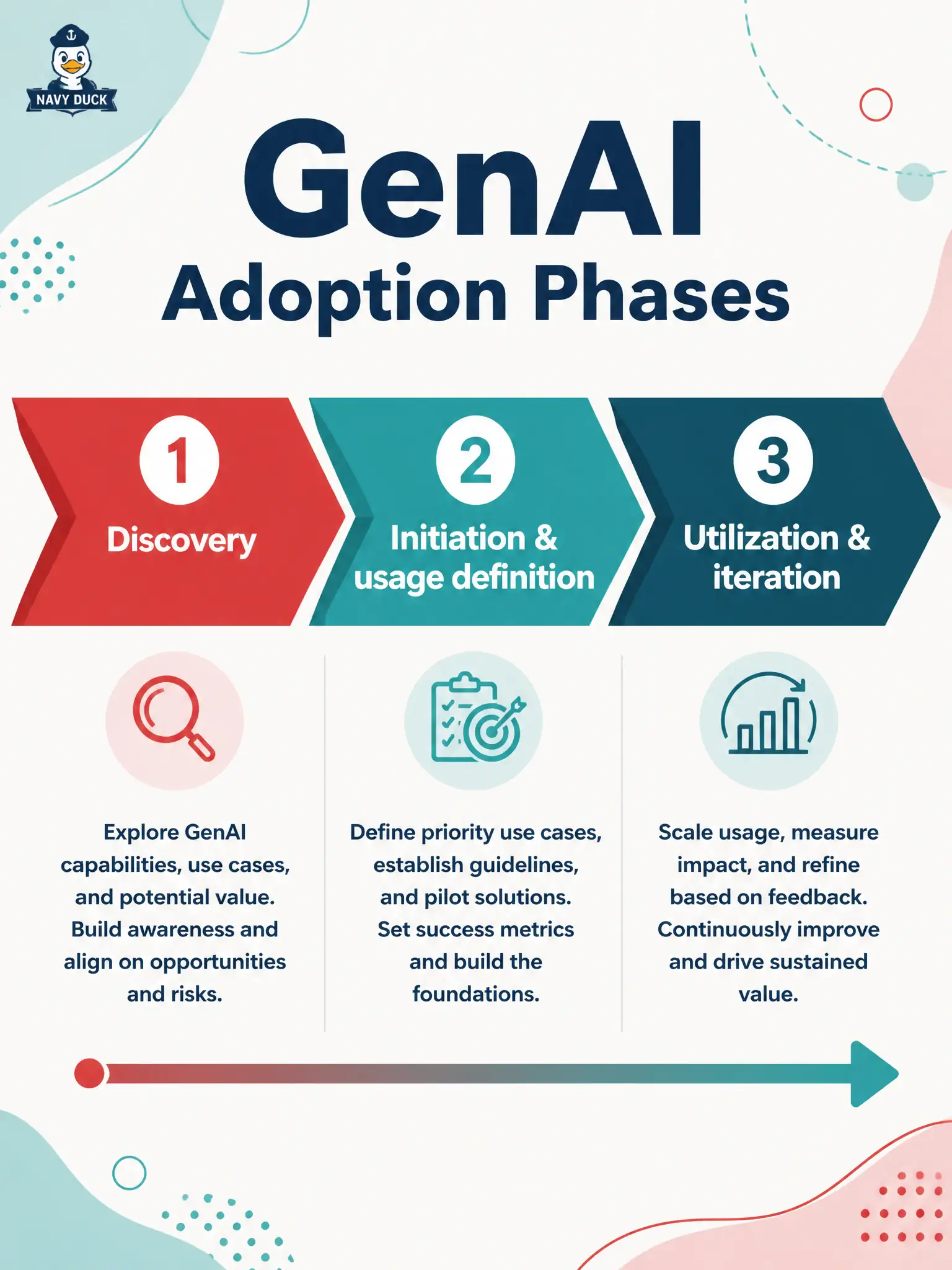
A community smokehouse-reservation board asks for the official sequence a test organization uses when adopting GenAI. Which ordered list is correct?
Select an answer to reveal the explanation.
Short Explanation
Adoption has a three-act play with a fixed order: discovery, then initiation and usage definition, then utilization and iteration. Shuffle the acts and the story breaks. Those three names are the official sequence.
Full Explanation
The syllabus names three GenAI adoption phases in order: discovery; initiation and usage definition; and utilization and iteration. A community smokehouse-reservation board that asks for the official sequence needs that exact order. Listing utilization and iteration first, then discovery, then initiation reverses the path and misstates early confidence-building before lasting use-case definition. Starting with initiation, then utilization, then discovery similarly scrambles the sequence. Substituting fine-tuning, red-teaming, and neuron-coverage certification invents a technical-ops sequence that is not the official adoption-phase list. Exam caveat: recalling the names and order is the point; do not reorder phases or swap in CT-AI or fine-tuning sequences. Operational check: when documenting smokehouse GenAI adoption, label current work against discovery → initiation and usage definition → utilization and iteration in that order. Keep civic testware subject to the same review discipline you would apply to human-authored packs. On the written exam, prefer syllabus terminology over vendor marketing language or lab choreography. Treat fluent output as a draft until organizational quality gates and data-handling rules are satisfied.