
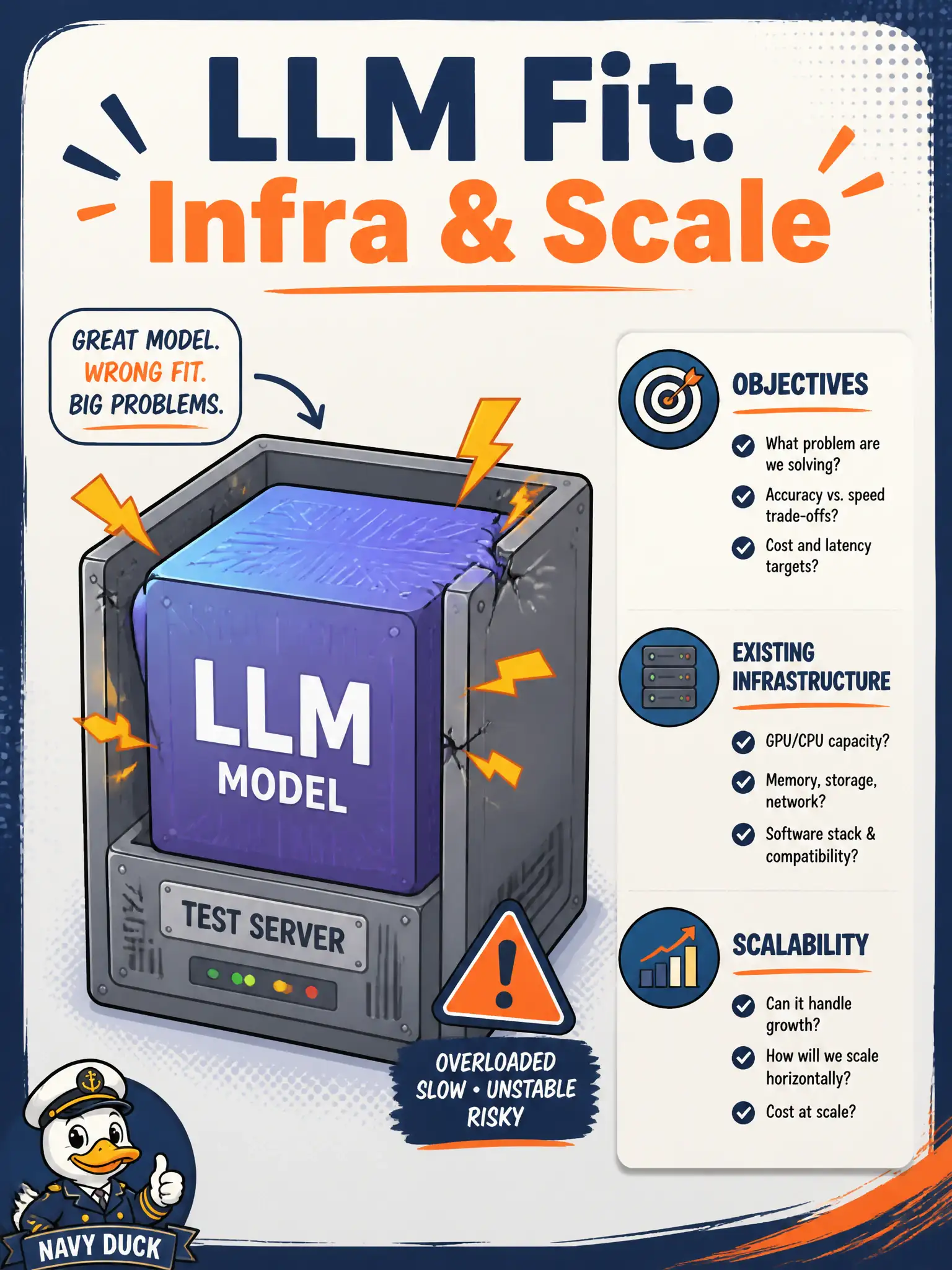
A community bread-oven reservation desk picks a huge general model that will not run on the current test server and cannot grow with Saturday rush. What strategy aspect is missing in that LLM choice?
Select an answer to reveal the explanation.
Short Explanation
A giant model on a tiny server is like booking a parade float for a bicycle lane. Strategy requires selecting LLMs that fit the test objectives, the existing infrastructure, and scalability needs. Brand size alone is not a strategy.
Full Explanation
Within a GenAI testing strategy, selecting the right LLMs means aligning candidates with stated test objectives, current test infrastructure, and expected scale. A community bread-oven reservation desk that picks a huge general model that will not run on the current test server and cannot grow with Saturday rush missed that infrastructure-and-scalability alignment. Naming Chapter 3 attack vectors inside every prompt template does not fix model-to-infrastructure fit. Treating the LLM itself as the sole system under test with neuron coverage shifts into CT-AI SUT work and does not select a workable helper for testing. Requiring personal home laptops as the only approved runtime undermines organizational control and often worsens shadow-AI risk. Exam caveat: detailed selection criteria deepen later; here the point is infrastructure and scale fit as a strategy aspect. Operational check: before shortlisting, verify the candidate model can run on the bread-oven desk’s current test servers and scale for Saturday rush while still serving stated test objectives. Keep civic testware subject to the same review discipline you would apply to human-authored packs. On the written exam, prefer syllabus terminology over vendor marketing language or lab choreography.