
After containing a phishing-driven intrusion at a logistics company, an analyst prepares an investigative visual summary for operations leadership who want to verify whether response actions actually halted the attacker. How should the analyst structure the timeline visual?
Select an answer to reveal the explanation.
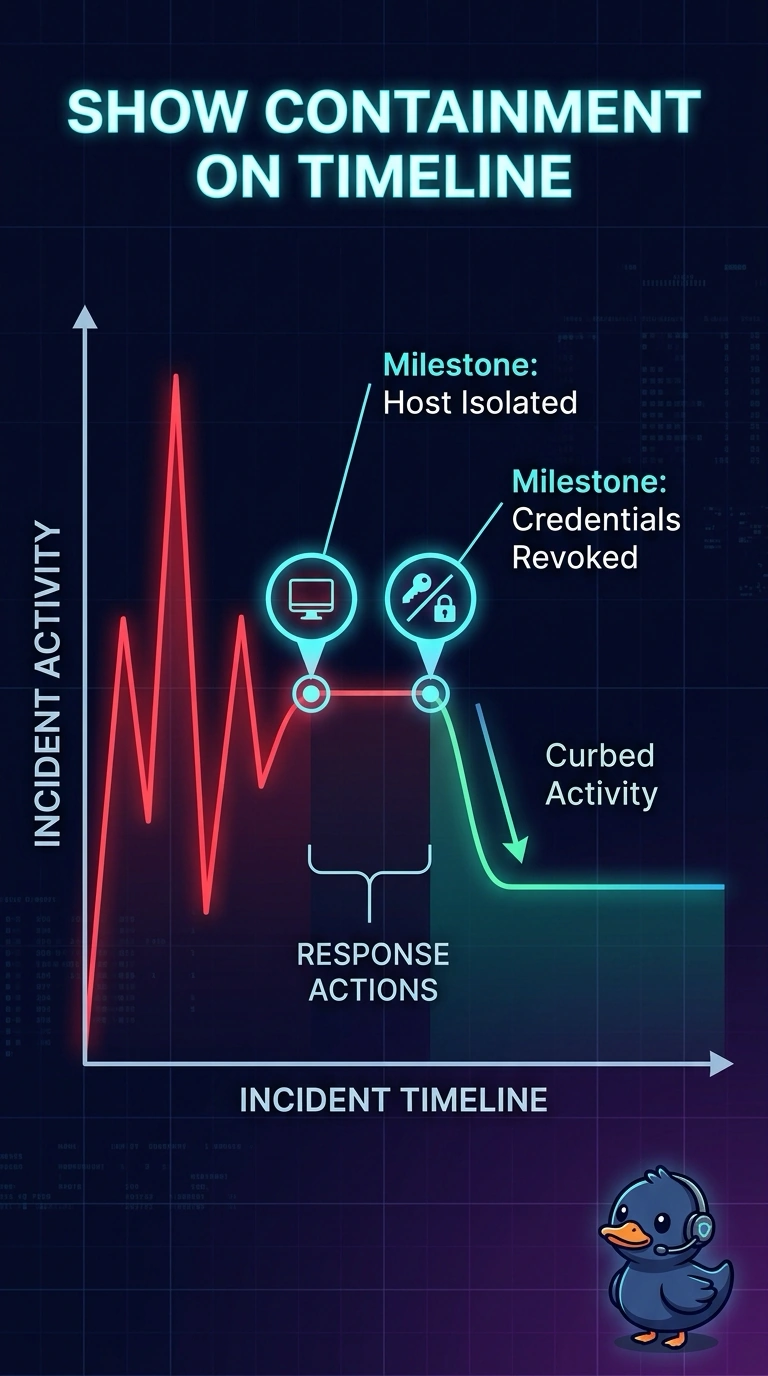
Short Explanation
An incident timeline without response markers is like a fever chart that never shows when you gave the patient medicine. When you annotate containment milestones directly on the timeline, leadership can immediately see attacker activity drop off after isolation or credential resets. Avoid the trap of hiding timestamps or handing executives raw alert lists that obscure cause and effect.
Full Explanation
Stakeholders evaluating incident response effectiveness need to see the temporal relationship between attacker actions and defender interventions. Choosing to Annotate containment milestones directly on the incident timeline to show how response actions curbed activity pairs key events—such as host isolation or session revocation—with Show action completion and verified post-action state alongside subsequent activity, with collection health/latency confirmed. A telemetry drop alone can reflect an offline sensor or pipeline gap and does not prove successful containment. Conversely, choosing to Omit containment timestamps from the timeline visual so leadership focuses only on the initial phishing email leaves executives unable to tell whether the intrusion is still active or when it ended. Choosing to Replace the chronological timeline with an alphabetical list of every raw alert ID generated during the response strips away sequence and visual clarity, burying the story in unformatted identifiers. Likewise, choosing to Display only post-containment log counts in the summary chart without showing pre-containment baseline activity removes the before-and-after comparison needed to demonstrate impact. As an exam caveat, ensure all annotated milestones use a single consistent timezone across log sources so containment never appears to precede the attack. As an operational check, cross-check each annotated milestone timestamp against SOAR execution logs and case notes before publishing the summary.
Prefer to study offline? Printable PDF study book + test engine ($7.50, unofficial). These questions stay free here.