
A retail enterprise SOC contains a credential-phishing campaign affecting point-of-sale support, e-commerce engineering, and warehouse operations. How should the analyst organize the investigative visual summary so each department can act quickly?
Select an answer to reveal the explanation.
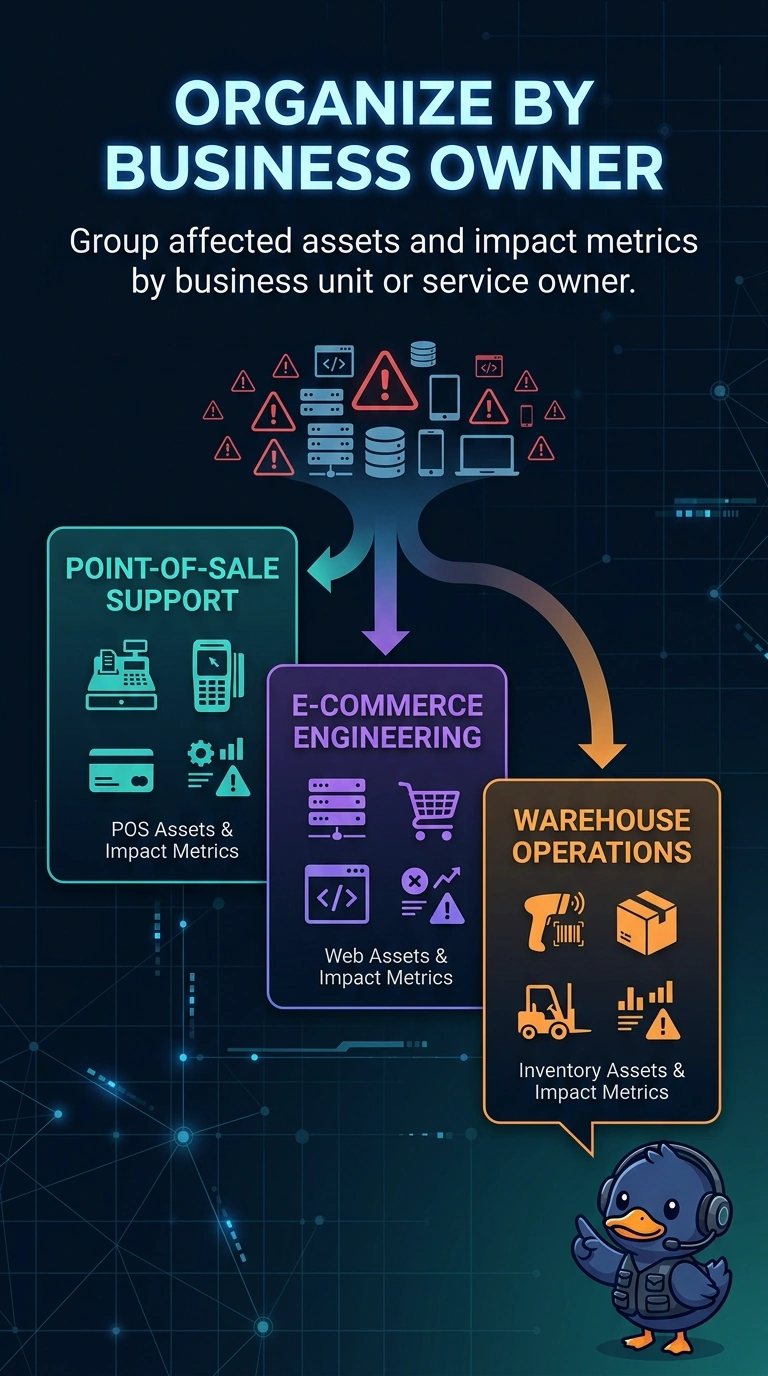
Short Explanation
Handing three different store managers one giant unsorted checklist only guarantees nobody knows which tasks are theirs. When you group visual summaries by business unit, each owner sees their exact impact and next steps immediately.
Full Explanation
Effective post-incident communication aligns findings with ownership, which makes Group affected assets and impact metrics by business unit or service owner the right choice because department leads can immediately identify their exposed accounts, affected hosts, and remediation priorities. Choosing Combine all affected hosts into a single alphabetical list without business context forces each team to waste time filtering out unrelated systems. Selecting Send every department the full raw SIEM query output across all three business units overwhelms non-SOC readers with unparsed technical detail and risks exposing other teams' data. Choosing Omit remediation priorities from the summary and ask teams to search cases manually delays containment follow-up and creates accountability gaps. As a caveat, maintain a unified enterprise timeline alongside the business-unit breakdown so leadership still sees the full scope. For an operational check, confirm each listed service owner receives only the relevant action items and tracks completion back to the case.
Prefer to study offline? Printable PDF study book + test engine ($7.50, unofficial). These questions stay free here.