
A healthcare SOC analyst determines that a high-priority correlation alert was caused by an authorized clinical software update rather than malicious activity. How should the analyst document the closure in case management?
Select an answer to reveal the explanation.
Short Explanation
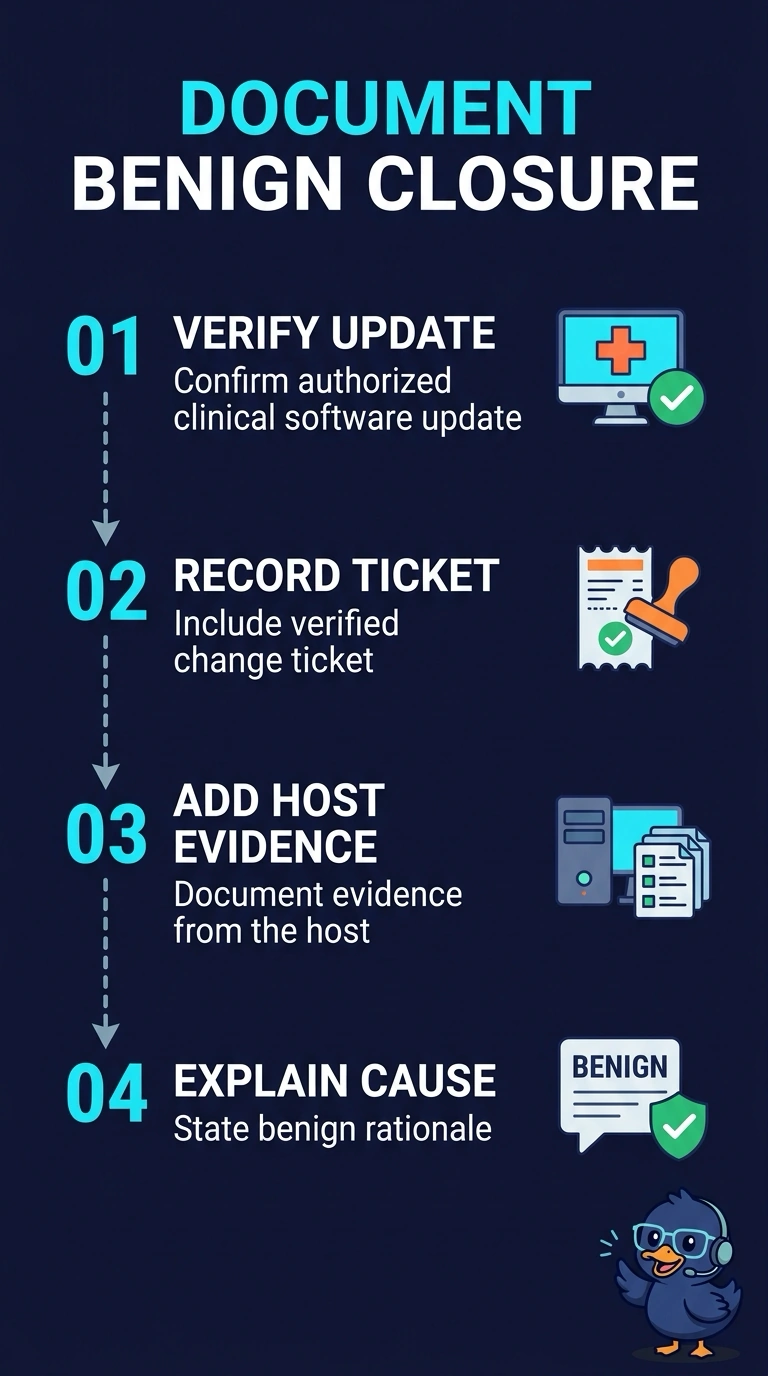
Closing a false positive without notes is like silencing a smoke alarm and throwing away the battery instead of writing down that dinner burned. If you delete the alert or leave the case hanging, the next shift has to re-investigate from scratch. Record the verified change ticket, host evidence, and benign rationale so your team has a clear audit trail.
Full Explanation
Case management in Falcon Next-Gen SIEM serves as the system of record for investigation decisions, whether an alert turns out to be a true incident or benign activity. Choosing to Record the verified change ticket, host evidence, and benign rationale documents why the high-priority correlation alert was safe to close and provides concrete criteria for future rule tuning. Choosing to Delete the alert from the SIEM so future shifts do not see noisy entries destroys audit history and prevents analysts from recognizing recurring benign patterns. Choosing to Leave the case open indefinitely without notes in case the update runs again clutters active queues and forces peer analysts to repeat completed triage. Choosing to Mark the case as confirmed compromise to preserve the original severity score falsifies incident metrics and triggers unnecessary escalation or compliance reporting. Caveat: verify that the observed process and timing actually match the approved change window rather than assuming any update activity during a maintenance period is benign. As an operational check, attach the change ticket identifier, host query results, and timestamped closure notes to the case before setting its resolution status.
Prefer to study offline? Printable PDF study book + test engine ($7.50, unofficial). These questions stay free here.