
During a weekend security incident at a regional hospital, a SOC analyst isolates three endpoints through an existing SOAR workflow and disables a compromised service account. Before ending the shift, how should the analyst record these response actions?
Select an answer to reveal the explanation.
Short Explanation
Think of a shift handoff like a surgical chart: the next team needs to know exactly what was done and when, not just that things look stable. If you skip formal case notes, critical timelines vanish into chat scrollback. The trap is treating informal updates as a substitute for auditable records.
Full Explanation
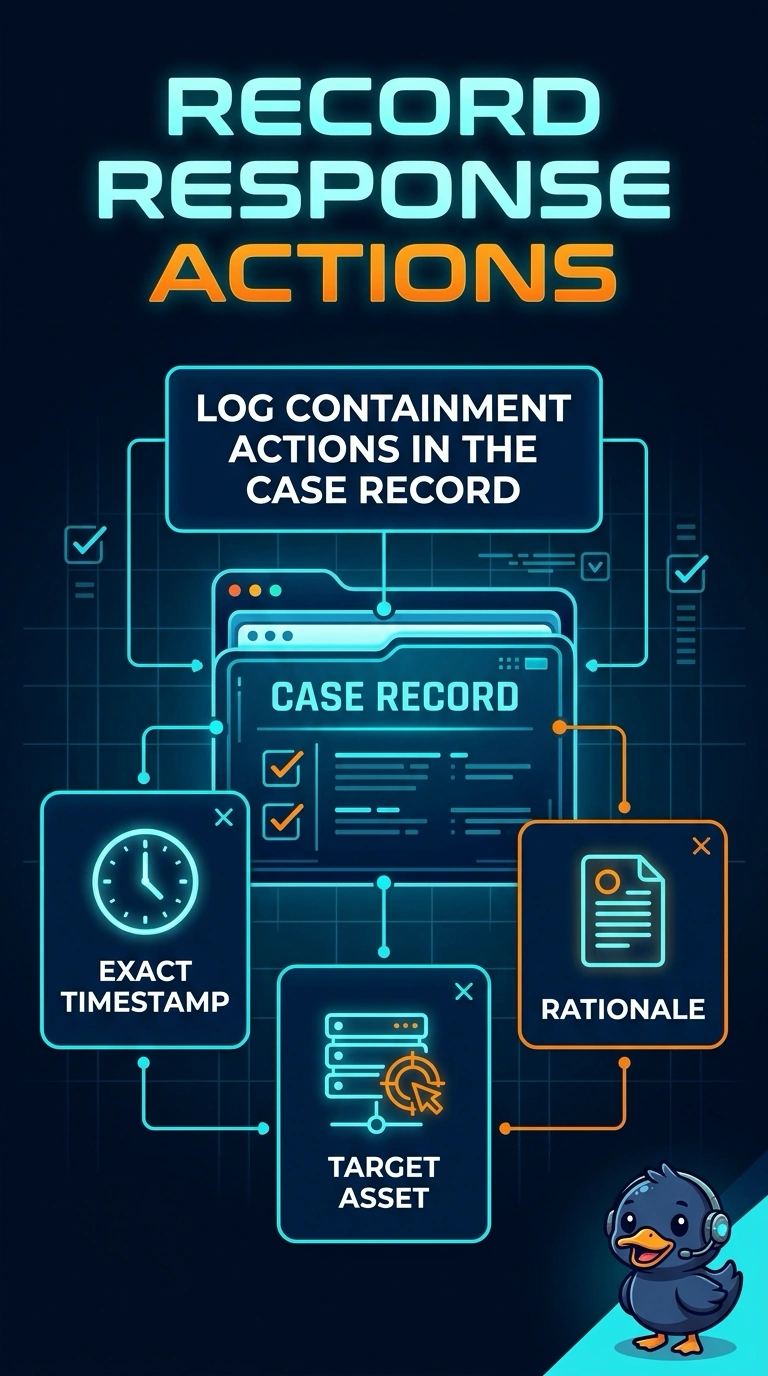
Effective incident handoff and compliance auditing require that you Log each containment action with its exact timestamp, target asset, and rationale in the case record. Structured case entries give incoming analysts, IT owners, and auditors an authoritative timeline of which hosts were isolated, which accounts were disabled, and why each step was taken. Choosing to Send a brief chat message to the incoming shift analyst summarizing that the affected systems were contained leaves critical operational details scattered in ephemeral messaging that lacks auditability. Deciding to Create a new dashboard widget showing the total count of alerts triggered during the weekend shift displays aggregate alert volume rather than specific remediation actions or affected assets. Opting to Wait until the full post-incident root-cause analysis is complete before adding response details to the case delays urgent handoff context and increases the risk that exact timestamps or reasoning will be forgotten. As a caveat, keep case entries concise and factual so sensitive credentials are never pasted into free-text notes. As an operational check, verify that every executed SOAR workflow ID and target host identifier is linked to the active case before signing off.
Prefer to study offline? Printable PDF study book + test engine ($7.50, unofficial). These questions stay free here.