
After containing an unauthorized access incident in a school district cloud identity tenant, an analyst prepares an investigative visual summary for the IT operations team. Beyond the attack timeline, what should the summary highlight to support recovery?
Select an answer to reveal the explanation.
Short Explanation
An IT recovery team needs a clear map of what is fixed and what still needs checking, not a mountain of raw log text. When you include open gaps alongside completed actions, teams can finish remediation without guesswork. The trap is burying operational priorities under raw data or speculation.
Full Explanation
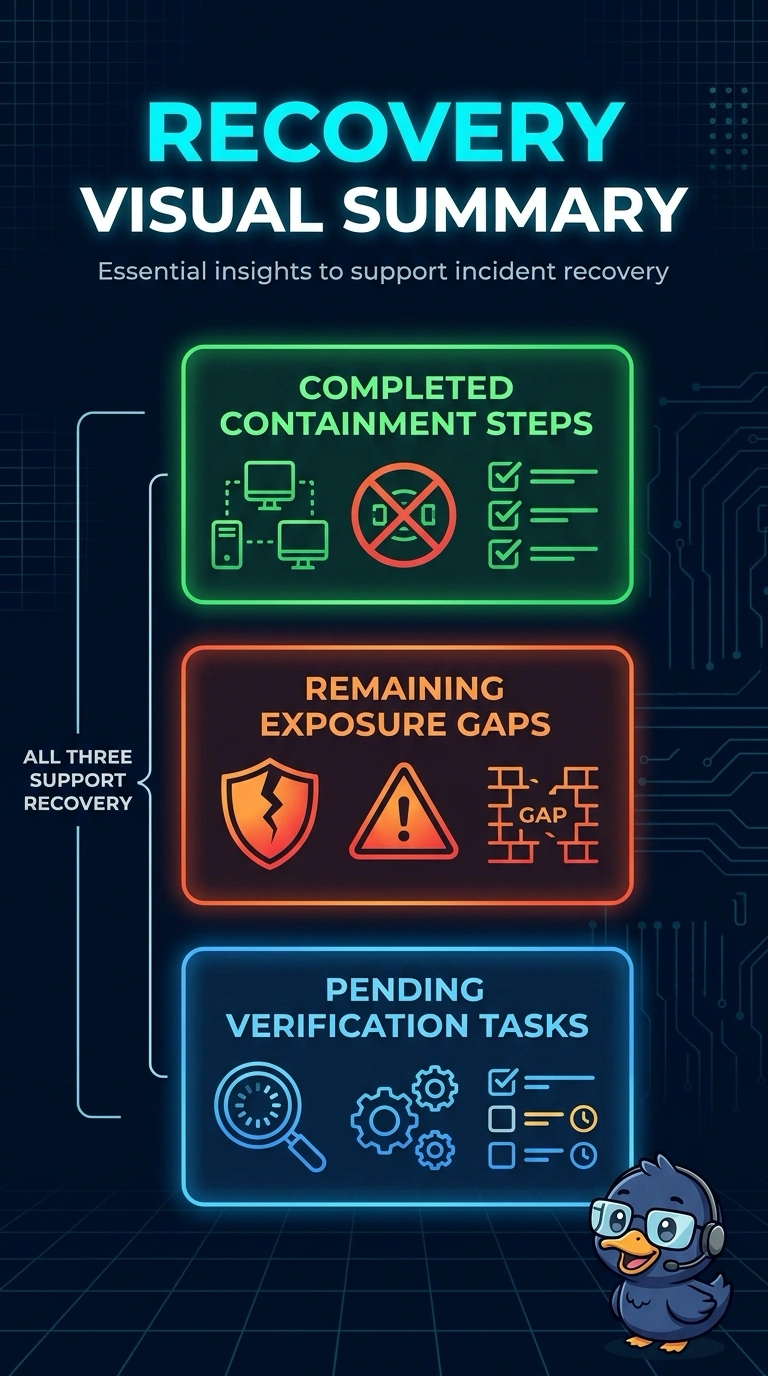
To guide technical recovery effectively, an investigative visual summary should highlight Completed containment steps, remaining exposure gaps, and pending verification tasks. Operations teams rely on this breakdown to confirm which accounts or hosts are already locked down, where visibility or access risks persist, and which validation checks remain before normal service resumes. Providing Raw unparsed log lines for every authentication event recorded during the incident window overwhelms readers with noise instead of synthesizing actionable recovery status. Including A list of all correlation rules currently enabled across the entire Next-Gen SIEM tenant adds unrelated administrative inventory that does not help IT staff remediate the affected identity tenant. Adding Speculation about the threat actor's identity based solely on an IP geolocation lookup introduces unverified claims that can misdirect technical priorities. As a caveat, distinguish confirmed remediation actions from requested follow-up tasks so ownership is unmistakable. As an operational check, review each pending verification item with the IT operations lead and record completion status in the case.
Prefer to study offline? Printable PDF study book + test engine ($7.50, unofficial). These questions stay free here.