
A hospital SOC analyst is preparing a case file for compliance and legal review while one remote branch's log availability is still unconfirmed. How should the analyst represent that uncertainty in the case documentation?
Select an answer to reveal the explanation.
Short Explanation
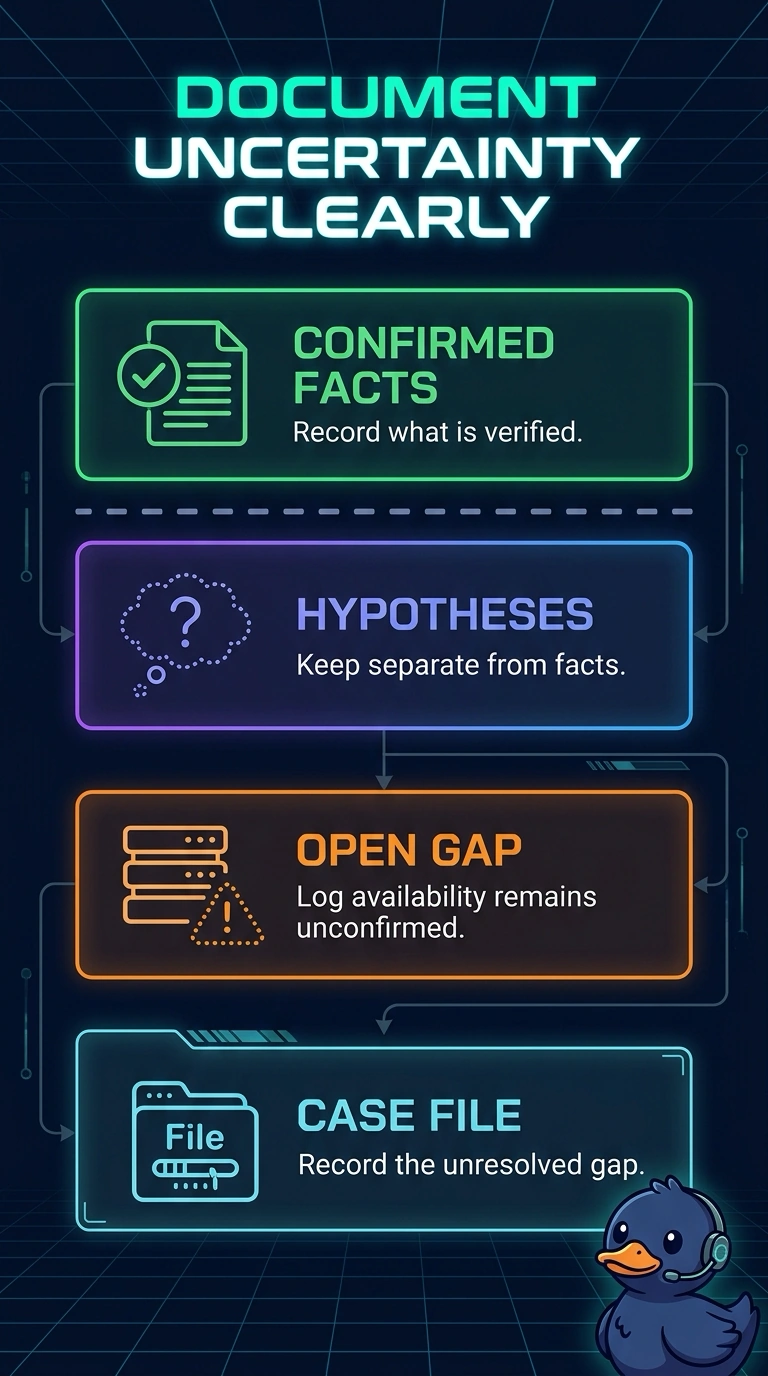
Writing an incident report with missing logs is like mapping a coastline in the fog—you draw what you can see and mark where visibility ends. Guessing to sound decisive is a dangerous trap for compliance and legal reviews. Separate what you proved from what remains open so your case record stays accurate.
Full Explanation
Defensible incident documentation requires an analyst to "Separate confirmed facts from hypotheses and record the open gap" so legal, compliance, and technical reviewers know exactly what telemetry proved and where visibility was incomplete. Explicit attribution of evidence versus open questions prevents false confidence during audits and follow-up remediation. Choosing to "State that the remote branch was unaffected to keep the report decisive" misrepresents an absence of verified logs as proof of no compromise. Choosing to "Omit any mention of the remote branch from the final case timeline" hides a known scope limitation that could leave an infected system unaddressed. Similarly, choosing to "Label unverified assumptions as confirmed root cause in the summary" compromises the integrity of the record and can misdirect remediation efforts. As a caveat, pair each documented gap with an owner or follow-up action so missing telemetry is actually resolved rather than forgotten. For an operational check, review the case summary line by line to confirm every factual claim references supporting log or endpoint evidence, while unverified items are explicitly marked as open.
Prefer to study offline? Printable PDF study book + test engine ($7.50, unofficial). These questions stay free here.