
A distributed retail SOC operates across rotating shifts, and an analyst is halfway through investigating a suspected account takeover when shift change approaches. How should the analyst document the work in the case?
Select an answer to reveal the explanation.
Short Explanation
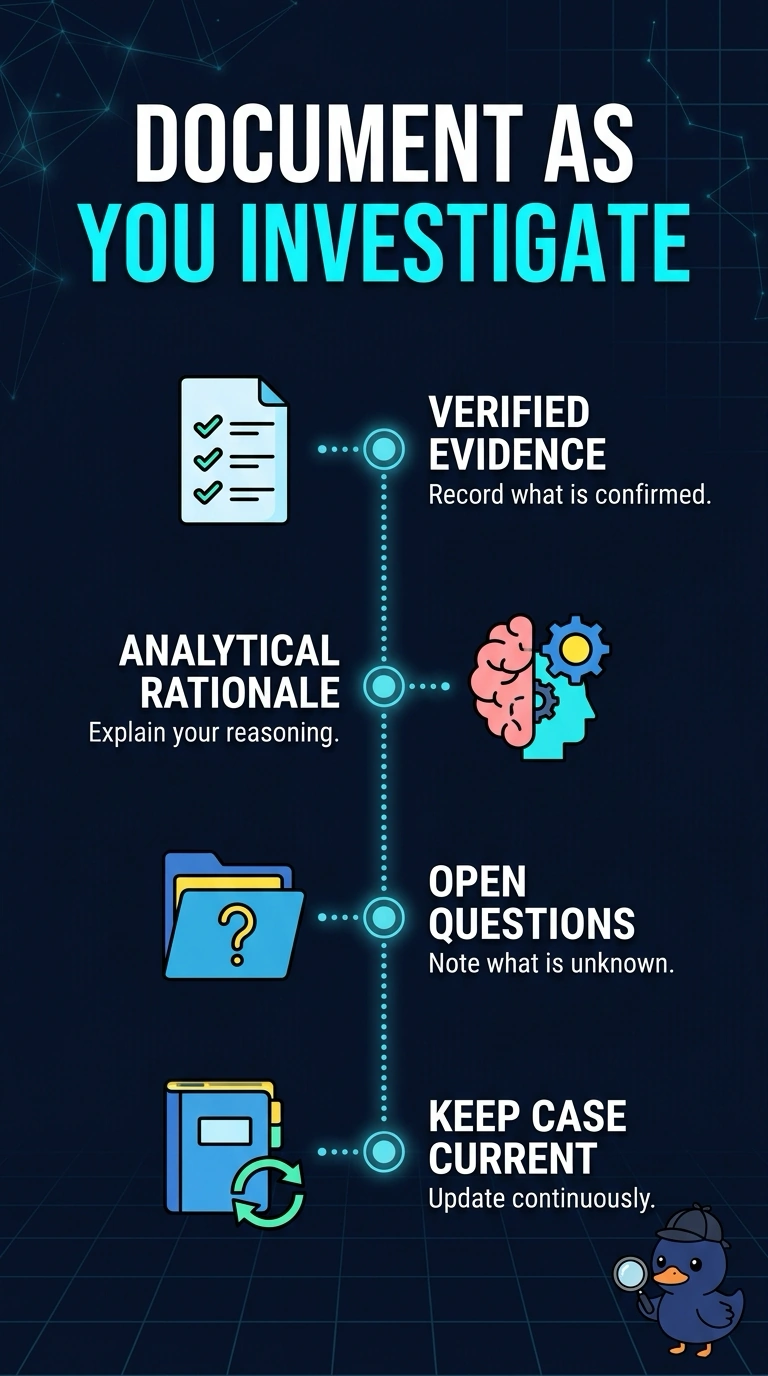
Passing an active investigation at shift change is like handing off a relay baton—drop the context, and the next runner stalls. The trap is thinking documentation is only for the final wrap-up. When you record your evidence and reasoning as you go, the next analyst picks up seamlessly.
Full Explanation
Effective case management requires analysts to "Record verified evidence, analytical rationale, and open questions continuously in the case" so that another responder or auditor can follow the exact investigative path. Capturing findings in real time preserves the link between observed telemetry, queries run, and decisions made at each stage. Choosing to "Wait until the investigation closes before adding any notes to the case" leaves the incoming shift blind to completed checks and risks duplicated effort or missed leads. Choosing to "Send a brief chat message summarizing only the final severity rating" strips away the supporting observables and lives outside the permanent audit trail. Similarly, choosing to "Paste raw unannotated query text without explaining what the results mean" forces the next analyst to re-run searches and guess why those queries mattered. As a caveat, keep confirmed facts clearly separated from working hypotheses in your notes so incoming staff do not treat assumptions as proven. For an operational check, review the case timeline before handoff to verify that every key observable, affected host or account, and pending next step is explicitly listed.
Prefer to study offline? Printable PDF study book + test engine ($7.50, unofficial). These questions stay free here.