
A biotech lab SOC analyst is investigating a single compromised workstation and wants to see the exact sequence of individual process launches and file writes in chronological order. Why should the analyst inspect individual event records rather than relying only on a groupBy summary?
Select an answer to reveal the explanation.
Short Explanation
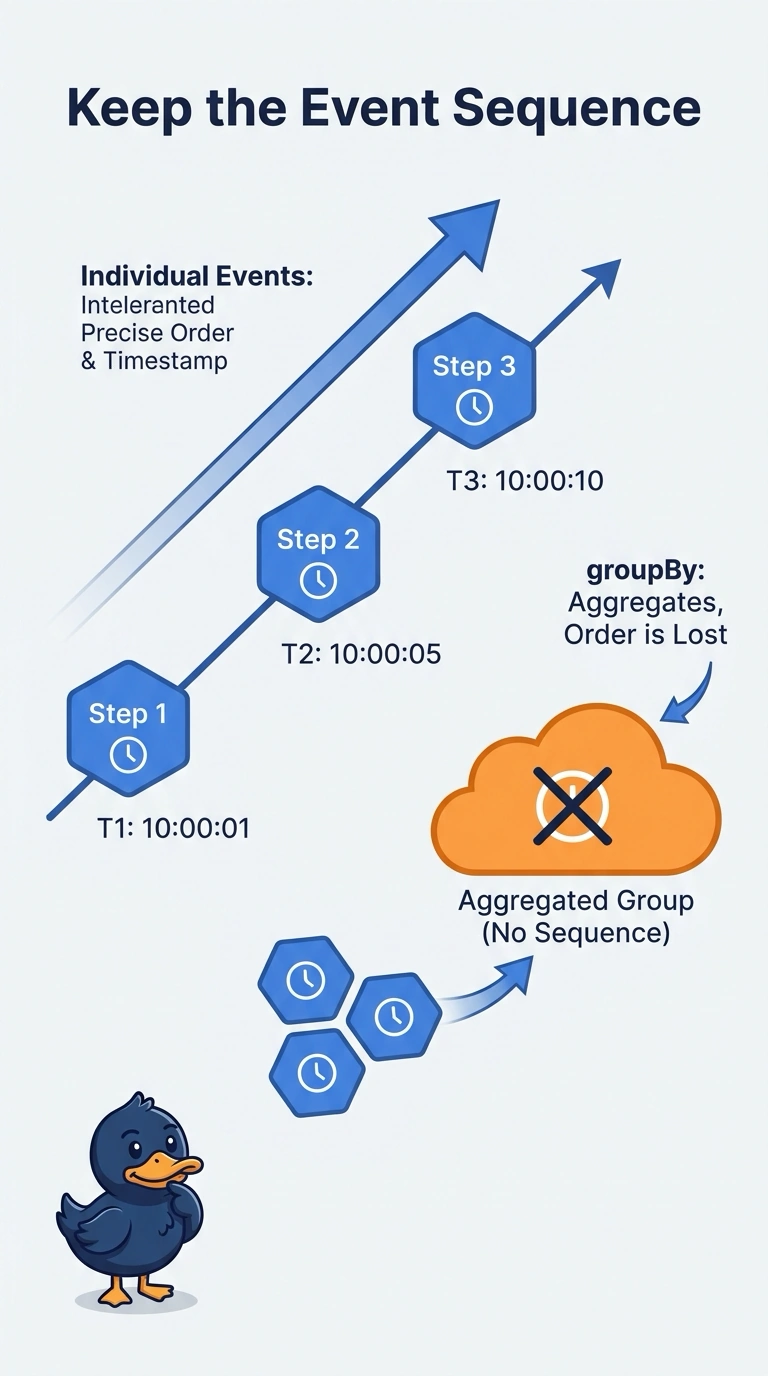
Summary tables are fantastic for spotting big trends, like counting cars on a highway. The trap is expecting an aggregated count to tell you which turn a single driver took first, when only individual event records hold that trail.
Full Explanation
In CQL, aggregation functions such as groupBy collapse matching events into summary buckets by shared field values, which is ideal for measuring volume or top offenders but strips away the fine-grained order of individual actions. Because individual event records preserve exact timestamps and step-by-step execution order, inspecting them lets you trace how one process launch led to a file write and a subsequent connection. The claim that individual event records automatically normalize unparsed vendor logs into CPS fields is false because normalization happens during parsing and ingestion, not simply by viewing raw rows. Saying a groupBy query cannot filter events by hostname or time window in Falcon Next-Gen SIEM is incorrect because you routinely filter by host and time range before aggregating. Likewise, claiming a groupBy summary deletes underlying raw telemetry from the repository after running misunderstands read-only search queries, which never erase stored logs. Caveat: broad event searches can hit display row limits over wide time ranges, so scope your query tightly to the target host and narrow window. Operational check: sort the host-scoped event results chronologically by event timestamp to verify parent-child process and file-write ordering.
Prefer to study offline? Printable PDF study book + test engine ($7.50, unofficial). These questions stay free here.