
An e-commerce SOC analyst is building a Falcon Next-Gen SIEM dashboard panel to track web-application errors across dozens of distinct HTTP response codes without cluttering the chart with separate series for every code. What should the analyst do in CQL?
Select an answer to reveal the explanation.
Short Explanation
Think of a crowded dashboard chart like a highway map that labels every mailbox instead of major exits—you lose the big picture fast. Categorizing status codes in CQL keeps your trend lines readable while preserving the underlying detail. The trap is cranking up legend limits or ditching normalization, which only trades clarity for clutter or lost telemetry.
Full Explanation
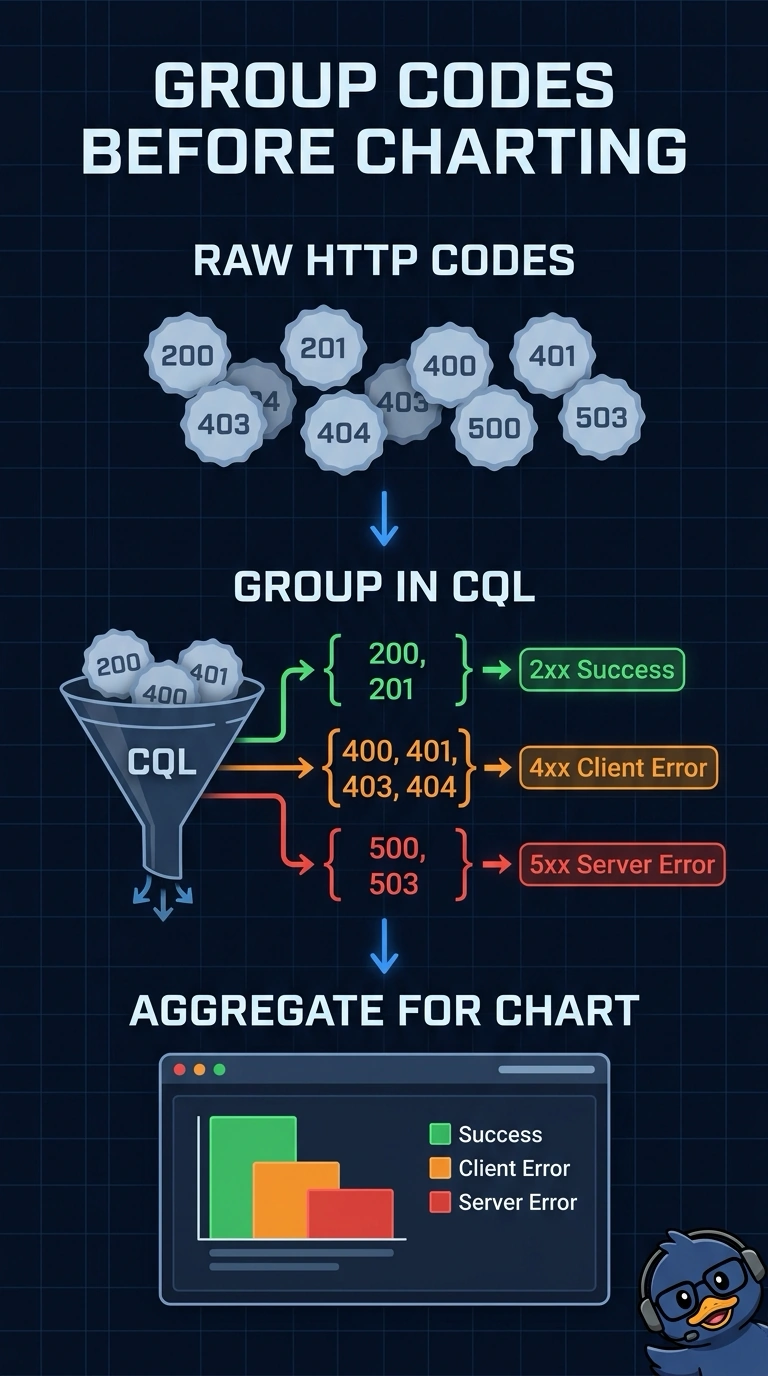
When monitoring web-application health across dozens of response codes, you should Group individual status codes into broader outcome categories in CQL before aggregating for the dashboard chart. Categorizing codes into high-level buckets such as client errors, server errors, and successes reduces visual noise while letting groupBy or time-series aggregations surface meaningful spikes immediately. Choosing to Increase the dashboard panel's maximum legend limit so every individual HTTP status code renders simultaneously creates an unreadable chart where rare but critical error spikes blend into dozens of overlapping colors. Choosing to disable CrowdStrike Parsing Standard normalization is incorrect. Disabling CPS does not itself convert raw status codes into generic pass/fail or erase raw logs; it removes the expected normalized-field mapping and does not solve chart cardinality. Choosing to Run separate raw event searches for each individual HTTP status code instead of using a dashboard aggregation defeats the purpose of a unified operational panel and slows down triage. Caveat: broad categories can mask a sharp rise in one specific status code, so keep drill-down filters available. Operational check: compare the sum of your categorized buckets against total web event counts in a test query to confirm no unmapped status codes are dropped.
Prefer to study offline? Printable PDF study book + test engine ($7.50, unofficial). These questions stay free here.