
A manufacturing SOC analyst queries seven days of authentication events in CQL to find the latest login from a suspect account, but the displayed table shows only events from six days ago. What should the analyst check in the query?
Select an answer to reveal the explanation.
Short Explanation
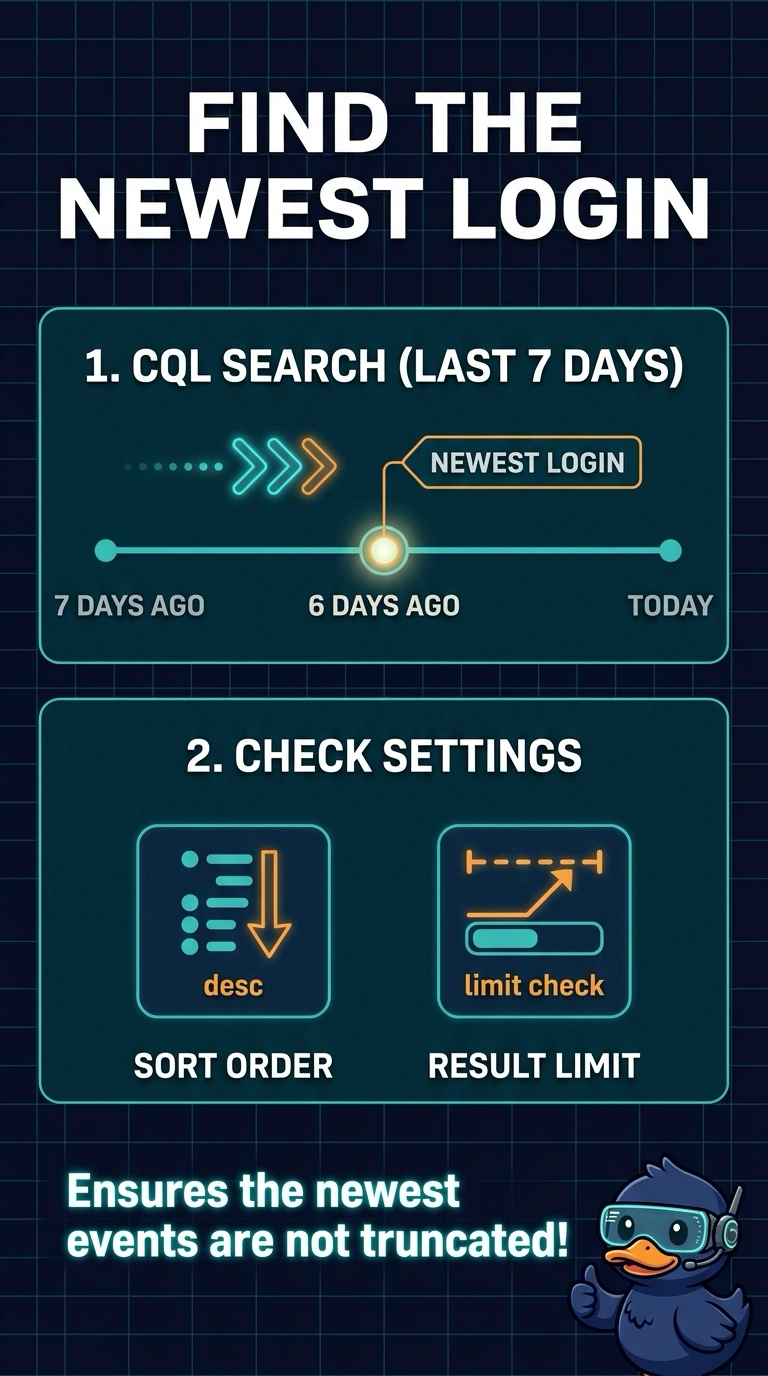
Looking at a long event table without checking the sort order is like reading a diary from page one when you only want today's entry. The trap is assuming no recent logins happened just because the top rows are six days old. Check how your results are sorted and capped before you draw a conclusion.
Full Explanation
When a CQL search spans several days of high-volume authentication logs, result tables often return a bounded number of rows in a specific order. You should Check the sort order and result limit to ensure the newest events are not truncated, because an ascending timestamp sort or default row cap can display the oldest matching records while hiding recent activity. Choosing to Assume the suspect account was automatically deleted six days ago without checking logs jumps to an unsupported conclusion without verifying directory or recent login events. Choosing to Remove all time-window filters so CQL displays every historical event since deployment slows the search and makes truncation worse rather than fixing ordering. Deciding to Switch from normalized CPS fields to raw unparsed strings to bypass the sort order does not change how results are sorted or capped and breaks schema consistency. As a caveat, if sorting newest-first still shows no recent events, verify whether the log source stopped ingesting six days ago. As an operational check, narrow the time window to the most recent 24 hours or sort descending by timestamp and aggregate with groupBy to confirm the latest login time.
Prefer to study offline? Printable PDF study book + test engine ($7.50, unofficial). These questions stay free here.