
A manufacturing SOC analyst finds a single suspicious script-execution event in CQL, but the strict process-name filter hides what the user and host did immediately before and after it. How should the analyst pivot in CQL to inspect the surrounding activity?
Select an answer to reveal the explanation.
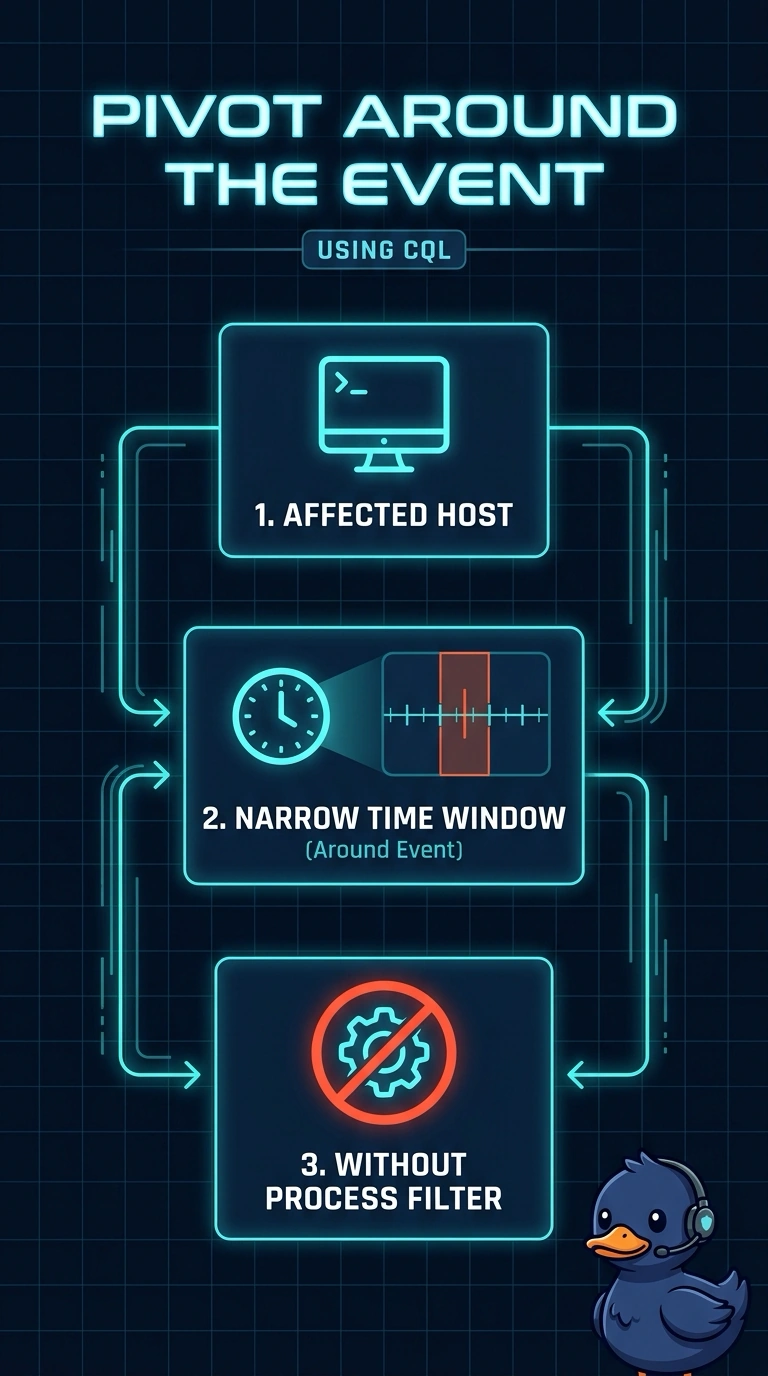
Short Explanation
You’ll get the context you need by narrowing the time window to the minutes around the event and removing the process filter, while keeping the search focused on the affected host. That reveals the surrounding activity; expanding to ninety days while retaining the strict filter still hides other event types.
Full Explanation
Filtering by the affected host over a narrow time window around the event, without the process filter, surfaces preceding user logins, file writes, parent process launches, and follow-on network connections on that endpoint while keeping result volume manageable. Expanding the query to ninety days across all hosts while retaining the strict process-name filter still hides non-matching event types, such as authentication or DNS lookups around the incident. Removing all filters, including the host and time window, floods the search with unrelated telemetry and risks hitting row limits. Counting total events by country without filtering on the affected workstation loses the host-level chronological context needed to understand local execution steps. One caveat: if the host shares activity with an external identity or server, you may also need a second pivot on the username across identity logs. As a practical check, sort the host-scoped results chronologically and verify both the parent process and subsequent network or file events.
Prefer to study offline? Printable PDF study book + test engine ($7.50, unofficial). These questions stay free here.